Kitchen

Best Teapots of 2026

Pouring tea should be the easiest part of the morning, yet I've watched a full pot send half a cup down its own spout and across the tablecloth more times than I care to admit. The difference between a teapot you keep for decades and one that quietly migrates to the donate box almost always comes down to the pour: a clean cut-off, no drip running down the belly of the pot, and a lid that stays put when you tip it. Get that right, add a handle that doesn't heat up and a body that keeps tea warm through a second cup, and everything else — how it looks sitting out on the counter, how easily it rinses clean — becomes a bonus rather than a compromise.

I've cycled through plenty of pots over the years, from a chipped cast iron hand-me-down to a glass one I bought purely because it was pretty. For the past nine months my team and I have brewed side by side with 12 teapots, and the pattern held: the ones that pour cleanly are usually the ones built with care everywhere else. Capacity is the detail people underestimate most — a four-cup pot pours exactly two generous mugs. The picks below run from small pots for one to bigger ones that serve a whole table.

1

Sweejar Royal Teapot

Top Pick
Sweejar Royal Teapot

Afternoon tea

Our Score 9.6/10
Check Price

Worth Noting

  • Not for stovetop or direct heat
Infuser
Stainless steel
Capacity
28 oz
Material
Porcelain
Dishwasher Safe
Yes
Read the full review

The Sweejar Royal Teapot does something most teapots do not: it looks finished before the tea is in it. The pumpkin-shaped porcelain body, with its border decoration and gently domed lid, reads as afternoon tea rather than everyday utility. At 28 ounces it is a two-mug pot, maybe three teacups, which is the right size for a shared pot that does not sit around going cold.

We recommend it for the table, not the stove. The deep stainless infuser gives leaves room without letting bits through, and the porcelain holds heat nicely for a second cup. The white glaze is easy to wipe, and the handle and spout are shaped for a comfortable pour. The payoff is that you can carry it from kitchen to living room and it still looks intentional.

It is not the pot for a big family breakfast, and the decoration will not suit a modern minimalist table. But for a gift or a weekend ritual, it is the one we choose when the tea is part of the occasion. The classic shape also makes it easy to pair with teacups you already own, which is more useful than it sounds when you are setting a table.

Bottom line: For afternoon tea and a pot that looks dressed for the table, we choose the Sweejar; its 28 oz porcelain body keeps a small batch warm and the deep infuser handles loose leaves.

2

Hario ChaCha Kyusu Maru

Hario ChaCha Kyusu Maru

Everyday loose leaf

Our Score 9.2/10
Check Price

Worth Noting

  • Glass body is delicate
Weight
10.8 oz
Infuser
Stainless steel
Capacity
700 ml
Material
Heatproof glass
Read the full review

A 700 ml glass pot with a mouth wide enough to get a sponge into is the version of a teapot we reach for most often. The Hario ChaCha Kyusu Maru holds two generous mugs or three smaller cups, and the stainless basket sits deep enough that loose leaves have room to open. We like that the glass shows the brew color without turning the pot into a science experiment. The shape is simple, almost Japanese-minimal, and it looks at home on an open shelf as well as a breakfast table.

The basket is the part that matters day to day. It lifts out by a small handle, empties cleanly, and the wide opening means tea leaves do not pack into a shoulder you cannot reach. The glass is heatproof, and the pot is light enough to lift with one hand when full. The pour is clean into a mug, and the stainless strainer handles fine-leaf tea without shedding bits into the cup.

Capacity is honest for its size: 700 ml is about two large mugs, not a crowd. For a household that drinks one or two cups at a time, that is the sweet spot; for a family filling a table, go larger. The glass does not hold onto flavors the way an unglazed pot can, which makes it a good choice if you move between green, black, and herbal teas in the same week.

This is our default because it makes the whole loop easy: scoop, steep, pour, rinse. It is not the pot for someone who wants a thermal carafe or a dramatic centerpiece, but for daily loose-leaf tea it earns its place at the front of the cupboard.

Bottom line: We recommend the Hario as the default teapot for daily loose-leaf tea: its 700 ml glass body, wide mouth, and stainless basket make brewing and cleaning easy for two to three cups.

3

Teabloom Celebration Teapot

Teabloom Celebration Teapot

Blooming tea

Our Score 9.2/10
Check Price

Worth Noting

  • Lid fits loosely
Infuser
Removable glass
Capacity
40 fl oz (4–5 cups)
Includes
2 blooming teas
Material
Borosilicate glass
Read the full review

The Teabloom Celebration Teapot arrives with two jasmine blooming teas, and that tells you what it is for: a pot that makes the brewing visible. The clear borosilicate body and removable glass infuser let a tea flower open in the water, and the 40-ounce capacity gives it room to do so. It is a giftable set, and it looks lovely on a shelf even when it is empty.

The glass infuser is the unusual part. It lifts out, so you can rinse leaves without fishing around, but it also means the pot is not the simplest choice for a fine, dusty tea; a stainless mesh catches more. The glass is stovetop and microwave safe, and the pot is light for its size. We treat it as a display pot first and a daily brewer second.

That is the honest split. For blooming tea and a slow afternoon, it is the most enjoyable pot here. For a household that wants one sturdy pot for every day, the thin glass asks for careful handling and a safe shelf. We recommend it to someone who wants the ritual and will treat the pot accordingly.

Bottom line: We like the Teabloom for the ritual of blooming tea; the clear 40 oz body shows the flower opening, and the two included blooms make it a ready gift.

4

Bodum Assam Tea Press

Bodum Assam Tea Press

Controlled brewing

Our Score 9.0/10
Check Price

Worth Noting

  • Plastic lid and handle feel less premium
  • Needs a fairly full pot to brew
Filter
Stainless steel
Capacity
34 oz
Material
Borosilicate glass
Dishwasher Safe
All parts
Read the full review

The Bodum Assam Tea Press borrows the French press idea and applies it to tea: leaves go in the glass, water goes on top, and a stainless plunger stops the steep when the tea tastes right. That is a useful control for anyone who has left a pot of green tea to turn bitter. At 34 ounces it makes about four mugs, so it suits a household that drinks tea in rounds rather than one cup at a time.

The glass is borosilicate and the filter is stainless, which gives it a clean, laboratory-smart look on the counter. It is not a stovetop pot, so you heat water separately and pour it in. We like the press for black tea and robust herbal blends where a little extra strength is welcome; delicate whites and greens need a quicker plunge.

This is the pick when brewing control matters more than ceremony. It looks smart enough for the table, and the plunger gives you a repeatable way to stop the brew. The plastic parts make it feel less heirloom than a porcelain pot, but for daily loose-leaf tea it is a practical, tidy system.

Bottom line: When you want to stop the steep without lifting out leaves, we reach for the Bodum; the press gives you control, and 34 oz makes about four mugs.

5

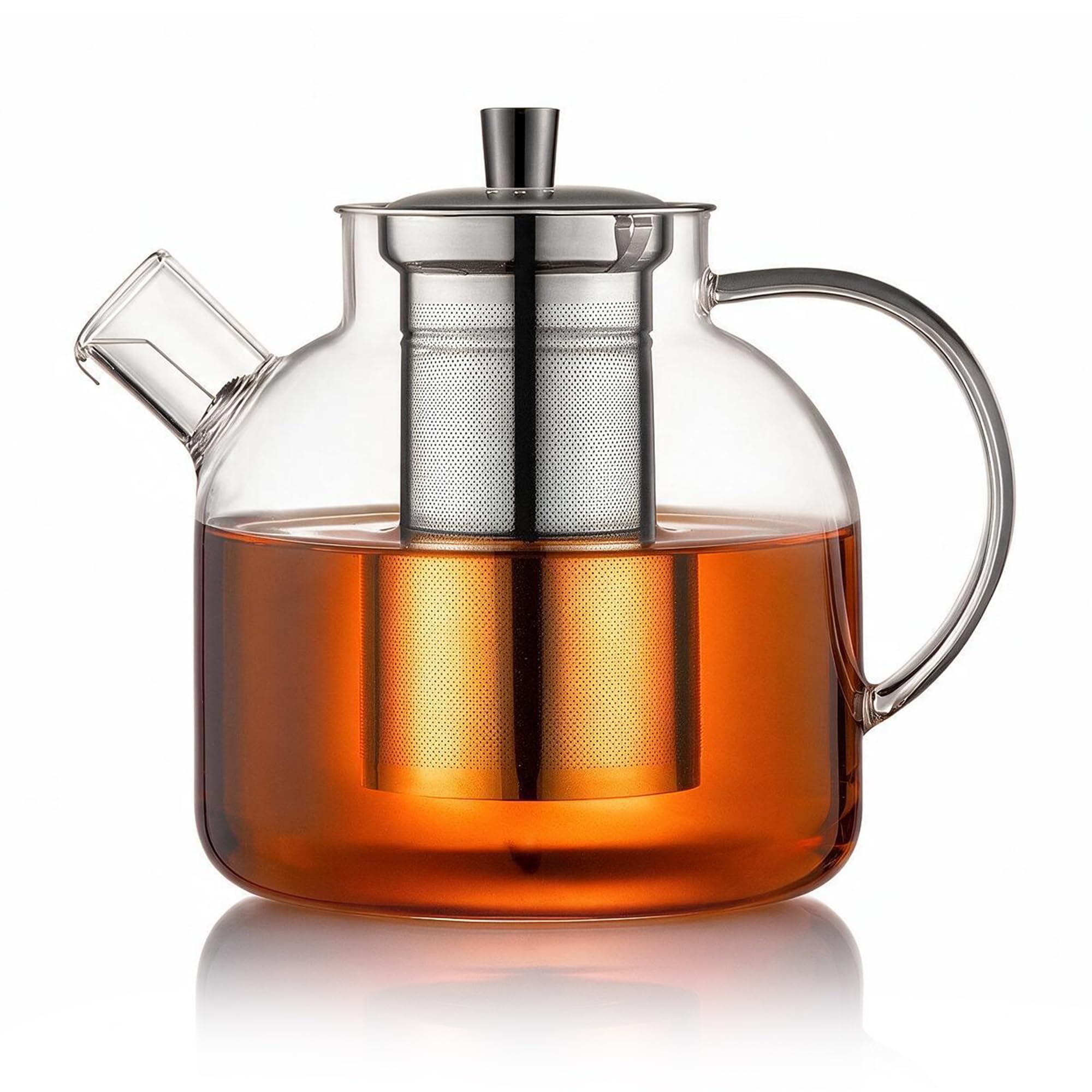
Ehugos 1500ml Glass Teapot

Ehugos 1500ml Glass Teapot

Family batches

Our Score 9.0/10
Check Price

Worth Noting

  • Large footprint on the counter
  • Glass body is vulnerable to knocks
Infuser
Stainless steel
Capacity
1500 ml
Material
Borosilicate glass
Stovetop Safe
Yes
Read the full review

A 1500 ml teapot is a different kind of purchase: you are buying for a table, not a single mug. The Ehugos glass pot makes that case with a broad borosilicate body, a removable stainless basket, and a handle that stays cool enough to lift when the pot is hot. We like it for family breakfasts and long writing sessions when one pot should cover several cups.

The size is the point, but the details make it work. The wide mouth takes a brush, the infuser lifts out for rinsing, and the glass lets you watch the tea color deepen. It is stovetop and microwave safe, and the broad base gives it stability on the burner. The main trade-off is footprint: this is a pot that lives on the counter or a low shelf, not a crowded cupboard.

Bottom line: We keep the Ehugos for family batches: 1500 ml serves a crowd, the handle stays cool, and the removable basket makes a large pot easier to clean.

6

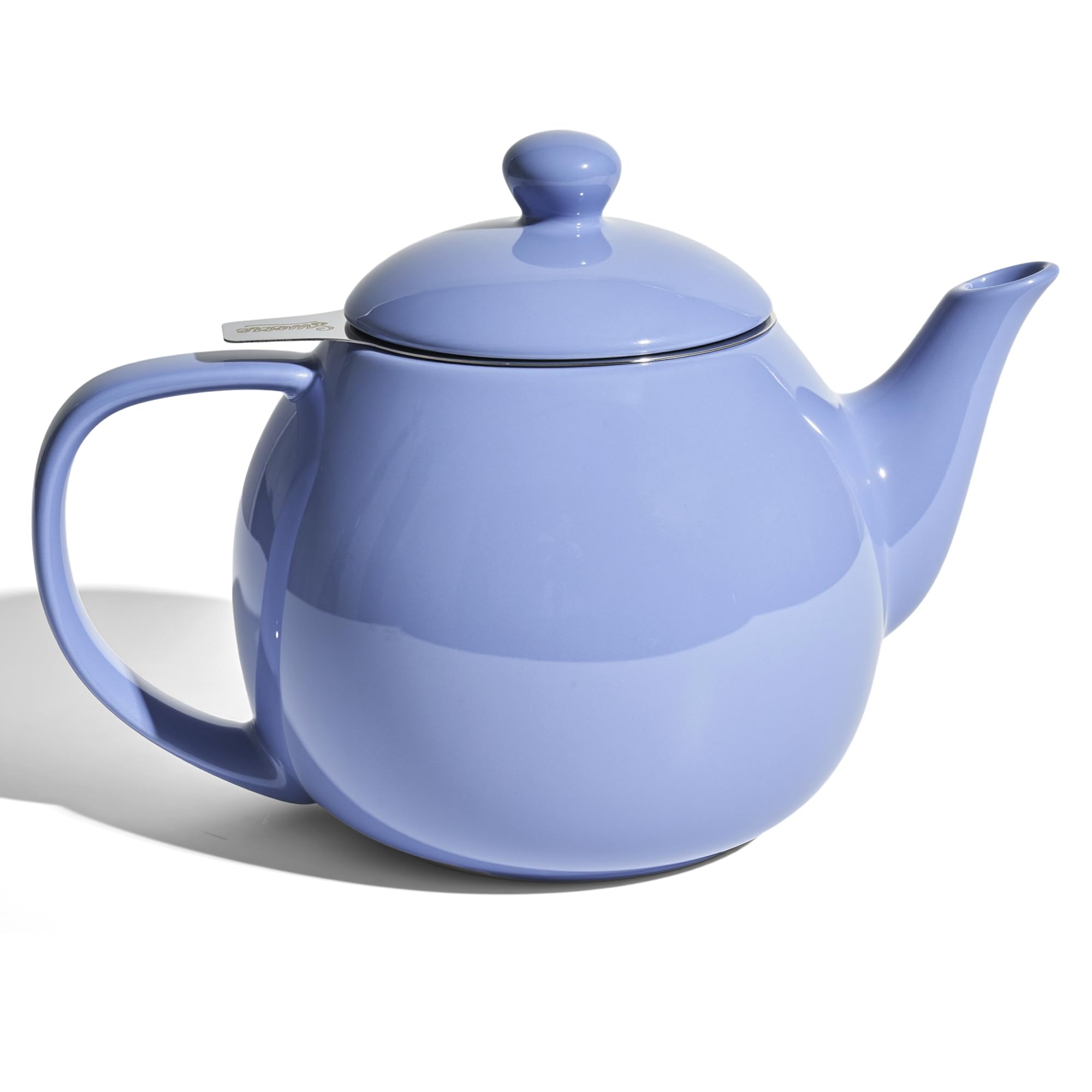
Sweese Porcelain Teapot

Sweese Porcelain Teapot

Colorful table

Our Score 9.0/10
Check Price

Worth Noting

  • Lid can shift while pouring
  • Spout may drip
Infuser
Stainless steel
Capacity
27 oz
Material
Porcelain
Microwave Safe
Yes
Read the full review

The Sweese porcelain teapot leads with color. The dusty blue glaze and clean porcelain shape make it a decor object as much as a brewer, and at 27 ounces it is sized for two mugs or three teacups. The stainless infuser is removable, and the lid has a silicone gasket that is meant to keep it steady.

We recommend it when the teapot will sit on the table and be seen. The porcelain holds heat well, the handle stays comfortable, and the wide opening is easy to wipe. It is a good second pot or a color-led gift rather than the default for a careless household. If you want a porcelain pot with a more classic shape, the Sweejar is the safer table choice; if color is the point, this one earns its place.

Bottom line: Color is the reason we point you to the Sweese: the dusty blue porcelain turns a 27 oz pot into a table piece, and the stainless basket handles loose leaves.

7

DOPUDO 18 oz Glass Teapot

DOPUDO 18 oz Glass Teapot

Single serving

Our Score 8.8/10
Check Price

Worth Noting

  • Handle can get hot on the stove
Infuser
18/8 stainless steel
Capacity
18 oz (530 ml)
Material
Borosilicate glass
Stovetop Safe
Yes
Read the full review

Eighteen ounces is not a compromise if you are brewing for one. The DOPUDO glass teapot is small enough to sit beside a laptop without taking over the desk, and the removable 18/8 stainless basket means you can brew loose leaf without a separate strainer. We like it for a single strong mug or two modest cups, and the clear body makes it easy to see when the color is where you want it.

The pot is stovetop safe and microwave safe with the infuser and lid removed, which makes it flexible for a small kitchen. The wide base and rounded shape are stable on a counter, and the glass is light enough to lift and pour without a wrist workout. The trade-off is capacity: if you routinely drink two full mugs, this pot will feel like a refill waiting to happen. It is a personal pot, not a sharing pot.

Bottom line: The DOPUDO is our pick for a single mug: 18 oz, a removable stainless basket, and stovetop-safe glass in a compact pot that suits one person.

How We Tested a Dozen Teapots

We started by pulling together every teapot we could find that shoppers actually buy, sorting them by material — glazed ceramic, cast iron, glass, stainless steel — then by stated capacity, from two cups to eight, and by whether the body is safe on a stovetop or only meant for pre-brewed water. We cut anything with a lid design that looked flimsy in photos or a spout that narrowed to a point, and landed on 12 pots we could live with for nine months.

Those nine months covered weekday mornings with one or two cups, weekend breakfasts with six people waiting, and slow Sunday afternoons. We filled each pot to its own fill line and poured at a gentle angle, then again at a steep one, watching where the stream landed and whether a bead of tea formed under the spout and ran down the outside. We tipped each one while full and gave it a small shake to see whether the lid held, and took water temperatures at 10, 20, and 30 minutes to compare how long each material held heat. Each pot also got weighed empty and full, since a stoneware pot that holds eight cups is a different object entirely when you're carrying it across a kitchen.

For cleaning, we brewed black tea and let it sit in each pot for an hour before washing, then checked spout interiors and lid rims for staining and noted whether the opening was wide enough to get a hand and a sponge inside. Dishwasher-safe models went through a full cycle. Durability got the sink treatment — a light knock against the faucet, a set-down on a stone counter, a wet handle gripped mid-pour — which told us quickly which lids rattled, which handles turned slick, and which pots we'd trust with a table full of guests.

How to Choose Teapots

Capacity Is About Usable Cups

A listed capacity is not the same as what reaches your mug. An 18 oz pot like the DOPUDO is a personal pot for one large cup or two small ones, while 27 to 28 oz is the two-mug sweet spot for a shared afternoon pot. Once you get to 34 oz and above, you are brewing for three or four people or for a long session. Remember that a bulky infuser displaces water, so a pot filled to the brim with leaves gives you less tea. Match the pot to your usual round, not to the largest crowd you might host.

Match the Material to Your Heat Source

Glass shows the brew and makes staining easy to spot, but heatproof glass is not automatically stovetop safe. Check the maker's heat sources before you put a glass pot on a burner; the Ehugos and DOPUDO are stovetop safe, while other glass pots are made for hot water only. Porcelain holds heat longer and looks more at home on a set table, but it wants a trivet rather than a flame. Cast iron keeps tea warm and feels substantial, though chipped interior enamel is a stop sign. Decide where you will heat water before you fall for a shape.

Look at the Infuser and the Pour

The infuser decides whether loose tea is a pleasure or a chore. A removable stainless basket is the easiest to empty and rinse, and a fine mesh keeps small particles out of the cup. A glass infuser shows the leaves but can let dust through, while a press like the Bodum stops the steep without removing anything. Pouring matters just as much: a lid that shifts and a spout that drips turn a full pot into a tablecloth problem. Test a new pot with water before you fill it with tea, and hold the infuser tab against the handle if the design calls for it.

Plan for Cleaning and Storage

A teapot earns its counter space only if it is easy to live with. Wide mouths are easier to brush than narrow shoulders, and removable infusers keep leaves from packing into corners. Dishwasher-safe parts are a real convenience, but delicate glass and decorated porcelain still deserve hand-wash care. Measure the footprint before you commit: a 1500 ml family pot takes up more room than a 700 ml everyday pot, and a long spout needs clearance in the cupboard. If you have a small kitchen, choose the smaller pot and brew twice rather than wrestling a large one in and out.

Frequently Asked Questions

Final Verdict

Our default is the Hario ChaCha Kyusu Maru. It makes the daily loop of loose-leaf tea feel easy: 700 ml for two generous mugs, a wide mouth that takes a brush, and a stainless basket that lifts out cleanly. If your tea is usually a solo mug, the DOPUDO is the smaller route.

When the pot is part of the table, the Sweejar brings porcelain warmth and a classic shape. The Bodum earns its place when you want to stop the steep on command. Choose by the cup you actually pour, not by the size of the crowd you might host once.