Kitchen

Best Dutch Ovens of 2026

I put off buying an enameled cast iron pot for years because it felt like the sort of thing you inherit rather than purchase. Then I braised short ribs in a friend's kitchen, and my stainless stockpot quietly stopped getting invited to Sunday dinners. A Dutch oven is a heavy pot with a lid that seals, and the seal is the whole trick: it traps steam so a cheap cut turns tender, and it holds heat steadily enough to brown meat without scorching it. It fixes dinner, really — one vessel that goes from stovetop to oven to table.

We cooked in 12 of them over the past eight months, from supermarket budget buys to the enameled status symbols, and the gaps showed up fast. Weight matters more than shoppers expect: a seven-pound pot full of chili is a two-handed lift, and the handles decide whether that lift feels secure. Color isn't frivolous either when the pot lives on your stove rather than in a cupboard. One first-timer's tip before you scroll: a pale interior shows you when onions are truly browning, while a dark one forgives braise stains.

1

Magnaware 10-Quart Oval

Top Pick
Magnaware 10-Quart Oval

Holiday crowds

Our Score 9.6/10
Check Price

Worth Noting

  • Loses heat faster than cast iron
Shape
Oval
Capacity
10 quarts
Material
Cast aluminum
Item Diameter
17.75 inches
Read the full review

Ten quarts, 17.75 inches across, cast aluminum rather than iron: this is the pot for the big cooks that don't fit in anything else. A turkey goes in with the lid on. So does a gumbo for twenty.

Aluminum changes how it behaves. It comes up to heat fast and gives it up fast, so a low braise needs a closer eye on the flame than a 13-pound iron pot would. In exchange you get a vessel you can lift out of a hot oven without bracing yourself, no seasoning, no rust, and no enamel to chip. The silicone handles it ships with are worth keeping where you can find them.

We keep it for volume, and for anyone who finds 13 pounds of iron a lot to handle on a busy afternoon. The one thing to check before ordering is your oven: 17.75 inches across needs a wide shelf and a door that opens clear, and this is the only pot here that might not fit.

Bottom line: We keep this one for the two or three big cooks a year: ten quarts that hold a turkey, and a pot one person can lift out of a hot oven.
2

Mueller DuraCast 6-Quart

Mueller DuraCast 6-Quart

Everyday braising

Our Score 9.4/10
Check Price

Worth Noting

  • Warranty length isn't stated
Capacity
6 quarts
Item Weight
12.5 lb
Oven-safe Up To
500 °F
Cooktop Compatibility
Gas, electric, ceramic, halogen, induction
Read the full review

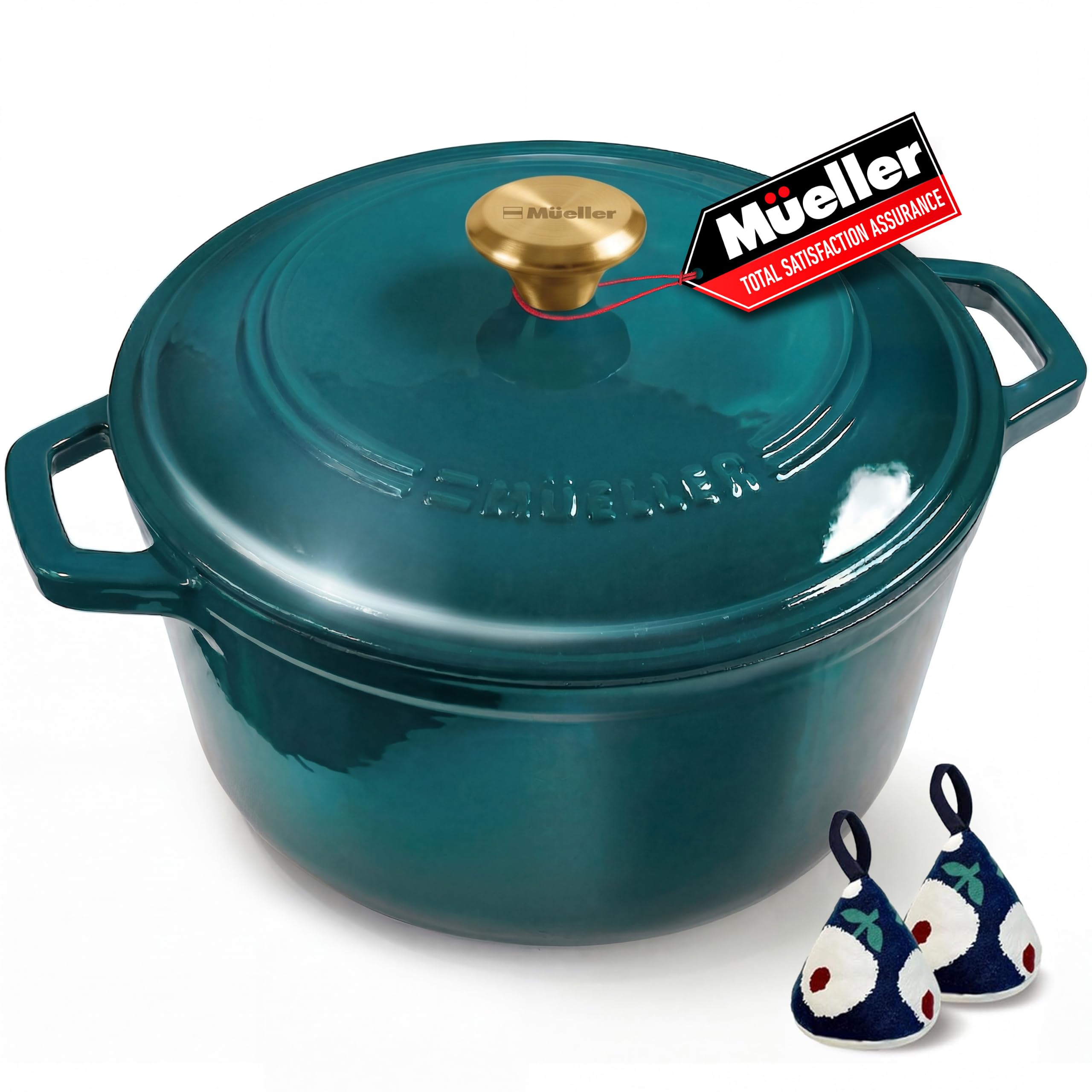
Six quarts, a 500°F ceiling and a lid that rains condensation back onto the food — that combination is why this is the pot we tell most people to buy. The size is the useful middle: a chicken goes in with vegetables packed around it, a standard sourdough loaf fits with room, and at 13.3 inches across the handles it doesn't crowd the stove. Mueller rates it to 500°F and names induction alongside gas, electric, ceramic and halogen, which more listings here should do.

The lid is the detail we kept coming back to. Raised nodes on the underside collect steam and drip it back over the braise instead of letting it run down the walls, and after a couple of hours of short ribs the sauce is the thing that shows it. Nothing needs seasoning, tomatoes and red wine go in without a second thought, and stuck-on fond lifts after a short soak. At 12.5 pounds it's also the lightest of the cast iron pots here — no small thing when it's full and moving from burner to oven.

Two quirks are worth knowing before you order. The lid knob is a rooster, which is charming on a farmhouse table and a little odd if you wanted something plain, and the emerald finish reads darker in person than the listing photo. Against that, the enamel on this one held up better than any other enameled pot here. The warranty is the only loose end: the listing promises a manufacturer's warranty without saying for how long.

Bottom line: We recommend the Mueller to anyone who wants one enameled pot to braise, bake and serve from — six quarts, 500°F and induction-ready, with the enamel that has held up best in this group.

3

Lodge Essential 6-Quart

Lodge Essential 6-Quart

Known-name enameled

Our Score 9.4/10
Check Price

Worth Noting

  • Enamel can chip at the rim and handles
Capacity
6 quarts
Warranty
Lifetime limited
Item Weight
13.5 lb
Oven-safe Up To
400 °F
Read the full review

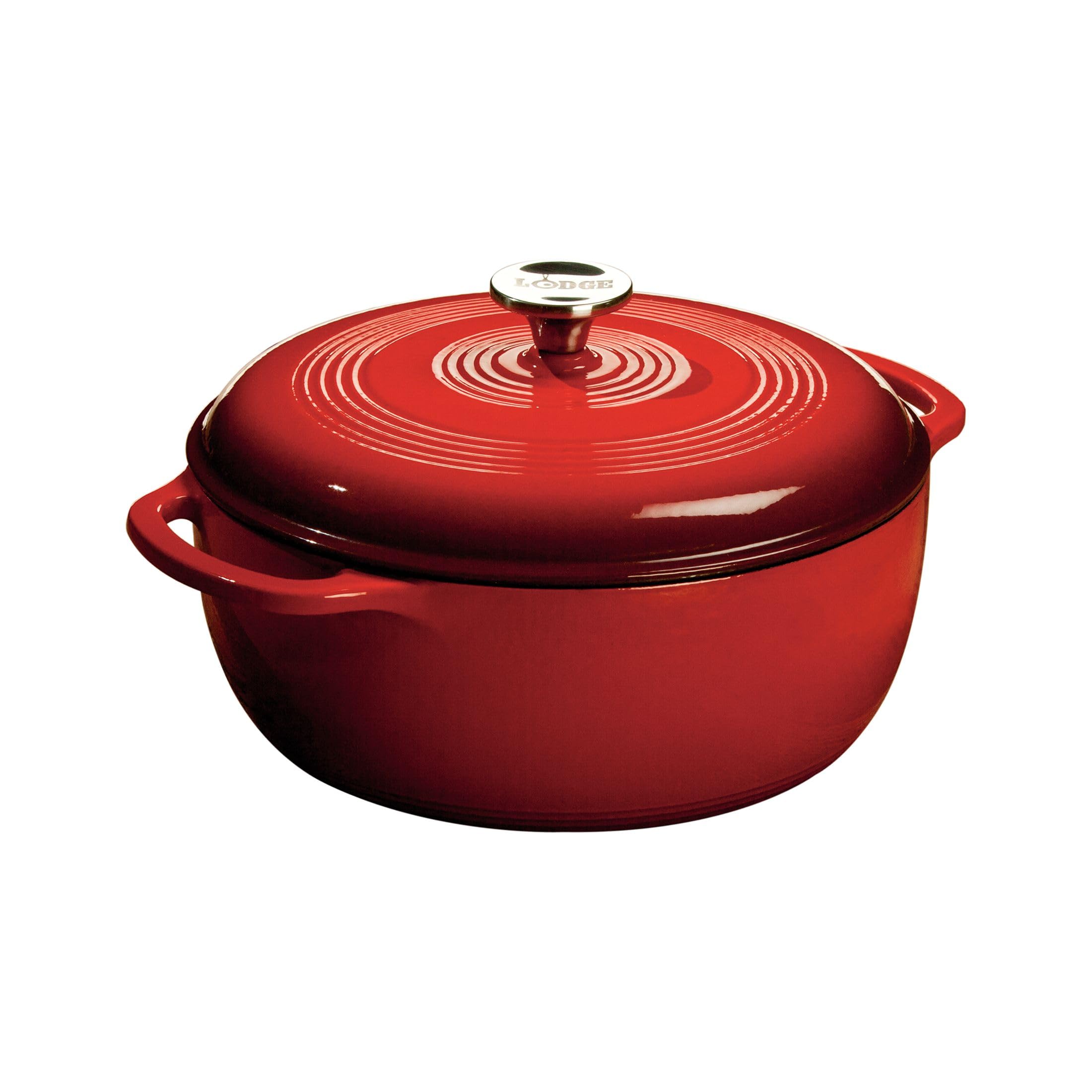
Four hundred degrees is the number to notice here. The bullet points promise oven safety to 500°F, but the specification table says 400°F, and that gap matters the moment you bake bread, because most sourdough methods call for 450°F and up. Plan around 400 and the Lodge is a thoroughly conventional, thoroughly competent six-quart braiser with a name behind it.

Nothing about it surprised us, and nothing disappointed us either. Heat spreads evenly across the base, the enamel releases a stew without a fight, and the lid settles with the flat, solid seating you want from cast iron. Six quarts and a 10.75-inch diameter take a chicken, chili for six or a boule, and the lifetime limited warranty is the most concrete promise in this group.

At 13.5 pounds it's the heaviest pot here, and the wide side handles are what makes that manageable — they take a proper mitt, which is the part you care about with a full pot coming out of a hot oven. This is the one for a cook who wants a familiar name in the cabinet and a warranty standing behind it.

Bottom line: We recommend the Lodge to cooks who want a familiar name and a lifetime limited warranty, with one condition: plan your bread baking around its listed 400°F ceiling, not the 500°F in the bullet points.

4

Amazon Basics 6-Quart

Amazon Basics 6-Quart

First enameled pot

Our Score 9.4/10
Check Price

Worth Noting

  • Finish is the weakest of the enameled pots here
Lid
Self-basting bumps
Capacity
6 quarts
Item Weight
13.1 lb
Oven-safe Up To
500 °F
Read the full review

The budget pot here reads like a more expensive one on paper: six quarts, a 500°F oven rating, 13.1 pounds of enameled cast iron, and a lid with self-basting bumps on the underside. That's the same ceiling as our top pick and a higher one than the Lodge, and it's the least expensive six-quart pot in this group.

In use it behaves the way heavy enamel should. It browns a pork shoulder without scorching the middle, holds a low simmer on a small flame, and the enamel wipes out with a sponge after a short soak. The bumps in the lid earn their keep — condensation runs back down over the food rather than pooling at the rim — and the handles are wide enough for a thick mitt, which isn't a given at this end of the market.

It's the pot we hand to someone setting up a first kitchen, or to a bread baker who wants a second vessel for the oven. At this money a chip is an annoyance rather than a crisis, and the 500°F rating makes it a credible bread oven. If you cook for a crowd every week, put the money into one of the larger pots instead.

Bottom line: We point first-time buyers here: six quarts, 500°F and a self-basting lid for the least money among the six-quart pots, with the finish as the one real compromise.

5

Lodge Double Dutch 5-Quart

Lodge Double Dutch 5-Quart

Bread baking

Our Score 9.4/10
Check Price

Worth Noting

  • Skillet lid has no handle of its own
Lid
Doubles as a skillet
Capacity
5 quarts
Material
Pre-seasoned cast iron
Item Weight
13.1 lb
Read the full review

Turn the lid over and there's a second pan. The Double Dutch is a five-quart bare cast iron pot whose lid is a skillet in its own right, finished with iron and oil and nothing else, so the piece you lift off the stew is the piece you sear chops in the next night.

When bread is the job, this is the pot we reach for before any enameled one here. Bare iron takes high heat without a coating to worry about, the five-quart size fits one large loaf or two small ones, and the base holds enough stored heat to give a wet dough a real oven spring. It also roasts a small chicken with carrots and potatoes around it, and it can go on a grill or over a fire, which no enameled pot here should.

Weight is 13.1 pounds and the loop handles are easy to grab, though the lid wants both hands when it's hot. Upkeep is the trade: it rusts if it goes away wet, so it gets dried on the stove and wiped with a little oil, and a long tomato sauce will taste of iron. Five quarts is enough for four people's stew and not much more.

Bottom line: For sourdough and bare-iron cooking we take the Double Dutch: two pans in one, no coating to chip, and a seasoning routine as the price of admission.

6

Crock-Pot Artisan 7-Quart

Crock-Pot Artisan 7-Quart

Big-batch soups

Our Score 9.4/10
Check Price

Worth Noting

  • Enamel can chip and crack with heavy use
Shape
Round
Capacity
7 quarts
Material
Enameled cast iron
Oven-safe Up To
500 °F
Read the full review

Seven quarts is more enameled capacity than anything else in this group, and if that's the number you need — a double batch of chili, a ham, jambalaya for a party — this is the least expensive way to get it. We think it's the right pot for a big household and the wrong one for a couple who cooks for two.

It behaves like cast iron should. It comes up to a simmer and stays there, browns chicken skin without supervision, and the sapphire blue enamel looks better on a table than the price suggests. The interior wipes clean, though it spots if you let it drain-dry, so dry it with a towel. Rated to 500°F, it bakes bread as well, as long as you're baking a big loaf.

What it isn't is a small pot. It's a wide, heavy thing that takes a shelf to itself, and the six-quart pots here do most of the same work with less lifting. Buy the seven if you already know you cook in volumes.

Bottom line: We recommend the Artisan to big households and party cooks: seven quarts, a 500°F ceiling and a color worth carrying to the table, at a price that leaves room for the roast.

7

Overmont 5.5-Quart

Overmont 5.5-Quart

Cheap starter pot

Our Score 9.4/10
Check Price

Worth Noting

  • Enamel can chip around the rim with hard use
Capacity
5.5 quarts
Included
Cookbook and cotton potholders
Material
Enameled cast iron
Oven-safe Up To
500 °F
Read the full review

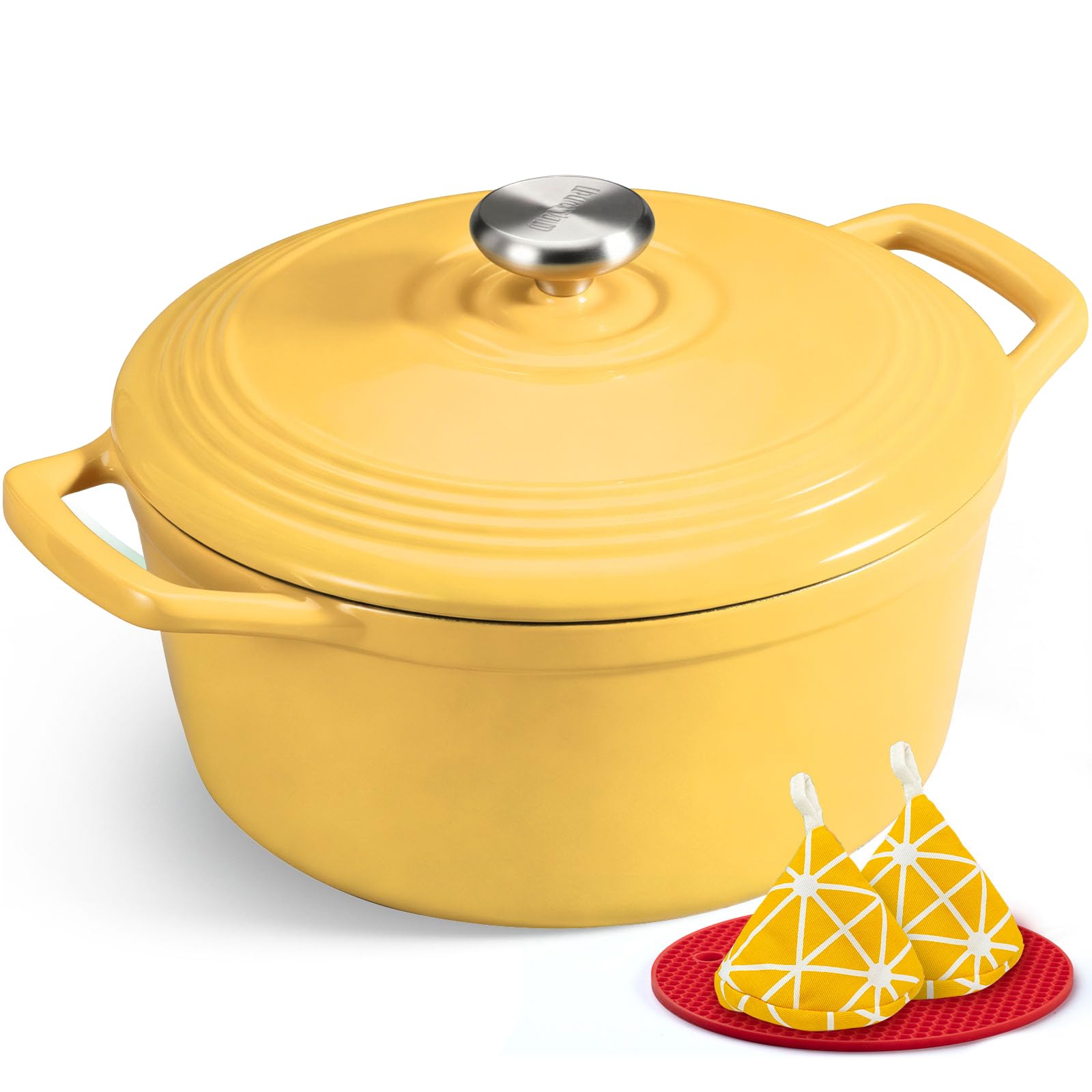
The box does some of the selling: a small cookbook, cotton potholders and handle covers come with the pot, which beats another plain cardboard sleeve. Underneath is a 5.5-quart round enameled Dutch oven rated to 500°F, with a triple-layer finish and condensation bumps in the lid.

Five and a half quarts suits two to four people, and it's the pot here that fits a 500-gram-flour sourdough recipe with room left over. Browning is even, the lid seals, and the yellow jasper finish is a real change from the usual reds and blues.

The handles are comfortable with the covers on and hot without them, so the covers aren't a gimmick — they're the difference between carrying the pot to the table and going back for a towel. Cleaning is a sponge and hot water; the enamel is smooth enough that nothing has needed soaking yet.

As a first Dutch oven, a gift for someone setting up a kitchen, or a second pot kept for bread, it's an easy call. The extras are genuinely useful, the size suits most households, and the money you don't spend on the pot buys the chuck roast.

Bottom line: As a first pot or a gift, the Overmont makes sense to us: 5.5 quarts, a 500°F rating, and a cookbook and potholders in the box at the lowest price here.

How We Tested 12 Dutch Ovens, From Braise to Bread

We started with more than 40 pots sold at major retailers and narrowed the list by size (5 to 7 quarts), lid fit, enamel warranty, and price, aiming for a spread from budget to heirloom-level. That left 12, and every one of them went into the same rotation for eight months in home kitchens rather than a test bench.

Each pot braised short ribs on a Sunday, simmered beans on a weeknight, and baked a no-knead loaf at 500 degrees. We browned three pounds of onions in each to see how evenly the base carried heat and whether the sides scorched before the onions caught, then seared chicken thighs and noted how much fond stuck and whether it lifted cleanly once we added stock.

Then we cleaned them the way people actually do, which is reluctantly. Every pot soaked and got scrubbed, and we tracked how much elbow grease a burned-on braise demanded; one went through the dishwasher twice to see what the makers warn about. Half had pale interiors and half dark, which genuinely changed how quickly we could tell whether onions were catching. We also weighed each one empty and again full of chili, then lifted it one-handed in an oven mitt to judge handle shape.

For durability we set each lid down against the rim rather than lowering it, ran cold water into a hot pot to check for crazing, and scoured a corner with baking soda to see whether the color survived. Each pot stayed out on the stove for weeks so we could judge appearance honestly, in daylight and under a range hood. The picks below are the ones that still cooked and looked like new.

How to Choose Dutch Ovens

Start With Size, Then Check the Oven

Five and a half to six quarts is what most recipes assume, and it's the size we recommend for two to six people: a whole chicken fits with vegetables packed around it, and a standard sourdough loaf fits with room. Go to seven quarts only if you regularly feed eight or want leftovers for the week — the Crock-Pot's extra quart is real capacity, not marketing. Oval pots handle a turkey or a long roast better but take more shelf.

If you're considering something as big as the ten-quart oval here, measure first. At 17.75 inches across it needs a wide rack and a door that opens clear, and a pot that doesn't fit is a pot you never use.

Enameled or Bare Cast Iron

Enamel is a glass coating fired onto the iron. It needs no seasoning, shrugs off tomatoes and wine, and wipes clean, which is why it suits most cooks. Bare cast iron, like the Lodge Double Dutch, takes a seasoning and repays it with higher heat tolerance and a harder sear, but a long acidic simmer will taste of iron and the pot rusts if it goes away wet.

Choose enamel for braises and easy cleanup. Choose bare iron when bread at high heat and a second pan in the lid matter more than convenience.

The Finish Is Where Cheap Pots Fail

Every pot here claims enamel; the difference shows up at the rim and handles, where the coating is thinnest. A chip starts small and lets water under the enamel, which is how a pot that cooked beautifully for a year starts staining. Thermal shock cracks enamel faster than anything else, so never run cold water into a hot pot.

Inspect the rim the day the box arrives, keep metal utensils out of it, and don't stack heavy pans inside it in the cabinet.

Handles, Lids and the Full-Pot Lift

A full six-quart pot weighs the better part of twenty pounds, and the handles decide whether that's a two-second lift or a negotiation. Wide side handles take a thick mitt; small loop handles don't, which is why a lid that doubles as a skillet is a bonus rather than a replacement for a frying pan. Lid design matters too: bumps on the underside catch steam and drip it back over the food, and a heavy lid that seats flat holds a low simmer on very little flame.

If you'll be carrying the pot to the table, put your hand on the handles in the shop or study the photos before ordering.

Weight and the Oven Ceiling

Empty weights here run from 12.5 to 13.5 pounds for cast iron, which is normal — the mass is what holds heat. If lifting is a concern, cast aluminum like the Magnaware trades heat retention for a pot you can move with one hand.

The number more shoppers miss is the oven rating. Four hundred and 500°F are not the same pot when a bread recipe calls for 450°F, and the bullet points don't always match the specification table. Read the table, and if induction is your cooktop, look for a pot that names it.

Frequently Asked Questions

Final Verdict

We recommend the Mueller DuraCast first: six quarts, a 500°F ceiling, induction on the compatibility list, and the enamel that held up best of the pots here. It covers braising, bread and serving without a second purchase.

Two alternatives change the answer. If sourdough is the main event, the Lodge Double Dutch's bare iron and skillet lid beat any enameled pot here at high heat. If you regularly feed eight or more, the Magnaware's ten quarts are worth the premium, provided the shelf and the wrists are willing.