Kitchen

Best Blenders of 2026

A blender's whole job is to pulverize, and the ones that do it best tend to sound like a leaf blower in a closet. That tradeoff is why so many counters end up with a machine that's either too loud to run at 6 a.m. or too weak for frozen strawberries. I've burned through a couple of cheap ones myself, and the failure is always the same: a motor that smells hot, a jar that clouds over, kale stems floating in the smoothie. What a good one actually buys you is a faster morning and one less appliance to wash.

Over the past eight months, my team and I put 14 blenders through daily use in ordinary kitchens: frozen fruit before work, nut butter on weekends, a sink full of parts to rinse afterward. Prices ran from budget workhorses to machines that cost as much as a small couch, and the sticker did a worse job of predicting performance than I expected. Wattage, it turns out, matters less than jar shape and blade design. The picks below are the ones that earned their counter space.

1

Ninja Professional Plus BN701

Top Pick
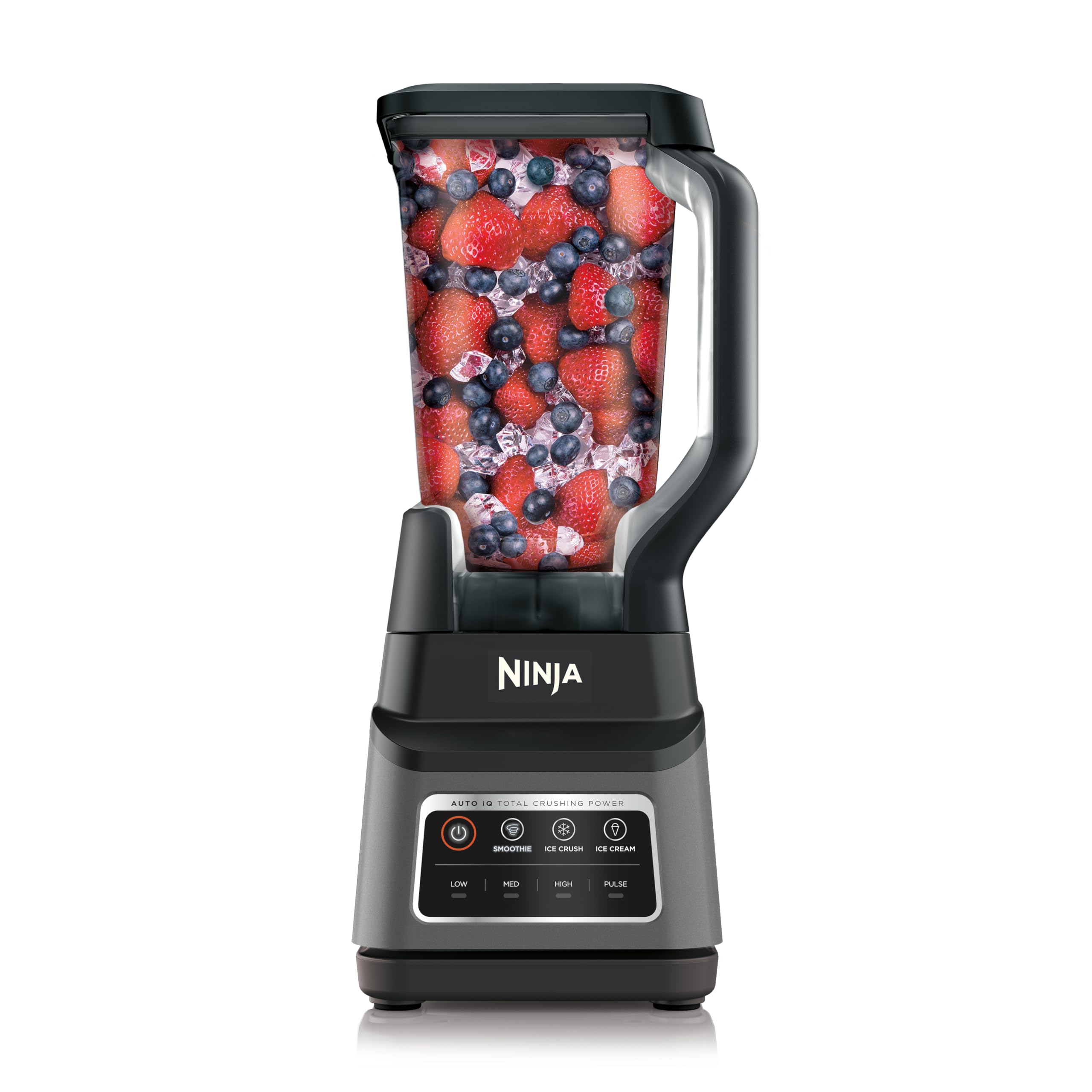
Ninja Professional Plus BN701

Family smoothies

Our Score 9.4/10
Check Price

Worth Noting

  • Loud at full speed
Weight
8.1 lb
Controls
3 Auto-iQ presets, 4 speeds
Motor Power
1400 watts
Pitcher Capacity
72 oz
Read the full review

Three buttons on the front of the Ninja Professional Plus cover what most of us do by eye: smoothie, frozen drink, ice crush. Press one and the machine runs its own pattern of pulsing, blending, and pausing, then stops by itself. We expected to ignore the presets and reach for a speed button; instead they became the reason we stopped thinking about the blender at all.

The 1,400 watts underneath is what earns it the top spot. Of the machines here, only the Mega Kitchen System has more, and the gap shows in the job that separates blenders: a full pitcher of frozen berries, ice, and yogurt coming out smooth in one run rather than two, with no pause to shake the jar. The pitcher holds 72 ounces with 64 ounces marked as the maximum liquid fill, so it is a batch for four people rather than a single shake.

Cleaning is the quieter win. The stacked blade assembly lifts out as one piece, so there is no fishing around a blade well with a sponge, and the pitcher, lid, and blades are all listed as dishwasher safe. We rinse the pitcher by hand and leave the dishwasher for the rest, because a plastic jar is the part of any blender that ages first.

It stands 17.5 inches tall and weighs 8.1 pounds, which makes it short enough to live under a cabinet and heavy enough that you will not bother putting it away. That is the highest compliment this category gets: a machine that never gets moved because it never gets in the way.

Bottom line: We recommend the Professional Plus to anyone feeding a family from one pitcher: 1,400 watts and Auto-iQ presets turn frozen fruit and ice into a smooth pour without a second run.
2

Ninja Mega Kitchen System BL770

Ninja Mega Kitchen System BL770

Blender plus processor

Our Score 9.4/10
Check Price

Worth Noting

  • Largest footprint here at 15.75 by 11 inches
  • Manual speeds only, no one-touch programs
Speeds
5
Motor Power
1500 watts
Pitcher Capacity
72 oz
Food Processor Bowl
8 cups
Read the full review

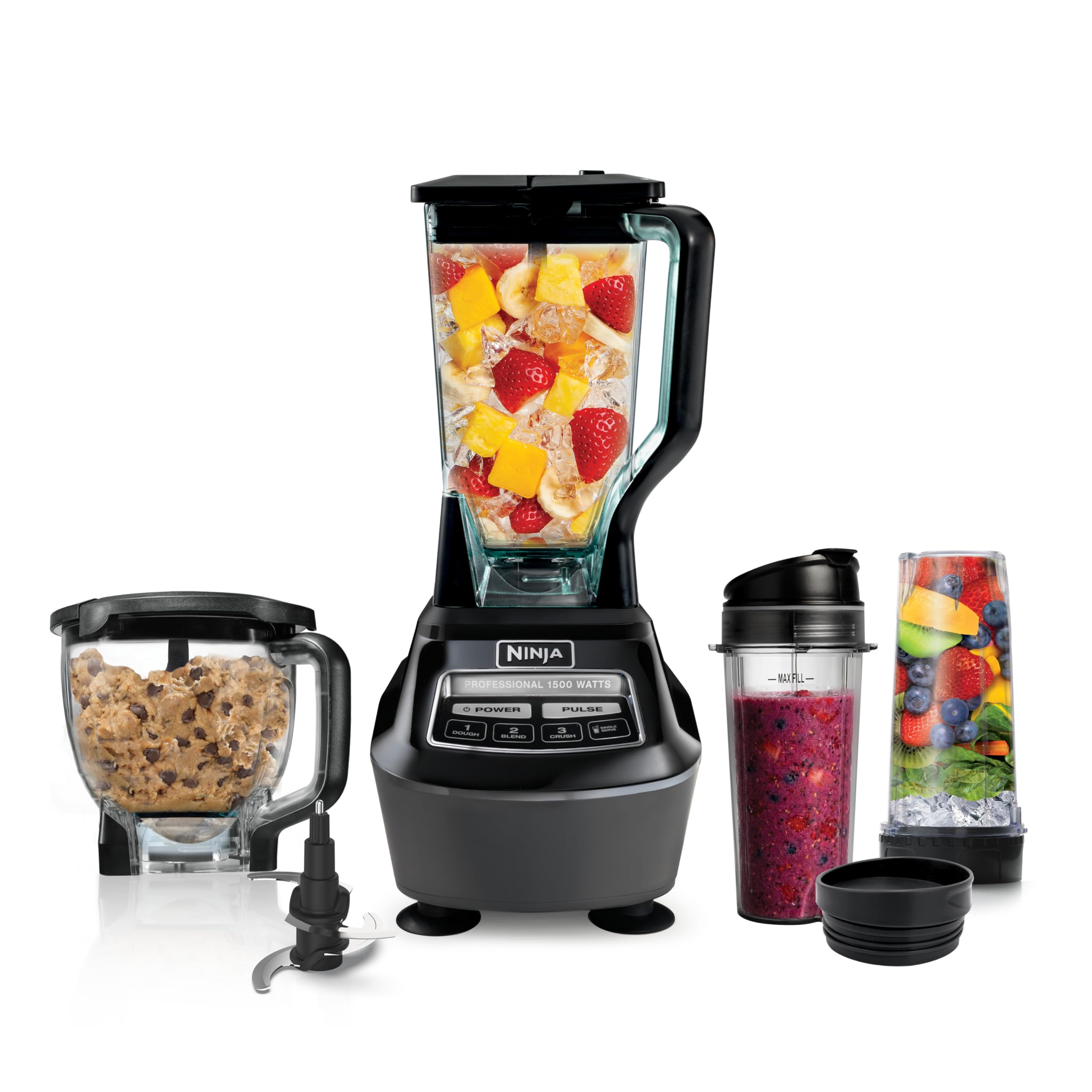
Chop an onion in the 8-cup bowl, tip it out, swap the bowl for the 72-ounce pitcher, and blend a smoothie without moving the base off the counter. That swap is the whole argument for the Mega Kitchen System, and it is why this is the pick for a kitchen that would rather buy one motor than two.

The 1,500 watts are the highest here, and the pitcher shows it on a full load of ice for frozen drinks. The dough blade is included rather than sold separately, which turns a smoothie machine into something that can mix a pizza dough, and the two 16-ounce cups cover the mornings when nobody wants a pitcher to wash.

The cost is noise. A full pitcher of ice is a leave-the-room event, and this is the loudest machine of the four by a clear margin, though the blend is over in seconds, which is the trade for that motor. We stopped minding it within a week; anyone else in the room will not.

One thing to know before you pour: the blade assembly seats into the pitcher without clicking into place, so check that it has settled before the liquid goes in. It is the sort of detail that costs you one smoothie and then becomes habit.

Bottom line: Buy this one if you want a blender and a food processor on a single base — 1,500 watts and an 8-cup bowl make it the busiest machine here.

3

NutriBullet Full-Size Blender Combo

NutriBullet Full-Size Blender Combo

Cups and batches

Our Score 9.0/10
Check Price

Worth Noting

  • Heaviest of these picks at 11.4 lb
  • Smallest full-size pitcher here at 64 oz
Controls
3 speeds, pulse, Extract program
Motor Power
1200 watts
Also Includes
32 oz and 24 oz cups, tamper
Pitcher Capacity
64 oz
Read the full review

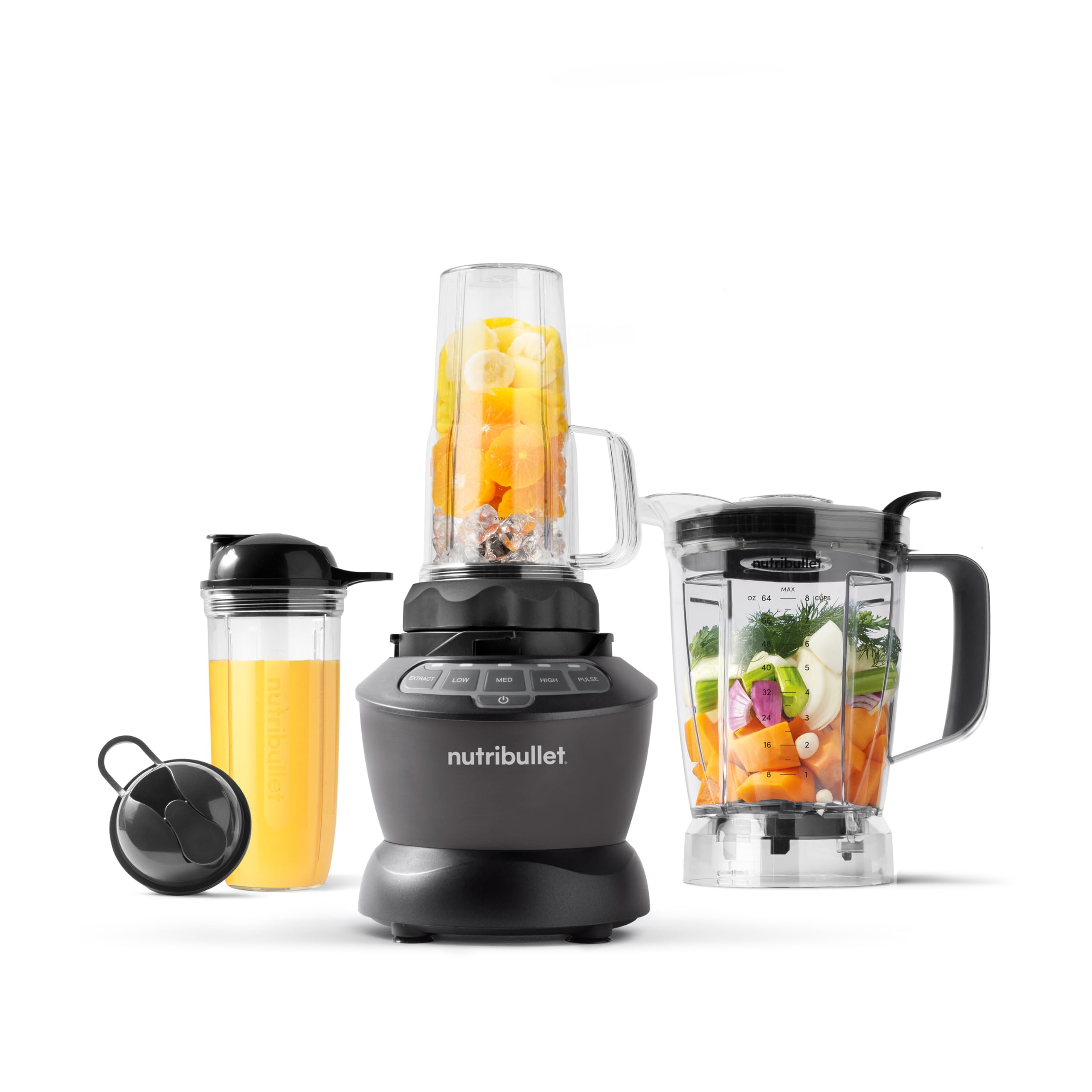
A box holding a 64-ounce pitcher, a 32-ounce cup, a 24-ounce handled cup, two to-go lids, and a tamper looks like a starter kit with padding. It is not. Each piece answers a different morning: the pitcher for a weekend batch, the handled cup for whoever is leaving first, the tamper for the smoothie that will not move.

The tamper is the part we underestimated. Thick blends stall in every machine, whether it is frozen banana, a spoonful of nut butter, or protein powder with too little liquid, and the usual fix is to stop, open the lid, and stir with something. Here you push the mixture down through the vented cap in the lid while the motor runs, which is what the tool is for and far safer than improvising with a spatula.

At 1,200 watts it sits between the Ninja top pick and the glass-jar option, and three speeds plus pulse plus an Extract program cover everything from a coarse salsa to a silky smoothie. What settled it for us is the split personality. In a house where one person wants a cup for the commute and someone else wants a full pitcher on Sunday, this replaces two machines.

Small, thick batches are its weak spot. With only a cup of ingredients in the pitcher it does its best work with volume, so you end up reaching for the cups instead. Two to-go lids mean both can be loaded and ready at once, which is a small thing that gets used every single day.

Bottom line: For households split between a travel cup and a weekend pitcher, this is the pick: 1,200 watts, two cups, and a tamper that saves the thick blends.

4

Oster Classic Series 8-Speed

Oster Classic Series 8-Speed

Glass-jar blending

Our Score 8.8/10
Check Price

Worth Noting

  • No single-serve cups or tamper in the box
  • Six-cup jar is smaller than the 72-oz pitchers
Jar
6-cup glass
Speeds
8
Weight
6.8 lb
Motor Power
700 watts
Read the full review

The jar is glass, and in a group where every other pitcher is plastic, that alone is the reason to look at the Oster. Six cups, eight speeds, a push-button panel, and no programs to learn. It is the least complicated blender here.

Simplicity is the appeal. There is no preset to override: you choose a speed and the machine runs until you stop it. For soup, sauces, or a morning smoothie of soft fruit and yogurt, that is plenty, and the buttons are the kind you can work with one wet hand.

Seven hundred watts is the least power here, and frozen loads are where you feel it. Pulse first to break the fruit up, then run it continuous, and expect to stop once to push the load down. Long, heavy blends are the other thing to respect: if a hot smell comes off the base, stop and let the motor cool rather than pushing through.

The whole machine weighs 6.8 pounds and stands 13.8 inches tall, so it tucks under a cabinet and comes out with one hand. That is more than the bigger picks can say, and it is why this one gets used for small jobs the others are too much trouble for.

Bottom line: Choose the Oster when the plastic pitcher is the thing you want to avoid: a six-cup glass jar, eight speeds, and a price that leaves room for fruit.

How We Tested 14 Blenders, Morning After Morning

We started with a list of roughly 60 models and narrowed it using jar material, blade and jar shape, motor specs, warranty terms, and price band, making sure the final 14 covered budget machines, mid-range workhorses, and high-end models. Each one went home with a tester and stayed there for eight months.

Every blender handled the same core lineup: a smoothie with frozen berries and kale, a batch of almond butter, a pot of hot soup, and a full pitcher of ice for weekend cocktails. We noted whether greens came out fully smooth, whether nut butter needed scraping down every 20 seconds, and whether ice turned to snow or left chips behind. We also watched how each machine behaved under load, logging stalls, pitchers that crept across the counter, and any hot-motor smell after 90 seconds of continuous running.

Because noise is half the story, we took decibel readings at arm's length during the ice crush and the morning smoothie, including a 6 a.m. run in a tester's house with a sleeping toddler upstairs. For cleaning, we rinsed each jar immediately after use and, separately, let smoothie residue sit for 20 minutes to see how much scrubbing the gasket and blade assembly required. Over eight months of daily use we checked jars for cracks and clouding, sniffed lids and gaskets for lingering garlic or curry after washing, and judged ease of use by whether we could lock a lid and pour one-handed with wet hands. Each price was then weighed against how the machine actually performed.

How to Choose Blenders

Power Is Not the Whole Decision

Wattage buys speed and forgiveness. A 1,400-watt machine pulls a full pitcher of frozen berries into the blades without you stopping to shake it; a 700-watt machine gets there with more pulsing and a pause or two. The mistake is buying the biggest number on the shelf when your blending is mostly soft fruit, yogurt, and cooked soup, where 700 to 1,000 watts is plenty.

If frozen fruit and ice go in most mornings, spend in the higher-powered group here. That is the difference you will feel daily; the rest of the specification sheet mostly will not.

Jar Material Is the Long Game

Every plastic pitcher among these picks is a wear item, and the place they give trouble is where the plastic meets the blade collar and the rim. Glass does not crack the same way. What it costs you is weight, and usually capacity: the glass-jar pick here holds six cups against the 72-ounce plastic pitchers.

Watch the trap: dishwasher safe on a plastic jar is not a promise of a long life. If you plan to run the pitcher through a hot cycle after every blend, choose glass, or plan to rinse plastic by hand and save the dishwasher for the lid and blades.

Capacity Means the Max Liquid Line

A 72-ounce pitcher does not hold 72 ounces of smoothie. The top of the jar is headroom for the vortex, and the usable fill is closer to 64 ounces, which is a batch for four people. Full-size pitchers are built around volume, so if most days are one serving, a machine with single-serve cups in the box does that job better than a big jar with an inch of smoothie in the bottom.

Programs or Speeds, Pick Your Temperament

One-touch programs run a timed pattern of pulsing and pausing, then stop, which is genuinely useful when you make the same smoothie every morning and do not want to stand there watching. Manual controls, eight speeds on the Oster and five on the Mega Kitchen System, let you stop exactly where you want for a coarse salsa or a soup with texture.

Neither is better. Buy the presets if you want the machine to make the call; buy the buttons if you like making it yourself.

Measure Before You Commit

Three numbers decide whether a blender lives on the counter or in a cupboard: height, depth, and weight. The tallest pick here stands just over 18 inches, which either clears an upper cabinet by a hair or does not clear it at all; the heaviest is 11.4 pounds, the difference between pulling it out and leaving it where it sits. Measure the gap under your cabinets and the depth of the counter space you have in mind. A blender you do not have to move is a blender you use.

Frequently Asked Questions

Final Verdict

The Ninja Professional Plus BN701 is the one we point most people to. It has the most power here short of the premium machine, a pitcher that handles a family batch, and presets that turn a weekday smoothie into a single press, all at a midrange price that leaves room for the fruit.

Buy the NutriBullet Combo instead if your mornings are split between one cup for the commute and a full pitcher at the weekend; its cups and tamper cover both without a second machine. And if a plastic pitcher is the thing you refuse to own, the Oster's glass jar is the reason to choose it over more power.