Storage

Best Bookshelves of 2026

A bookshelf has one job—hold your books without looking like it might not—and most of the frustration starts before the first novel goes on. You haul the box upstairs, decode a wordless instruction sheet, then spend the next year watching a shelf bow under a few hardcovers. The right one disappears into the room: it fits the wall, assembles without a second person, looks intentional in daylight, and stays square under a shelf of art books. That last part is where cheap ones reveal themselves.

I've built enough flat-pack furniture to know a low price often shows up later as a rough edge, a flimsy back panel, or a shelf that sags by spring. I gathered eight bookshelves, from compact two-shelf units to full wall bookcases, and we spent 10 months living with them in bedrooms, living rooms, and a hallway. The detail that matters isn't on the box: how the shelves are supported. Well-placed brackets and a rigid back panel do more for sturdiness than extra height. The picks below earned their floor space.

1

IRONCK Triple Wide 5-Tier

Top Pick
IRONCK Triple Wide 5-Tier

Large collections

Our Score 9.6/10
Check Price

Worth Noting

  • 68.2 lb frame needs a second person
  • Open back leaves the wall visible
Frame
MDF and iron
Dimensions
11.8"D x 69.3"W x 69.3"H
Open Shelves
14
Shelf Capacity
66 lb per shelf
Read the full review

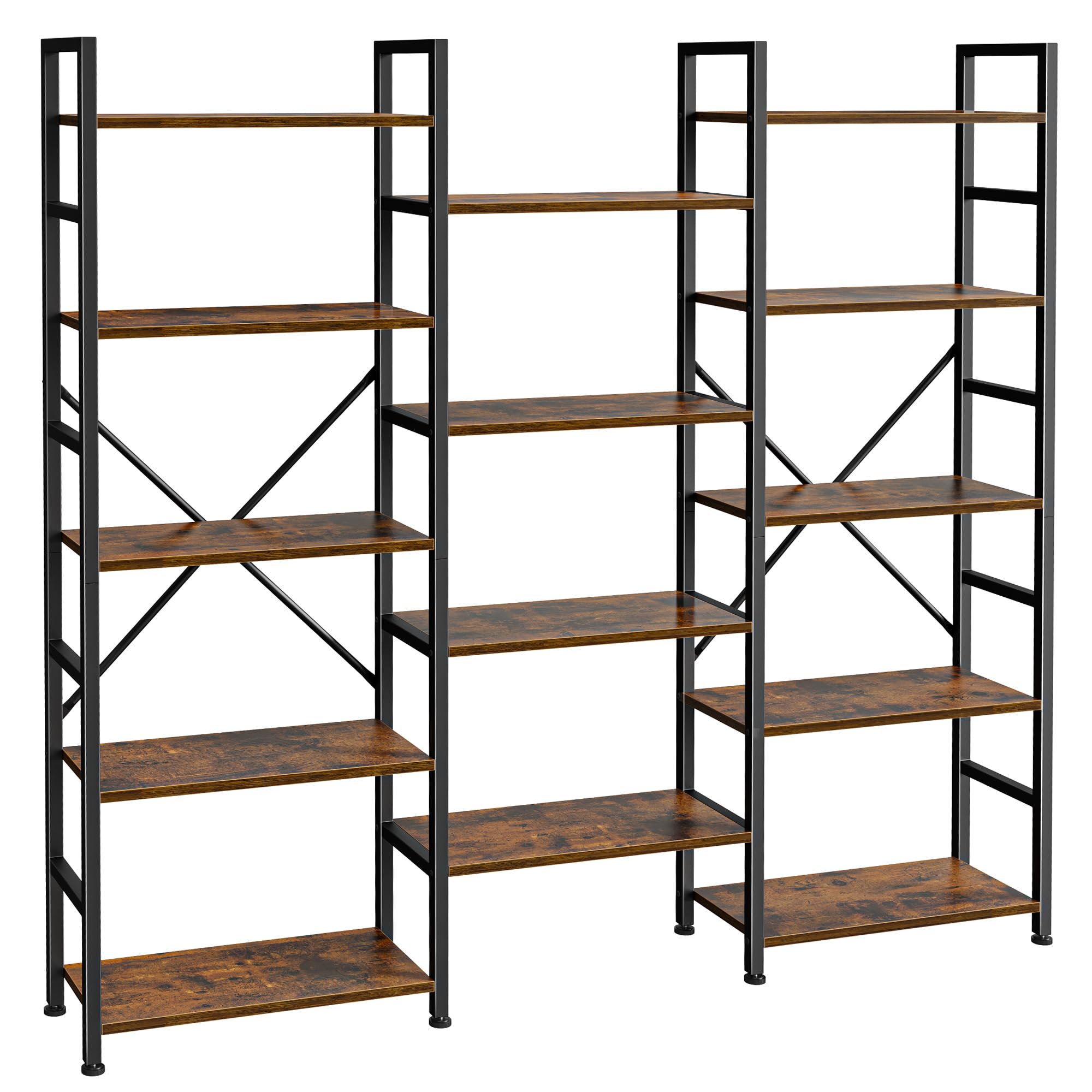
The IRONCK Triple Wide is for the reader who has stopped pretending a normal bookcase will do. At 69.3 inches wide and 69.3 inches tall, it is almost a square of shelving, and the 14 open shelves give a collection room to spread out instead of stacking sideways. It is a piece of furniture you plan a room around, not one you tuck into a gap.

The 11.8-inch depth is deeper than our top pick, which helps with oversized books and display objects, and each shelf is rated for 66 pounds. We were impressed by how much weight that suggests for hardcovers and by the MDF-and-iron frame, which looks more substantial than the usual thin-panel bookcase.

What we minded is the weight of the thing itself: 68.2 pounds before you add books. Build it near its final spot and recruit a second person for the upright stage; this is not a shelf you flip around alone. The payoff is a stable, generous wall unit that can handle a lifetime of acquisitions, provided you use the tip-over restraint.

We think it earns its higher price for a large collection, but it is not the right first bookshelf for a small room. It needs a wall, a helper, and a commitment to keeping the shelves organized. If you have all three, it is the most capable large shelf in this group.

Bottom line: We recommend it for a dedicated book wall or a large collection: the nearly square footprint turns a blank wall into serious storage, and each shelf carries real weight.
2

SUPERJARE Triple 14-Shelf

SUPERJARE Triple 14-Shelf

Main book wall

Our Score 9.4/10
Check Price

Worth Noting

  • Particle-board shelves, not solid wood
Frame
Steel and particle board
Dimensions
9.5"D x 59.4"W x 67.5"H
Open Shelves
14
Shelf Capacity
70 lb per shelf
Read the full review

The number that sold us on the SUPERJARE is 9.5 inches. That is the depth, and it means this 59.4-inch-wide bookcase sits close to the wall instead of turning a living room into a corridor. At 67.5 inches tall, the top shelf is still reachable without a step stool, which is not true of the 84-inch towers here. We call it the best default for a main book wall.

The 14 shelves do the heavy lifting. Each is rated for 70 pounds, so a run of hardcovers is not a problem, and the shelves adjust so you can size a gap for art books or paperbacks. We loaded the lower shelves with the heaviest volumes and used the upper ones for lighter books and objects; that is the arrangement this shelf is built for.

We were also glad to see adjustable feet. On a floor that is not perfectly level, they let you settle the frame before you anchor it, and small details like that make a flat-pack bookcase feel less temporary. The steel frame and particle-board shelves are a sensible mix at this level: rigid where it matters, without the weight of solid wood.

The trade-off is openness. Everything is on display, dust included, and there is no back panel or cabinet door to hide clutter. Anchor it to the wall, keep plants on a tray, and accept that this is a shelf for showing your books rather than concealing them. For a main wall, that is a fair exchange.

Bottom line: We think this is the best bookshelf for most homes: wide enough for a real collection, shallow enough for a hallway, and adjustable where it counts.

3

HOMISSUE 7-Tier Tall

HOMISSUE 7-Tier Tall

Tall narrow walls

Our Score 9.4/10
Check Price

Worth Noting

  • 84.4-inch height is a two-person build
Frame
Metal and engineered wood
Dimensions
11.8"D x 23.6"W x 84.4"H
Open Shelves
7
Leveling Feet
Four adjustable feet
Read the full review

At 84.4 inches tall, the HOMISSUE makes a narrow wall feel like a library. The footprint is only 23.6 inches wide and 11.8 inches deep, so it can stand in a hallway, beside a desk, or in a bedroom corner without blocking the room. We noticed the height first, but the width is what makes it useful in a small home.

Seven open shelves give you a lot of vertical storage, and the metal frame with the X-shaped back looks more architectural than most flat-pack towers. We were struck by how much nicer it looks in person than the usual black-box bookcase; the rustic brown panels and exposed frame give it some warmth. It is the kind of shelf that draws the eye up rather than closing a room in.

The catch is that an 84-inch bookcase is a commitment. Anchor it, keep the heaviest books low, and expect to spend some time on assembly because there are plenty of fasteners and panels. We wished for a second pair of hands during the upright stage, even though the shelf itself is not especially wide. On a solid wall, that effort buys you seven usable shelves in a space that could not take a wide unit.

We recommend it for a tall, narrow book collection, not for someone who wants a low display shelf under a window. It is also a better fit for a dedicated reading corner than a busy hallway where people brush past. If the wall is there, this is a lot of bookcase for the floor space it takes.

Bottom line: We think it is the tall narrow pick to beat: seven shelves, a stable metal frame, and a footprint that lets a small room keep its floor.

4

VASAGLE Tree 13-Shelf

VASAGLE Tree 13-Shelf

Small-space library

Our Score 9.2/10
Check Price

Worth Noting

  • Runs smaller than the photos suggest
  • Diagram-led instructions take patience
Dimensions
9.8"D x 33.9"W x 55.1"H
Anti-tip Kit
Included
Compartments
13
Total Capacity
176 lb
Read the full review

The VASAGLE tree bookcase is the one guests ask about before they realize it is holding books. The 33.9-inch width and 55.1-inch height are modest, but the branch-like compartments turn a blank corner into a display. We liked it most in a living room where a conventional bookcase can feel like a filing cabinet.

Thirteen compartments is more storage than the silhouette suggests, and the 9.8-inch depth keeps it from swallowing the floor. The total weight capacity is 176 pounds, which is enough for a mixed load of books, plants, and objects, though the compartments are better for paperbacks and trade hardcovers than oversized art books. The side panels and two back panels also help keep books from sliding out.

The part to check before buying is size. The photos make the tree look larger than it is, and the 55.1-inch height puts the top compartments below eye level for many adults. Measure the wall and decide whether you want a display piece or a full-height library. The instructions are mostly diagram-led, so sort the numbered parts before you start.

We keep coming back to it for renters and small apartments because it does two jobs at once: storage and a bit of sculpture. It is not the shelf for a serious hardcover collection, but it is the one we choose when the room needs charm as much as capacity. That is a narrower brief, and it fills it well.

Bottom line: We recommend the VASAGLE for a small room that needs storage with personality: 13 compartments, a shallow footprint, and a shape that makes the most of a corner.

5

NUMENN 5-Tier

NUMENN 5-Tier

Apartment book nook

Our Score 9.2/10
Check Price

Worth Noting

  • 30 lb per shelf limits heavy art books
Frame
Metal and wood panels
Dimensions
11.81"D x 23.6"W x 60.4"H
Open Shelves
5
Shelf Capacity
30 lb per shelf
Read the full review

The NUMENN is the pick we reach for when the goal is a real bookcase on a small budget, not a piece of heirloom furniture. It is 23.6 inches wide and 60.4 inches tall, with five open shelves and a metal frame, and it looks tidy rather than cheap in a bedroom or home office. We call it the sensible starter shelf.

Each shelf is rated for 30 pounds, and the unit as a whole is light enough at 25.3 pounds that one person can move it before loading. That is a useful quality in a rental: you can shift it without emptying the whole thing. The 11.81-inch depth fits trade hardcovers and most novels, and the closed back and fall-prevention baffle help keep books from pushing through.

The 30-pound limit is the honest catch. It is fine for paperbacks and ordinary hardcovers, but a row of heavy art books belongs on the bottom shelf or on a sturdier unit. Assembly is straightforward rather than quick; the parts are labeled, but there are enough of them that you should set aside an evening. Anchor it if you have children or pets.

For a first apartment or a teenager's room, that is a good trade. The NUMENN does not pretend to be a forever bookcase, and it does not need to be. It holds a real collection, looks neat, and leaves money for the books.

Bottom line: We think it is the value pick for apartment book storage: a narrow five-shelf frame that holds a respectable collection without demanding a big budget or a big wall.

6

IRONCK 6-Tier

IRONCK 6-Tier

Narrow tall storage

Our Score 9.2/10
Check Price

Worth Noting

  • 22 lb shelf limit rules out heavy art books
Dimensions
9.3"D x 23.8"W x 70.8"H
Open Shelves
6
Shelf Capacity
22 lb per shelf
Tip-over Restraint
Included
Read the full review

The IRONCK 6-Tier is what we think of as the hallway bookcase: 23.8 inches wide, 9.3 inches deep, and 70.8 inches tall. It stands close to the wall, so it does not turn a passage into an obstacle course, and the six shelves give a paperback collection room to grow. The vintage black finish is plain enough to disappear and dark enough to look intentional.

Compared with the wider IRONCK Triple, this one is a different purchase. The triple is for a collection that needs a whole wall; the 6-Tier is for a specific slice of wall and a budget that has to cover books too. You give up width and per-shelf capacity, not the tall, narrow usefulness that makes both shelves work.

The 22-pound shelf rating is the number to watch. That is fine for standard hardcovers and paperbacks, but not for a row of coffee-table books. We also noted that a tall, shallow unit can sway before it is anchored, so use the tip-over restraint and keep the heaviest volumes low. The assembly is manageable if you sort the labeled parts first and give yourself room to lay the frame down.

We like it best in a bedroom, a hallway, or a teen room where the bookcase is part of the background rather than the main event. It is not the shelf for a collector with oversized volumes, but it is a sensible way to add six shelves without adding a lot of floor space.

Bottom line: We recommend it for a narrow wall where every inch counts: six shelves, a shallow footprint, and a price that leaves room for more books.

7

LEYAOYAO 7-Cube

LEYAOYAO 7-Cube

Mid-century corners

Our Score 9.0/10
Check Price

Worth Noting

  • Plastic legs undercut the wood look
  • 35 lb maximum limits heavy books
Finish
Glossy brown
Dimensions
9.45"D x 31.5"W x 43.3"H
Open Cubes
7
Weight Capacity
35 lb maximum
Read the full review

The LEYAOYAO is the rare cube shelf that does not look like a dorm-room afterthought. The crisscross partition and glossy brown finish give it a mid-century silhouette, and at 31.5 inches wide and 43.3 inches tall it fits under a window or against a short wall. We liked how the seven open cubes break up a small collection instead of turning it into a solid block.

We think it earns its place on style first and storage second. The 9.45-inch depth is shallow enough for a hallway, and the open cubes are good for books, records, and small plants. The legs are plastic, though, and that is the detail that keeps it from feeling as grown-up as it looks in the photos. On carpet, plan to level it carefully.

The 35-pound weight capacity means this is not the shelf for a heavy hardcover collection. Keep dense books on the bottom row, use the upper cubes for lighter objects, and anchor the unit if it will be in a child's room. The open cubes also show every wire and stray object, so baskets or matching book sets help.

For a rental or a first apartment, the compromise makes sense: you get a piece that looks considered without paying for solid wood. It is not the last bookshelf you will ever buy, but it is one of the few here that makes a small room look better before you have filled it.

Bottom line: We recommend it for a small living room or bedroom that needs a shelf with mid-century character, not a wall-filling library.

8

SUNMORY Tree 6-Tier

SUNMORY Tree 6-Tier

Tiny reading nooks

Our Score 9.0/10
Check Price

Worth Noting

  • Shallow 7.87-inch shelves let tall books overhang
  • Looks larger in photos than in person
Shelves
6 tiers
Storage
Two cabinets
Material
Engineered wood
Dimensions
7.87"D x 14.57"W x 47.4"H
Read the full review

The SUNMORY is barely wider than a stack of records, which is exactly the point. At 14.57 inches wide and 47.4 inches tall, it slips into a corner, a bedside gap, or the sliver of wall beside a desk. We were surprised by how much it holds for the footprint: six tiers and two small cabinets give paperbacks and odds and ends a place without demanding a full bookcase's floor space.

The tree shape is more than decoration. The angled shelves keep books visible and make the unit feel like a display piece, and the two lower cabinets hide the clutter that would otherwise spill out. The 7.87-inch depth is shallow, though, so tall hardcovers will overhang and oversized art books are out. Each shelf is meant for about five to ten books, not a double-stacked row.

The size is the thing to measure twice. The photos make the tree look larger than it is, and the 47.4-inch height is closer to a small bookcase than a full library. We also wish the compartments were a little more forgiving for tall books, but that would change the proportions that make it work. Assembly is manageable, and the footprint is forgiving in a small room.

We recommend it for a kid's room, an entryway, or a reading corner where the shelf is part of the decor. It is not the answer for a serious collection, but it is a clever use of a narrow wall. The two lower cabinets are the detail that makes it feel like furniture rather than a display rack.

Bottom line: We think it is the best tiny-space pick here: a narrow tree shelf that holds a surprising number of books and looks good doing it.

How We Chose and Tested the Best Bookshelves

We started by narrowing a long list of bookshelves by size, material, price, and construction details—then filtered out models with vague weight limits, thin back panels, or footprints that would not fit a standard wall. The final eight ranged from compact two-shelf units to full wall bookcases, and we tested each for 10 months.

Assembly came first. I read each instruction booklet before opening the hardware bag and noted whether the steps matched the labeled pieces, how many steps required a second person, and which tools were actually needed. I timed solo builds where possible; for larger units, I asked a colleague to hold panels and watched whether the joinery lined up without force. I also checked for rough edges, flimsy back panels, and shelf supports that felt undersized for the load.

Once built, each shelf went into a real room—bedroom, living room, or hallway—and we measured the footprint and height against the wall before loading it. We counted how many standard hardcovers, paperbacks, bins, and board games fit, then checked whether oversized art books cleared the shelf depth. To test stability, we loaded the top shelf, nudged the sides, and checked for wobble on carpet and hardwood; we also noted whether the wall anchor felt necessary or like an afterthought. Over the months, we watched for sagging shelves, loosening hardware, and finish wear.

Appearance and value got the same scrutiny. We looked at each bookshelf in daylight and under a lamp, checking whether the finish looked even and whether the proportions suited a room rather than a warehouse. At the end, we compared the price against the material, hardware, and finish—and asked whether we would buy it again after living with it. The shelves that scored best were not always the most expensive; they were the ones that stayed solid, looked intentional, and held more than we expected.

How to Choose Bookshelves

Measure the wall, then the depth

We start with depth because width and height decide how much storage you get, while depth decides whether the room still feels usable. A 9- to 10-inch shelf is enough for most novels and trade hardcovers and keeps a hallway clear. If you collect art books or records, look for closer to 12 inches, and measure the tallest volume before you commit. Tape the footprint on the floor, then check door swings and walkways. The SUPERJARE's 9.5-inch depth is why it works as a main-wall shelf without dominating a room.

Adjustable shelves earn their keep

We put more value on adjustable shelves than on a big shelf count. Fixed shelves are fine for a uniform paperback collection, but adjustable shelves let you make room for a tall art book or tighten a gap for small novels. Look for a shelf that can move without rebuilding the whole unit, and count the usable gaps rather than just the shelf total. A 14-shelf unit with fixed spacing can be less flexible than a six-shelf unit you can reconfigure. If your books are all the same size, save the money and choose a simpler fixed design.

Check capacity where the weight lands

We pay more attention to per-shelf ratings than total capacity because books concentrate weight in a small area. A 22-pound shelf is fine for paperbacks and standard hardcovers; 66 to 70 pounds gives you room for denser volumes. Put heavy books low, spread weight across the shelf, and do not double-stack hardcovers on a shallow unit. Whatever the rating, anchor the bookcase to the wall; a tall shelf is a tipping risk before it is a storage problem.

Choose open, cubby, or tree by how you live

We like open shelves for a dedicated library and cubbies for a room that has to do more than store books. Open shelves put the collection on display and make books easy to grab, but they also show dust and clutter. Cubby and tree designs break storage into smaller compartments, which suits a mix of books and objects and can make a small room feel curated. The trade-off is flexibility: odd-shaped compartments are less forgiving of oversized books. If you want concealment, look for doors or add baskets; if you want a library wall, stay open.

Budget for assembly and material

We think the assembly estimate belongs in the purchase decision. Flat-pack bookcases are priced partly by the time and material they save. Particle board and veneer are normal at this level, but thin back panels and exposed edges are the first places to suffer if a shelf is dragged or overloaded. Build the unit near its final spot, use the labeled parts, and recruit a helper for anything taller than about 70 inches. A cheap shelf that takes two evenings to assemble is not a bargain if it wobbles when you fill it.

Frequently Asked Questions

Final Verdict

For most homes, the SUPERJARE Triple is the shelf we point to first. Its 59.4-inch width and 14 adjustable shelves give a real collection room to breathe, the 70-pound shelf rating handles hardcovers, and the 9.5-inch depth keeps a living room from feeling like a storage unit.

If you have a whole wall and a heavy collection, the IRONCK Triple Wide is the more capable large-scale choice. For a tight corner, the VASAGLE tree does more with less floor space; for a narrow hallway, the IRONCK 6-Tier is the budget-minded tall option.