Outdoor

Best Indoor Garden Systems of 2026

An indoor garden system is supposed to solve a specific problem: you want fresh herbs or lettuce at home, but your windowsills are dim, your schedule is uneven, and you have killed one too many basil plants. The good ones handle light timing, watering reminders, and seed starting without turning your counter into a science fair. The bad ones glow like a dorm-room blacklight, sprout leggy seedlings, or need so much fussing that you quit by week three. We tested 12 systems over eight months, and the differences showed up fast.

Appearance matters more than you'd think, since this is an appliance that lives in your kitchen, and so do cleaning, pump noise, and the cost of replacement pods. I came to care most about whether light reached the edges of the tray, whether seedlings came up evenly, and whether I could empty the tank without wrestling it out from under a cabinet. What you're buying is a better shot at germination and healthy growth, not just a pot with a light. The picks below are the ones that earned counter space.

1

AeroGarden Harvest

Top Pick
AeroGarden Harvest

First-time growers

Our Score 9.2/10
Check Price

Worth Noting

  • Fixed light caps plants at 12 inches
  • Replacement pods and parts are the ongoing cost
Footprint
10.5 x 6 x 17.4 in
Grow Pods
6
Grow Light
20W full spectrum
Max Plant Height
12 inches
Read the full review

The Harvest arrives ready to plant: a seed pod kit, a three-ounce bottle of plant food, and a bowl that takes ten and a half inches of counter width. Fill it, drop the pods in, and the 20-watt full-spectrum light runs its own on-off cycle over six plants. The touch panel handles the rest of the thinking, lighting up when it's time to add water or food.

We still send first-timers here, because nothing about it needs a phone, a schedule, or a lesson in hydroponics. Six cups is a sensible starter size — a basil plant you'll actually use, thyme, maybe a lettuce — and the whole thing is narrow enough to sit beside a sink. It is not a tomato machine, though; the deck is rated for plants up to 12 inches, so keep your ambitions leafy.

Germination is where this one is uneven. Some pods come up in days and others sit there doing nothing, and with only six cups a couple of blanks is half an empty garden. Order a spare pod kit with the unit so a dud doesn't cost you a fortnight, and start with the basil that comes in the box. After that it's a low-drama herb garden, and the one we point at anyone who has never grown anything indoors.

Bottom line: The simplest start in this group: a seed kit and plant food in the box, reminders on the panel, and a footprint small enough for a kitchen that only grows herbs.

2

Click and Grow Smart Garden 3

Click and Grow Smart Garden 3

Windowsills and gifts

Our Score 9.2/10
Check Price

Worth Noting

  • Only three growing stations
  • Proprietary pods are expensive to replace
Weight
3.5 lb
Watering
Wick, no pump
Grow Pods
3
Grow Light
16 hours on, 8 off
Read the full review

There's no pump in the Smart Garden 3. Water moves up through wicks to each pod, the lamp runs sixteen hours on and eight off by itself, and the arm extends as the basil grows. That is the entire operating instruction, and it's the reason this one can live on a bookshelf without a hum or a cable run to a reservoir.

Three pods is a small garden, and the price puts it in considered-purchase territory rather than impulse. What you're paying for is the housing: this is the best-looking unit in the group, the kind of object that sits on a kitchen windowsill without announcing itself as equipment, and it's the one that makes the best gift. Silence is part of it too — in a studio apartment, the absence of a pump is worth more than an extra cup or two.

Where it stumbles is the cost of keeping it going. The pods are proprietary, refills are the expensive half of ownership, and three stations go quickly if you cook with herbs daily. Light output is modest: bright enough to notice, not bright enough to keep beside your bed, and some plants sulk under it. It earns its spot anyway — nothing to program, nothing to break, and a small handsome thing that turns a windowsill into somewhere you harvest from.

Bottom line: Three pods, no pump, and the best-looking housing here: the Smart Garden 3 is what we recommend when the garden has to double as decor.

3

Ahopegarden 10-Pod Kit

Ahopegarden 10-Pod Kit

Budget herb garden

Our Score 9.0/10
Check Price

Worth Noting

  • Ships with eight baskets and sponges, not ten
  • Seeds are not included
Grow Pods
10
Light Post
Adjustable to 14.5 in
Water Tank
3 liters
Growing Modes
2
Read the full review

Ten growing stations for less than most of the six-cup systems in this group is the headline, and the Ahopegarden backs it up with a see-through water window, two light modes, and a light post that lifts to 14.5 inches as the plants climb. Nutrients, baskets, sponges, and domes come in the box.

We rate it the value pick, with one wrinkle worth knowing before you order: it ships with eight baskets and eight sponges for ten stations. You supply the seeds too, which is why it costs what it does and why the first harvest takes a little arranging. Buy seeds, mix the included A and B nutrients as directed, and ten cups fill fast — germination is where this one is strongest, with sprouts inside a week.

The pump is the part that gives trouble. When one goes, circulation stops, roots sit in still water, and the garden stalls, so keep the reservoir clean and don't let the level drop below the window. Set against that, this is the cheapest route into a ten-cup garden here, and it does the basics well: the light post adjusts, the water window means no lifting the deck to check, and the instructions are clear enough for a first-timer.

Bottom line: Ten stations, two light modes, and nutrients in the box for less than most six-pod systems here: the best value in this group if you don't mind buying your own seeds.

4

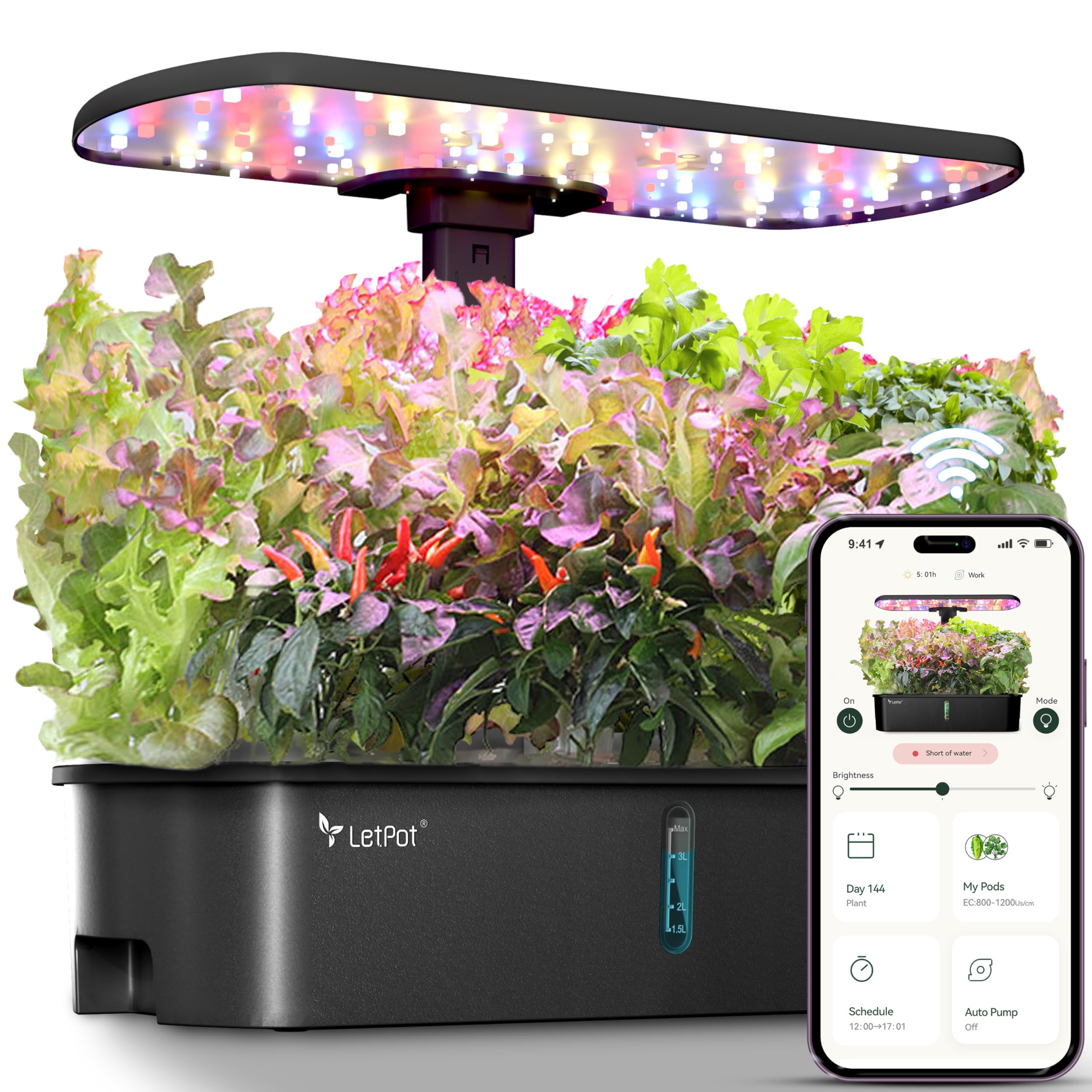
LetPot LPH-Air 10-Pod

LetPot LPH-Air 10-Pod

Tight counter space

Our Score 9.0/10
Check Price

Worth Noting

  • Four-liter tank needs more frequent refills
Control
App and WiFi
Footprint
15 x 5 x 7 in
Grow Pods
10
Water Tank
4 liters
Read the full review

Five inches of depth is why the LPH-Air earns a place. Set it against the twelve-cup LetPot and it gives up two cups and a liter and a half of reservoir; in exchange it slides onto a strip of counter that the bigger units hang over. For a lot of kitchens that trade is the entire decision, and it's why we keep a ten-cup unit in a group full of twelves.

The rest is the same idea in a smaller box: ten cups, app control with a light schedule you build yourself, and a black resin body that disappears against a dark worktop. Setup is quick and the app is the clearest of the ones here — reminders, modes, and timing all sit on one screen, which is the sort of thing you notice at eleven at night when the light is still on.

Ten cups across fifteen inches means the plants sit close, so plant similar sizes together; a tall basil in the middle will shade the thyme on either side of it. The smaller tank also wants checking more often than the 5.5-liter unit, which matters in a busy week. Neither is a reason to skip it — this is the system for someone with more ambition than counter space, and it looks tidy doing the job.

Bottom line: For a kitchen with only a strip of counter to give, the Air fits where most systems here can't and still runs ten plants from your phone.

5

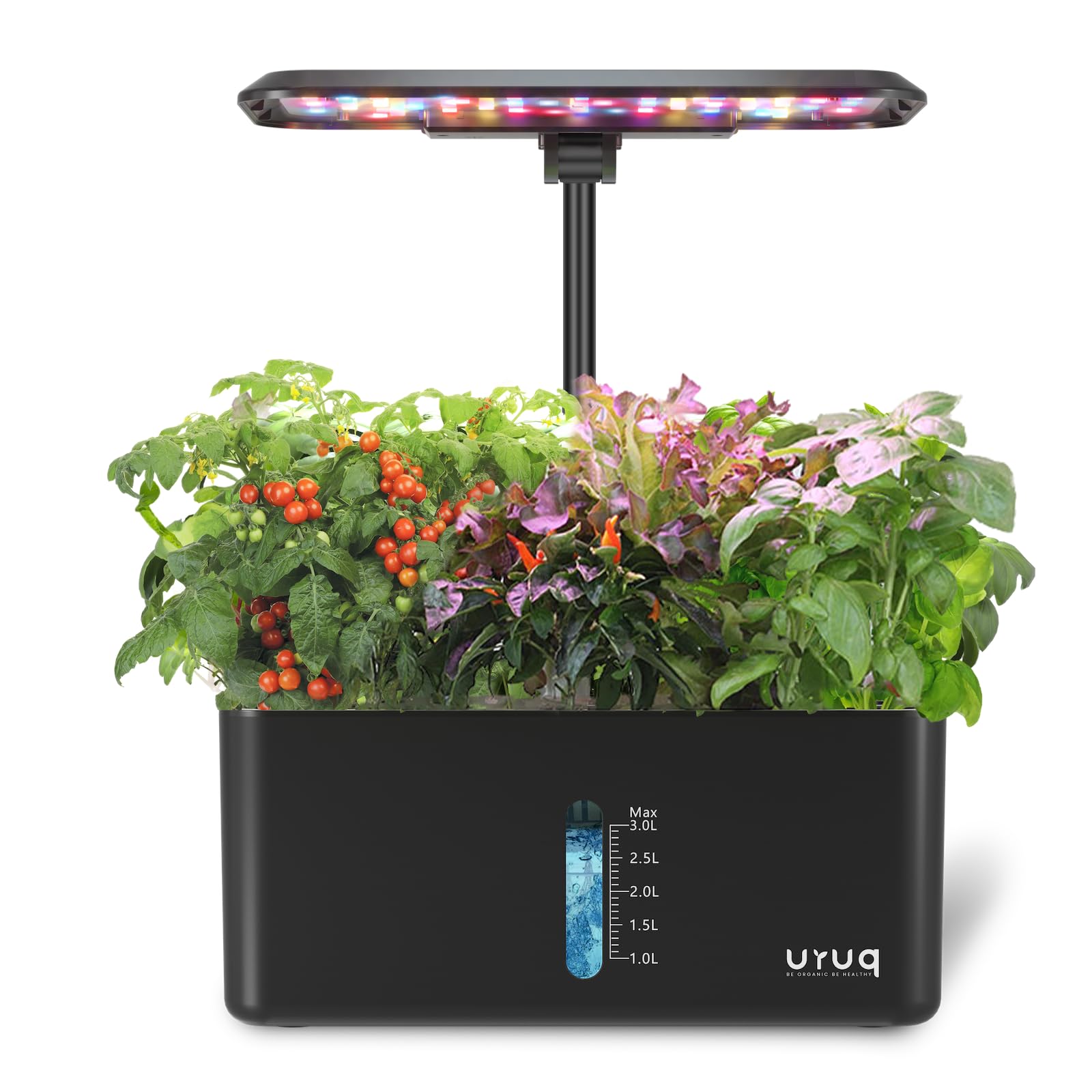
URUQ 8-Pod

URUQ 8-Pod

Small herb kitchens

Our Score 9.0/10
Check Price

Worth Noting

  • Three-liter tank means frequent refills
Grow Pods
8
Grow Light
24W, detachable post
Pump Noise
Under 20 dB
Water Tank
3 liters
Read the full review

The light pole on the URUQ unclips, which sounds like a minor thing until you're rinsing a reservoir with a lamp arm in the way. It lifts as the plants grow, comes off for cleaning, and puts the light where the canopy actually is rather than where it was in week one.

Eight cups and a three-liter tank make this a herb garden rather than a lettuce farm, and the 24-watt bar is bright enough that you'll notice it across a room. The pump runs below 20 dB and cycles every half hour to keep the water moving; in a small kitchen you hear the fridge, not the garden. Sponges and baskets come in the box; seeds and water don't.

What we keep it on this list for is the fit: a plain black housing that tucks into a corner, quiet operation, and enough cups for basil, parsley, and chives at once. The place it asks for patience is water — three liters is the smallest reservoir here, and a full deck will drink it down faster than you expect. If you're home most weeks, that's a small chore; if you travel, put the money into a bigger tank.

Bottom line: Eight plants, a three-liter tank, and a pump you can't hear: a tidy small-kitchen option for anyone who will keep up with refills.

6

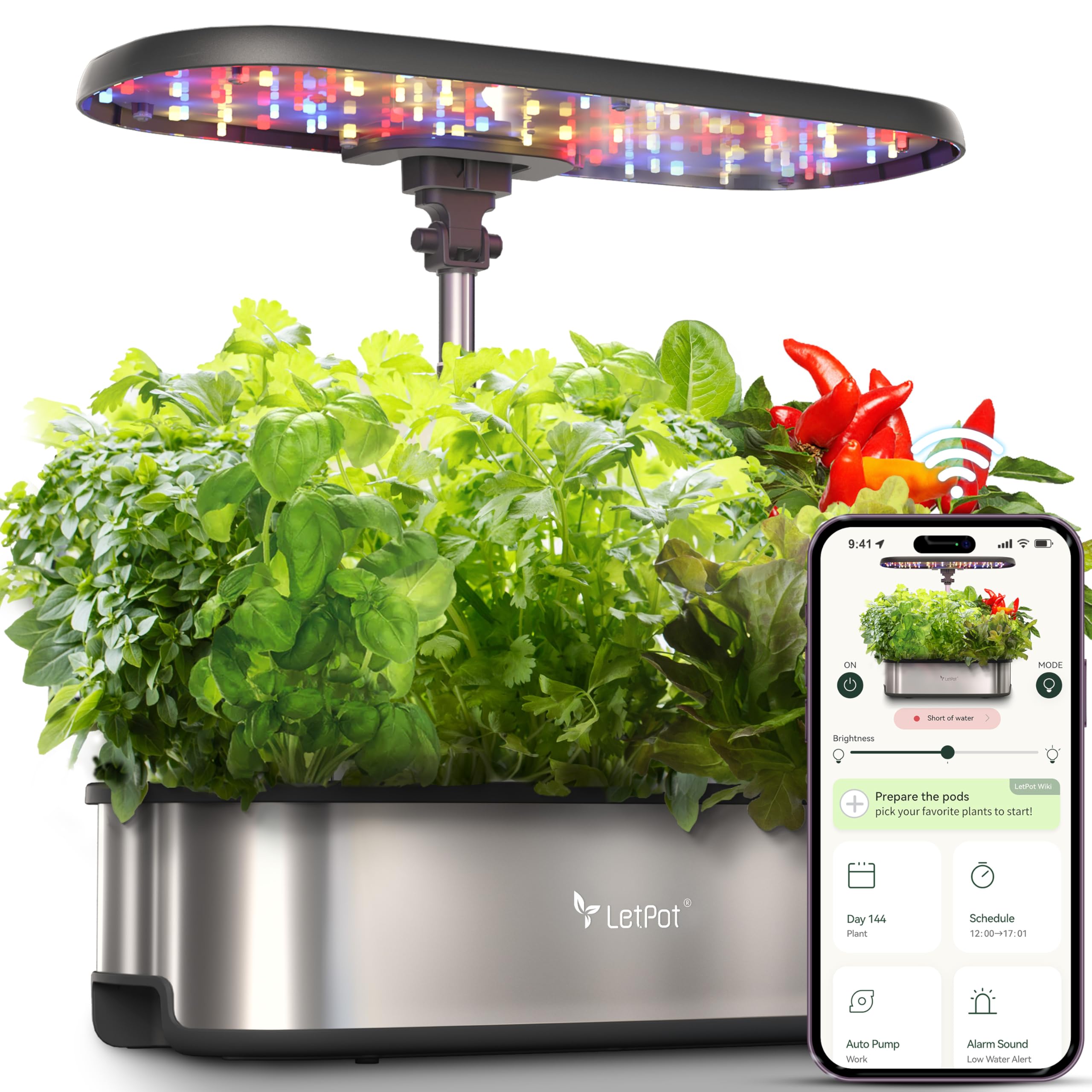
LetPot LPH-SE 12-Pod

LetPot LPH-SE 12-Pod

Full-size herb harvests

Our Score 8.8/10
Check Price

Worth Noting

  • Costs more than the budget 10- and 12-pod kits
Footprint
16 x 7 x 9.8 in
Grow Pods
12
Grow Light
24W full spectrum
Water Tank
5.5 liters
Read the full review

Twelve planting cups and a 5.5-liter reservoir are the two numbers that put the LetPot LPH-SE at the top of this group. We put it first because that tank is the biggest here short of the premium 21-pod machine, and in practice it is the difference between topping up once a week and topping up every other night. Twelve cups also means you can run basil, parsley, and a lettuce or two at once instead of choosing one herb and living with it.

Control sits in the LetPot app, and it does more than mirror a button panel: you can build a 24-hour lighting plan rather than accept a fixed cycle, switch between the veggie and fruit-and-flower modes, and check water and feed reminders without crouching over the deck. Setup is a short job — cups, sponges, nutrients, plug in. The stainless face and double-wall body are also a better thing to leave on a counter than another black plastic tray, which matters when the thing lives in your kitchen for years.

The light is what to plan around. It's bright, it runs its cycle daily, and a bar that size throws real light into a room, so give it a wall with an outlet and keep it out of the sightline from where you sit after dinner. Do that and the system asks almost nothing of you: the pump circulates, the bar climbs the post as the plants grow, and the only job left is thinning the basil before it shades everything beside it.

Bottom line: Our pick for most kitchens: twelve cups, a 5.5-liter tank, and app scheduling make the LetPot the system we hand to anyone who wants herbs and lettuce without a weekly routine.

7

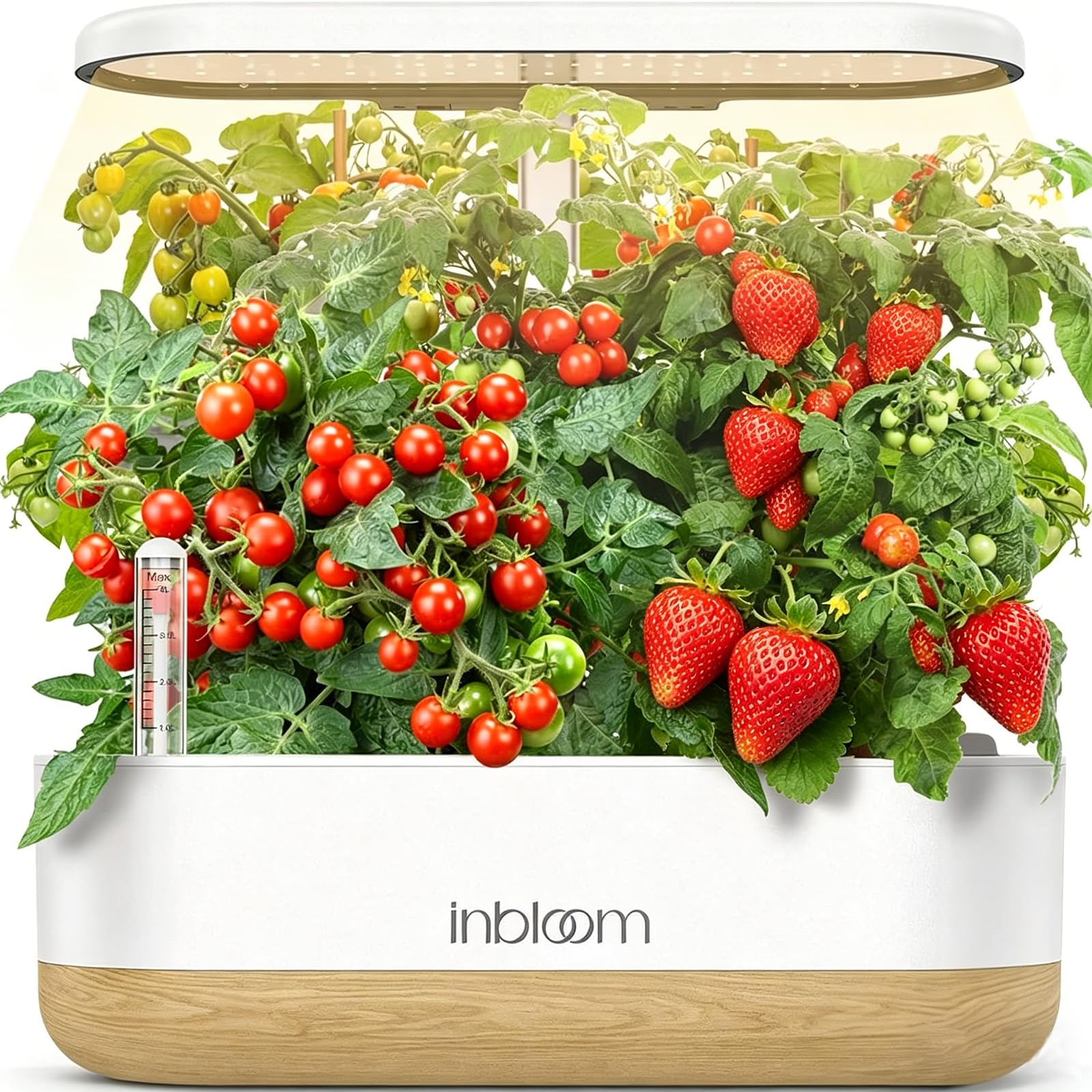
inbloom 12-Pod

inbloom 12-Pod

Leafy greens indoors

Our Score 8.8/10
Check Price

Worth Noting

  • Light doesn't extend far or run strong
Footprint
15.94 x 6.49 x 6.96 in
Grow Pods
12
Water Tank
4.2 liters
Low-water Alarm
At 700 ml
Read the full review

The low-water alarm on the inbloom trips at 700 ml, which is the useful version of that feature: it warns you while there's still water around the roots instead of after the tank has run dry. Small thing, but it's the difference between a reminder and an obituary.

Twelve cups, a 4.2-liter tank, and a height-adjustable light post put it in the same territory as the LetPot for less money, and the white housing is tidy on a counter. A silent pump circulates and oxygenates, and the alarm means a busy week doesn't kill the garden.

The light is the compromise. It adjusts upward but not far, and it isn't the strongest bar here, so treat the inbloom as an herb and lettuce machine. Anything that has to flower and fruit — a cherry tomato, a pepper — wants more light and more height than this gives it.

That's a fair trade, and it's why the inbloom sits in our also-consider tier rather than the top: twelve cups, an alarm that actually helps, and a footprint of about sixteen inches, provided your ambitions stop at leaves. If fruiting plants are the plan, put the difference toward the LetPot instead.

Bottom line: Twelve cups and a genuinely useful low-water alarm for less than the LetPot, as long as you want leaves rather than fruit.

How We Tested Indoor Garden Systems

We started by pulling together the indoor garden systems that appeared most often in retailer reviews and coverage, then narrowed the field by size, price band, seed-pod availability, light adjustability, and whether replacement parts were sold separately. We ruled out units with sealed grow pods or vague support, since an indoor garden is only as useful as its next harvest. The final group was 12 systems, tested over eight months.

I set each one up alone in a kitchen with average counter space, timing unpacking, assembly, and first planting. I started the same seed types in every system where pods allowed, then tracked germination daily: which cells sprouted, how many days it took, and whether seedlings came up evenly across the tray rather than bunching under the center of the light. I also ran them in a dim home-office corner for a few weeks to see how the grow light handled low ambient light, and noted light spill on nearby walls, heat near the tray, and whether the timer was easy to adjust without an app.

Once plants were growing, I refilled tanks, pruned, harvested, and cleaned each unit on its own schedule. I noted whether water levels were easy to read, whether pumps and filters came apart for rinsing, and whether plastic trays, hinges, and light arms felt sturdy after repeated use. For appearance, I lived with each system in view of the kitchen table and judged the cord, footprint, and glow at night. I also compared the ongoing cost of seed pods and nutrients, because a system that grows well but requires expensive refills is not a good value. We kept the systems running for eight months, through at least two planting cycles, and watched for yellowing leaves, leggy stems, algae, and clogged lines.

How to Choose Indoor Garden Systems

Height decides what you can grow

Every system here grows basil, and most manage lettuce. The split shows up when a plant has to stand up: cherry tomatoes, peppers, full-size dill. Check the plant height the deck is rated for and whether the light bar lifts as the canopy climbs. The AeroGarden Harvest fixes its light and caps plants at 12 inches; the LetPot and Ahopegarden units let you raise the bar.

We prioritise height over cup count, because a tall plant in a short garden gives you lanky stems and a light burn line across the top leaves. Decide what you actually cook with, then buy enough height for it.

Reservoir size sets your weekly routine

Tanks run from three liters to five and a half here, and that is a real difference in how often you fill. Three liters under eight or ten cups wants attention every few days; the LetPot's 5.5 liters stretches that toward a week. A see-through window or a low-water alarm saves you guessing, and the inbloom's alarm trips at 700 ml, before the roots are dry.

If you travel for work, buy liters rather than pod count. A big deck with a small tank is a garden that spends half its life thirsty.

Pumps, wicks, and what wears out

Most of these move water with a small pump, and the pump is the part that fails first — when it stops, circulation stops and roots sit in still water. A wicking design like the Click and Grow has no pump at all, which is why it's silent and why there's less to go wrong.

Weigh how much of a system depends on a component you can't fix. A pump-driven unit with a big tank earns its place, but it's worth knowing that the moving part, not the plastic, is what ends a garden's life.

Budget for pods, not hardware

The unit is the cheap part. Pods, sponges, and nutrients are the recurring bill, and proprietary pods cost more than loose seed — that's the trade with AeroGarden and Click and Grow, whose ecosystems are the most locked-in here. Kits like the Ahopegarden, inbloom, and URUQ ship baskets and sponges you can pack with your own seed.

We think the refill habit matters more than the finish. If you want to grow what you actually cook with, buy a system that takes loose seed; if you want to plant once and not think, pay for the pods.

Frequently Asked Questions

Final Verdict

The LetPot LPH-SE is the one we recommend. Twelve cups, a 5.5-liter reservoir, and app scheduling answer the three things that stop people gardening indoors: running out of room, running out of water, and forgetting the timer.

If running a kitchen appliance from a phone doesn't appeal, the AeroGarden Harvest does the same job from a panel with a seed kit in the box, provided you stick to herbs and lettuce. And if your counter is a five-inch strip, the LetPot Air fits it.