Outdoor

Best Gazebos of 2026

For about four hours one Saturday, my backyard was the best version of itself: a long table under a canopy, shade where there had been none, everyone lingering well past dessert. Then the wind picked up, everyone looked up at once, and I remembered that a gazebo is a small act of faith. A good one buys you a whole season of outdoor dinners, birthday parties, and shaded afternoons with a book; a bad one buys you a bent frame and a canopy in the neighbor's hedge.

What separates the two rarely announces itself on the box. It's how the frame feels when you grab a corner and shake it, whether the instructions assume two people or four, and whether the hardware in the bag actually lines up with the holes. We put eight gazebos through nine months of real backyard use — cookouts, a few soaking weekends, and one memorable takedown done at a jog — and the differences were obvious by midsummer. One tip before you shop: buy for the wind, not the sunshine, and measure your footprint before you fall for a look. The ones below earned their place.

1

PURPLE LEAF 10x12 with Lights

Top Pick
PURPLE LEAF 10x12 with Lights

Smaller patios

Our Score 9.6/10
Check Price

Worth Noting

  • Furniture not included despite the styling shots
Frame
Aluminum, 4.7 in posts
Included
Curtains, 260 GSM netting, lights
Footprint
142.9"L x 117.3"W x 114.6"H
Floor Area
120 square feet
Read the full review

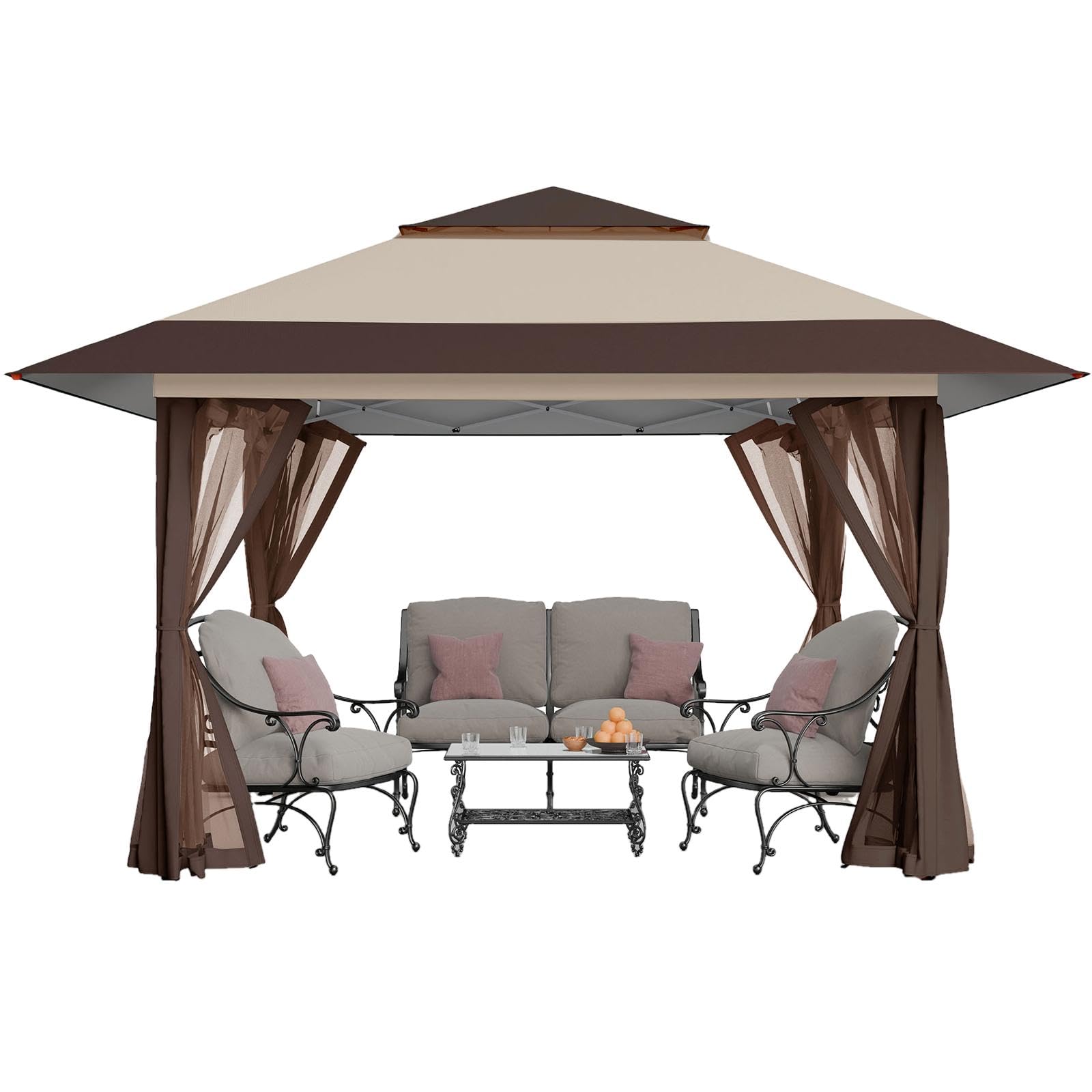
Twenty-four feet of gazebo is lovely until you walk it out across your own patio. The 10-by-12 Purple Leaf is the version most yards can take: 120 square feet, the same 4.7-inch aluminum posts as our top pick, and a galvanized steel double roof with hidden gutters that keep the runoff out of sight and off the chairs.

We were pleasantly surprised by how little is missing at this size. It ships with lights, the roof vents heat through the double tier, the curtains and 260 GSM netting come in the box, and the warranty is tiered honestly: five years on the hardtop, two on the fabric, one on the frame — which tells you what the company expects to wear out first. For a courtyard, a side garden or a patio that has to share space with a lawn, this is the sensible buy.

Furniture isn't included, whatever the styling shots suggest, and 120 square feet fits a bistro set and two loungers rather than a dining table for eight. Measure the usable width between the house and the fence, not the wall-to-wall number, and leave yourself a walking margin.

Bottom line: For a patio that can't take a 24-foot run, we think this is the sweet spot: full hardtop construction, lights included, and 120 square feet of shade.
2

PURPLE LEAF 14x24 Hardtop

PURPLE LEAF 14x24 Hardtop

Permanent backyard shade

Our Score 9.4/10
Check Price

Worth Noting

  • Needs a long, level 24-foot site
  • Premium price even among the hardtops here
Frame
Aluminum, 4.7 in wide
Footprint
279.69"L x 158.66"W x 126.7"H
Snow Load
3000 lb
Floor Area
336 square feet
Read the full review

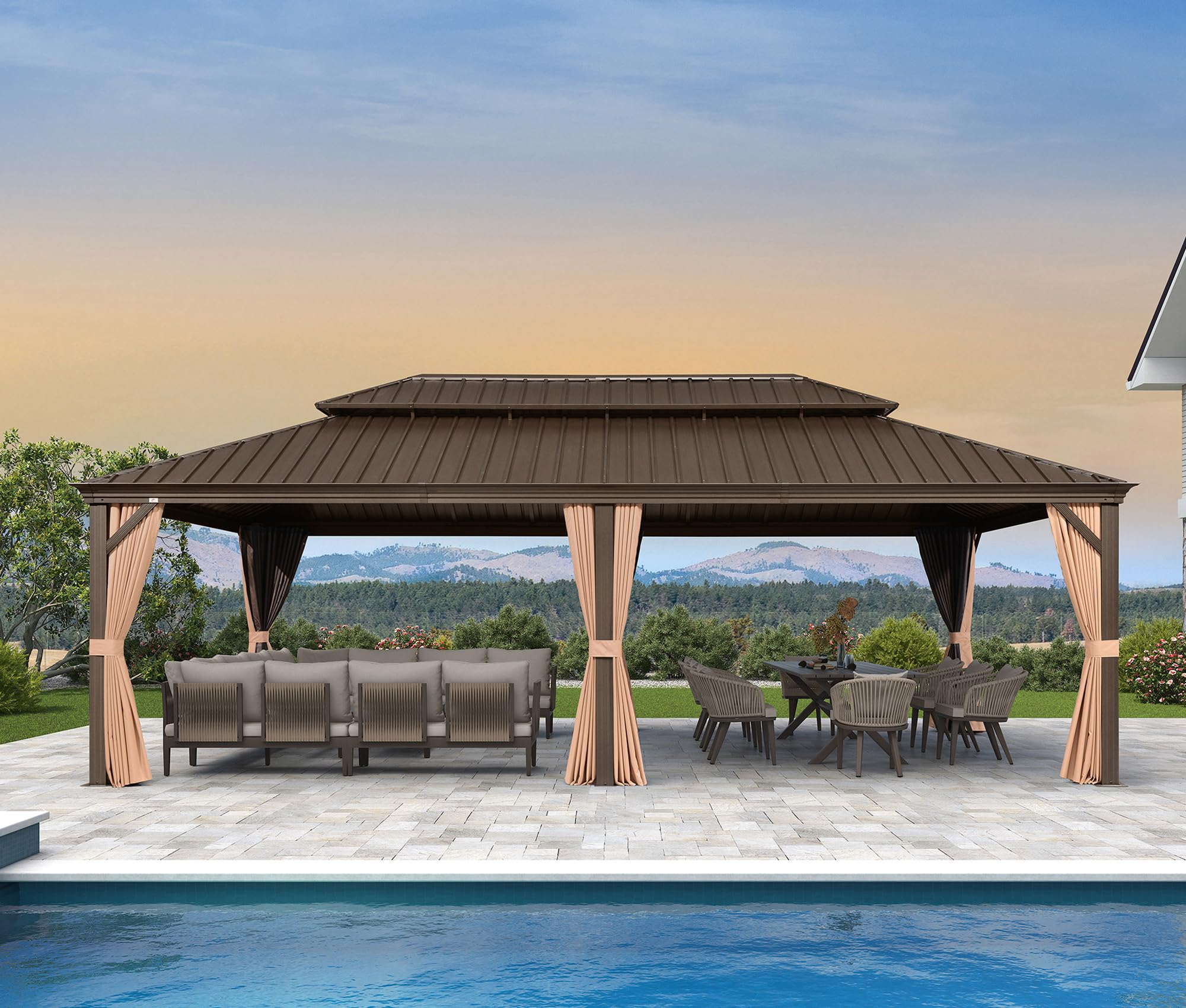
The figure that settled this one for us is 4.7 inches — the width of the aluminum posts, which puts the frame in a different class from the bolted tube most gazebos stand on. On top of it sits a galvanized steel double roof rated for 3000 pounds of snow, and the gutters carry rainwater down through the posts instead of dumping it along the whole edge. At 336 square feet, nothing else here covers as much ground.

What earns it the top spot is how complete the package is at that size. The 260 GSM netting and the fade-resistant curtains are included rather than sold after, the roof blocks 95% of UV, and the hardtop carries five years of coverage. The double roof isn't decoration either: the gap between the layers lets hot air out on a still afternoon, which is the difference between sitting under it in July and retreating to the kitchen.

Two practical notes before you commit. The instructions are mostly exploded diagrams, so line up a second pair of hands, set a weekend aside, and don't tighten anything until the frame is square. And 24 feet is a serious run of structure — pace it out, check the clearance to the fence and your roofline, and confirm the ground is level. Get those right and this becomes a gazebo you stop thinking about, which is the highest compliment a permanent structure can earn.

Bottom line: If the gazebo is going up for good, we think this is the one — the stoutest frame and most roof in this set, with drainage and snow capacity to match.

3

Backyard Discovery Norwood

Backyard Discovery Norwood

Compact wood look

Our Score 9.4/10
Check Price

Worth Noting

  • A build measured in days, not hours
Roof
29-gauge steel
Frame
100% cedar
Footprint
173"L x 121.25"W x 117"H
Weather Rating
Up to 30 in snow, 100 mph
Read the full review

The Norwood takes the Arcadia's cedar-and-steel formula and shrinks it to a 14-by-10 footprint, which is the size that fits beside a garage or over a small deck. Cedar posts and rafters, a 29-gauge Tudor Brown steel peak roof, and the same five-year warranty.

The weather ratings match the bigger model: 30 inches of snow, winds up to 100 mph, and a PowerPort on the post for three outlets and three USB ports. That's an unusual amount of engineering for a structure this size — the soft-top options in this set are fabric stretched over tube by comparison.

Assembly support is the best of the wood kits here. The instructions go step by step, and a companion app walks the awkward stages in 3D, which matters when you're holding a rafter in one hand and a diagram in the other.

So this is the wood pick for a smaller site: the Arcadia's ratings and roof, less structure to heat, and enough footprint left over for a grill and two chairs. If your yard can take 24 feet, the extra room is worth having. If it can't, this is the one we point you to.

Bottom line: Our pick for a smaller yard that still wants the cedar look: the Arcadia's ratings and roof in a 14-by-10 footprint.

4

Backyard Discovery Arcadia

Backyard Discovery Arcadia

Snow and wind

Our Score 9.2/10
Check Price

Worth Noting

  • A full-day build with two people
Roof
29-gauge steel
Frame
100% cedar
Footprint
296.63"L x 144.88"W x 100.5"H
Weather Rating
Up to 30 in snow, 100 mph
Read the full review

Cedar does something for a backyard that painted aluminum can't, and the Arcadia is the pick here for anyone who wants a gazebo that looks like it belongs to the house rather than the catalog. It's a 24-by-12 pavilion: cedar posts and rafters under a 29-gauge black steel roof, backed by a five-year warranty.

The weather numbers are the most reassuring in this set. The roof is rated to 30 inches of snow and winds up to 100 mph, and the PowerPort mounted on the post gives you three outlets and three USB ports exactly where the seating is — which means no extension cord snaking across the patio when the grill or the projector comes out.

What we like most is how little it asks for afterward: no fabric to replace, no frame to touch up, just cedar and steel doing their jobs. A cedar structure will silver out over the years unless you seal it, and that's the whole maintenance calendar — one afternoon with a brush every few seasons against a structure that should outlast the furniture under it.

Bottom line: We recommend the Arcadia to anyone who wants wood, a 100 mph rating and outlets already on the post — and doesn't mind giving up a day to build it.

5

Domi 14x20 Hardtop

Domi 14x20 Hardtop

Hardtop on a budget

Our Score 9.0/10
Check Price

Worth Noting

  • Four-inch posts fall short of the top pick's 4.7
Frame
Aluminum, 4 in posts
Footprint
233.31"L x 165.2"W x 126.39"H
Floor Area
280 square feet
Roof Hooks
3 hooks, 20 lbs each
Read the full review

Well under the top pick's price, the Domi still delivers 280 square feet of hardtop: a galvanized steel roof on a powder-coated aluminum frame with four-inch posts, edge gutters, curtains, netting and three hooks rated for 20 pounds each. We noticed the drainage first — water runs to the posts rather than sheeting off the side, which is the detail that keeps a seating area usable after a rain.

Where it gives ground is in the finish work. The roof panels take patience to seat and clip, and the alignment is fussier than the Purple Leaf's, so budget more time than the instructions suggest and keep the fasteners loose until everything lines up. The instructions themselves are picture-led. None of that changes the conclusion: the 99% UV blocking, the included curtains and netting, and the pre-drilled base plates make this the hardtop to buy when the premium tier is out of reach.

One thing to sort out first: those base plates want a flat, solid surface, and a paver patio with soft joints needs prep before the posts go down. Do that and the structure sits dead square, which is half of why it feels as solid as it does.

Bottom line: Our value pick among the hardtops: nearly the top pick's coverage and features for a good deal less, if you can live with a fussier roof fit.

6

LAUSAINT HOME 10x12 Canopy

LAUSAINT HOME 10x12 Canopy

Budget semi-permanent

Our Score 8.8/10
Check Price

Worth Noting

  • Fabric cover is a wear item, not a permanent roof
Frame
40 x 40 mm galvanized steel
Canopy
135G polyester, UPF 50+
Footprint
156"L x 120"W x 106.8"H
Wind Rating
Level 6 when secured
Read the full review

Square steel section is what separates this canopy from the pop-ups. The frame is 40 by 40 mm galvanized steel with a powder coat, and the roof is a double-tier 135G polyester canopy with zippered netting and curtains hanging from it — closer to a semi-permanent room than a tent, and the only thing at the budget end of this set with a frame worth anchoring.

The double tier does what it's supposed to: hot air escapes instead of pooling under the peak, and the UPF 50+ fabric keeps the worst of the sun off. Wind resistance is rated to Level 6, but that rating assumes the structure is properly secured, and the securing is on you — stakes into grass, weights or bolts on a hard surface.

Here's the trap worth knowing: the 10-by-12 figure is measured at the eaves, so the space between the posts is smaller than the name implies — the listing says so plainly, and it's the first thing to check against your patio. Get that right and we think this is the best value here for someone who wants an enclosed sitting area without a hardtop's price or foundation work.

Bottom line: We rate this the best value in the set for a semi-permanent sitting room — just check the true footprint before you order.

7

CROWN SHADES 13x13 Pop-Up

CROWN SHADES 13x13 Pop-Up

Parties and camping

Our Score 8.8/10
Check Price

Worth Noting

  • Frame and canopy are vulnerable in strong wind
Base
10 x 10 ft
Canopy
13 x 13 ft, 169 sq ft
Weight
48.2 lb
Footprint
120"L x 120"W x 72"H
Read the full review

One push on the center hub locks all four legs at once, and that mechanism is why this pop-up earns a place here. We put it up and folded it away more than once to see whether the hub stayed crisp, and it's the smoothest setup in this set — two people can have shade standing before the cooler is open.

The 13-by-13 canopy sits on a 10-by-10 base for 169 square feet, with 300D UPF 50+ fabric, mesh walls, stakes and a wheeled bag that measures 47 by 8 by 8 inches — short enough to lie along a trunk. At 48.2 pounds it's a two-person lift into a truck and a one-person roll across the yard, which is most of the point of owning one.

Where a pop-up stops is wind. The canopy is a sail, so the frame and fabric hold up best when it comes down before weather rather than after, and the legs need weight on all four, not two. Treat it as shade for the party and the camping weekend, not as a structure for the decade, and it does its job well.

Bottom line: Buy it as seasonal shade you can pack in the trunk, and we think you'll be pleased; buy it as a permanent structure and you won't.

How We Tested Every Gazebo on This List

My team and I started by sorting through the gazebos shoppers actually buy in the few-hundred-to-about-a-thousand-dollar range, then cut anything with a thin-walled frame, a canopy offered in only one size, or a parts list that reviewers kept describing as incomplete. That left eight, in footprints from roughly 8x8 to 12x12, split between pop-up and permanent-frame styles.

Each one was assembled in a real backyard, on grass and on a deck, and I timed setup with two people and then again alone. I counted the steps, noted where the instructions stopped making sense, and checked whether the hardware in the bag matched the parts list — including whether the bolts lined up without forcing. Then I checked the canopy fit, watching whether it slid over the frame or had to be wrestled into place, and timed how long the whole thing took to break down and bag.

Once up, each gazebo stayed up. I anchored them the way the manufacturer specified and watched how they behaved in ordinary gusts, noting which frames flexed and recovered and which ones sent me outside at midnight to add weight. Over nine months I revisited the same joints for loosening and rust, watched the canopies for fading and stressed seams, and asked guests which ones read as patio furniture and which read as a tent. Value came down to what was actually in the box: frame gauge, canopy thickness, a storage bag that survives a season, and anchoring hardware that was included rather than sold separately.

How to Choose Gazebos

Start with the roof, not the frame

A steel or polycarbonate hardtop turns a gazebo into a structure. It sheds snow, resists wind, and doesn't fade or tear. A fabric canopy is a cover, and covers wear out — the fabric and the frame are the first things to go in a blow, which is why pop-ups are seasonal by nature rather than a knock on any one of them.

Ask for snow and wind numbers before you buy. The hardtops here run from 3000 pounds of snow on the Purple Leaf to a 30-inch, 100-mph rating on the cedar Backyard Discovery models. A canopy with no rating at all is telling you something, and it's worth hearing.

Measure the footprint, not the name

Gazebo sizes are generous in a specific way. The Crown Shades uses a 13-by-13 canopy on a 10-by-10 base, and the LAUSAINT's 10-by-12 figure is measured at the eaves, so the space between the posts is smaller than the label suggests. Tape out the post positions rather than the roof, then check headroom at the lowest edge — under six feet at the valance is fine for a buffet and miserable for a tall guest.

Leave a walking margin on every side. A structure that fills the patio wall to wall looks impressive in a photo and is a nuisance to live with.

Anchoring is the whole ballgame

Every wind rating in this category assumes the gazebo is tied down. Hardtops come with pre-drilled base plates meant for a slab, deck framing or concrete footings; pop-ups lean on stakes and weights on the legs. Skimp here and the structure becomes a projectile, fabric canopies especially.

Settle the fixing before delivery day. If the site is pavers or a wooden deck, work out now whether you're bolting through into framing or building a level pad, because it's the one part of the job you can't improvise once the frame is standing.

Plan the build like a small project

These are two-person jobs, and the roof is the stage that needs the second set of hands. Most kits here ship with picture-based instructions, so work slowly, leave the bolts loose until the frame is square, and tighten everything at the end — the single most repeated piece of advice we'd give anyone opening one of these crates.

If that sounds like a lost weekend, price out installation before you order. The hardtops are heavy enough that a crew earns its money. The cedar kits are the exception: they reward someone comfortable with carpentry and go faster with a helper.

Netting, curtains and where the water goes

Netting keeps insects out while air moves; curtains add privacy and shade but cut airflow, so decide which you'll actually use before paying for both. Either way they're wear items, and curtains fade first — a two-year fabric warranty is normal, and it isn't a defect, it's a lifespan.

Drainage matters just as much. A roof without gutters dumps water along the whole perimeter, right where people sit, while a guttered roof such as the Purple Leaf's sends it down through the posts. Look for a runoff path that ends somewhere sensible, not in the middle of the patio.

Frequently Asked Questions

Final Verdict

For most buyers the answer is the Purple Leaf 14 by 24 hardtop: a 4.7-inch aluminum frame, a steel double roof rated for 3000 pounds of snow, gutters that keep the runoff off your seating, and 336 square feet of genuinely usable shade. It is the most structure in this set for the money, and the five-year hardtop coverage backs that up.

If 24 feet won't fit, the Domi 14 by 20 keeps the hardtop idea for considerably less, and the cedar Arcadia is the pick when you want wood and a 100 mph rating. Buy for the site you have: measure the footprint first and the roof second.