Home Decor

Best Coffee Accessories of 2026

A great cup of coffee is rarely the machine's doing. It's the grinder turning beans into an even bed, the kettle holding water at a steady temperature, the scale keeping your ratio honest — the small things that decide whether your beans taste like blueberries or burnt toast. Get one wrong and you spend months compensating: grinding longer, pouring slower, scrubbing harder. Get it right and the gear disappears into your morning, and the coffee just tastes the way it was supposed to.

I've brewed at home long enough to know that price is a poor guide here, and that the fanciest accessory is usually the one you stop reaching for. Over eight months, my team and I put 14 coffee accessories through our actual routines, from rushed 6 a.m. weekday cups to slow Sunday pour-overs for two. What separated the best from the rest wasn't a feature list — it was how little fuss they added, how easily they came clean, and how rarely they made us think about them. The picks below earned their counter space.

1

Veken Coffee Canister

Top Pick
Veken Coffee Canister

Bean storage

Our Score 9.6/10
Check Price

Worth Noting

  • Hand wash only, not dishwasher safe
Lid
Airtight with one-way CO2 valve
Body
304 stainless steel
Care
Hand wash only
Capacity
22 oz (1.4 lb)
Read the full review

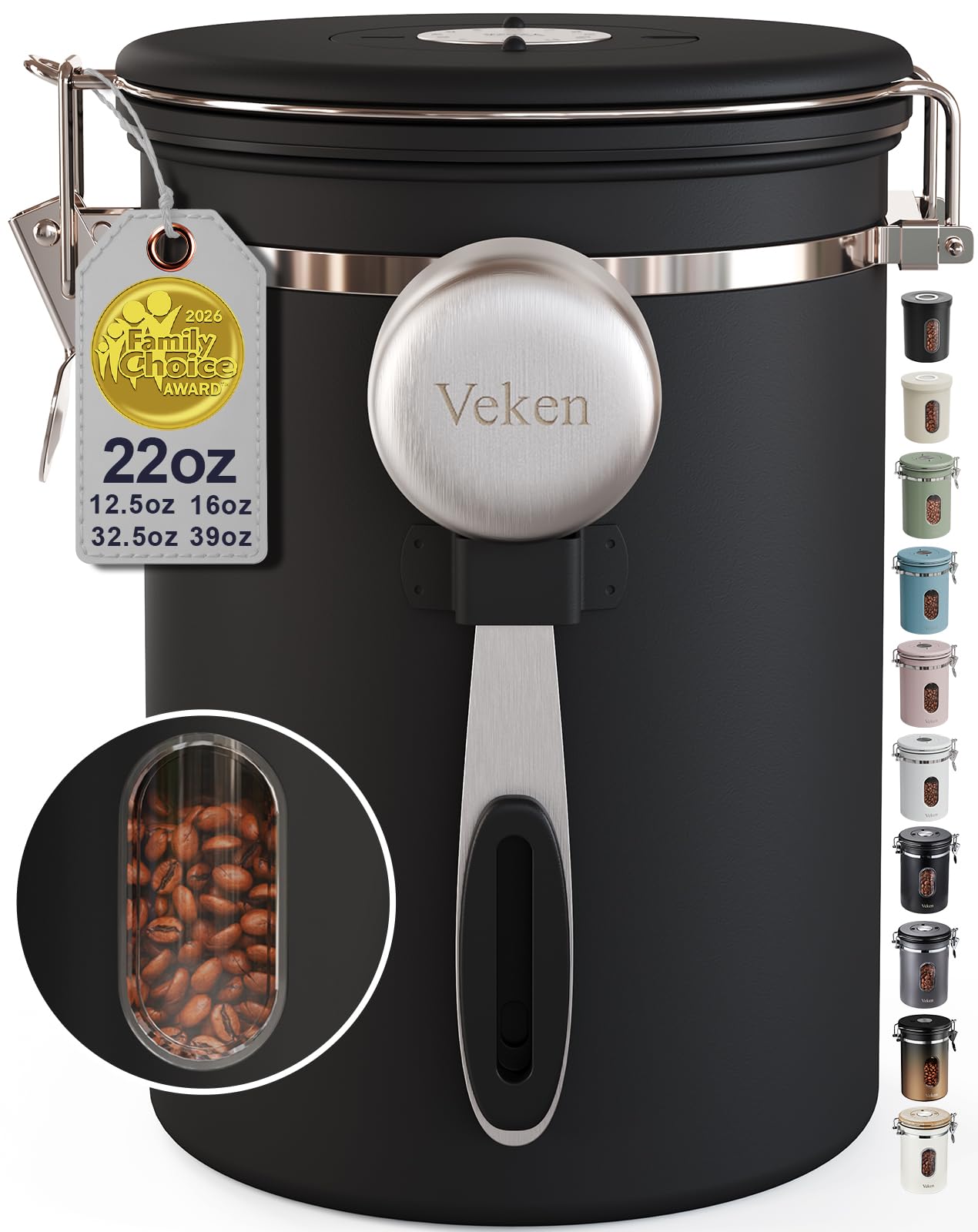
A bag of beans clipped shut on the counter is where a lot of the money in a coffee habit quietly leaks away. The Veken canister gives that bag a dark, sealed home: a silicone gasket in the lid, a flip-top latch that compresses it, and a one-way valve on top that lets carbon dioxide out without letting air back in.

The valve is what earned this the top spot rather than a pleasant spot on the shelf. Freshly roasted beans keep releasing gas for days, and a container that seals perfectly turns into a pressure vessel; the valve gives that gas somewhere to go, which is why the seal can stay as tight as it is. We also appreciated the details that stop you breaking the seal for no reason: a date dial in the lid and a window in the body mean you can read the level and note the roast date without opening anything.

The listed capacity is 1.4 pounds, so a standard bag goes in with room to spare, and the measuring scoop tucks into the container instead of living loose in a drawer. On the counter it reads as equipment rather than packaging, and the black finish is the sort of thing you leave out on purpose.

That capacity is also the boundary worth checking before you order: generous for a household buying a bag a week, tight for anyone working through two-pound sacks. Otherwise there is little to argue with. It seals, it holds, and it looks like it belongs there.

Bottom line: This is the coffee accessory we tell most people to buy first: an airtight, valve-equipped canister that keeps a pound of beans fresh to the last scoop.

2

Mind Reader Coffee Bar Organizer

Mind Reader Coffee Bar Organizer

Coffee bar setup

Our Score 9.6/10
Check Price

Worth Noting

  • Stirrer slots only take short sticks
  • No manufacturer warranty
Material
Plastic
Dimensions
13 x 6.4 x 11.5 in
Compartments
6
Weight Capacity
8 lb
Read the full review

The coffee station always starts tidy and ends up as a heap: a sleeve of cups here, lids sliding off a saucer, stirrers going soft in a mug. The Mind Reader caddy is the unglamorous fix — six upright compartments that stack the whole mess into a footprint of about 13 by 6.4 inches.

The layout does the work. The lower bays take standard disposable cups and their lids, the upper slots hold smaller cups and packets, and there is a channel at the bottom for stirrers. It is plastic, it holds up to 8 pounds, and it can sit on the counter or hang on the wall if your surface is already spoken for.

Our note from using it: the vertical design needs clearance above, so measure the gap to the underside of your cabinets before you commit — 11.5 inches of caddy plus enough room to reach into the top bays. In a break room or under an open shelf that is no issue at all, and the thing becomes quietly useful.

It is the least exciting object on this list and one of the most immediately satisfying, because the improvement is visible the moment you fill it. Buy it if your station is a pile; skip it if you keep two mugs and a bag of beans out and nothing else.

Bottom line: For a coffee station that has dissolved into cups and lids, this plastic caddy restores order in an afternoon and keeps it.

3

GENRICE Gold Coffee Spoons

GENRICE Gold Coffee Spoons

Stirring and serving

Our Score 9.6/10
Check Price

Worth Noting

Care
Dishwasher-safe
Count
4 spoons
Length
6.7 in
Material
304 stainless steel
Read the full review

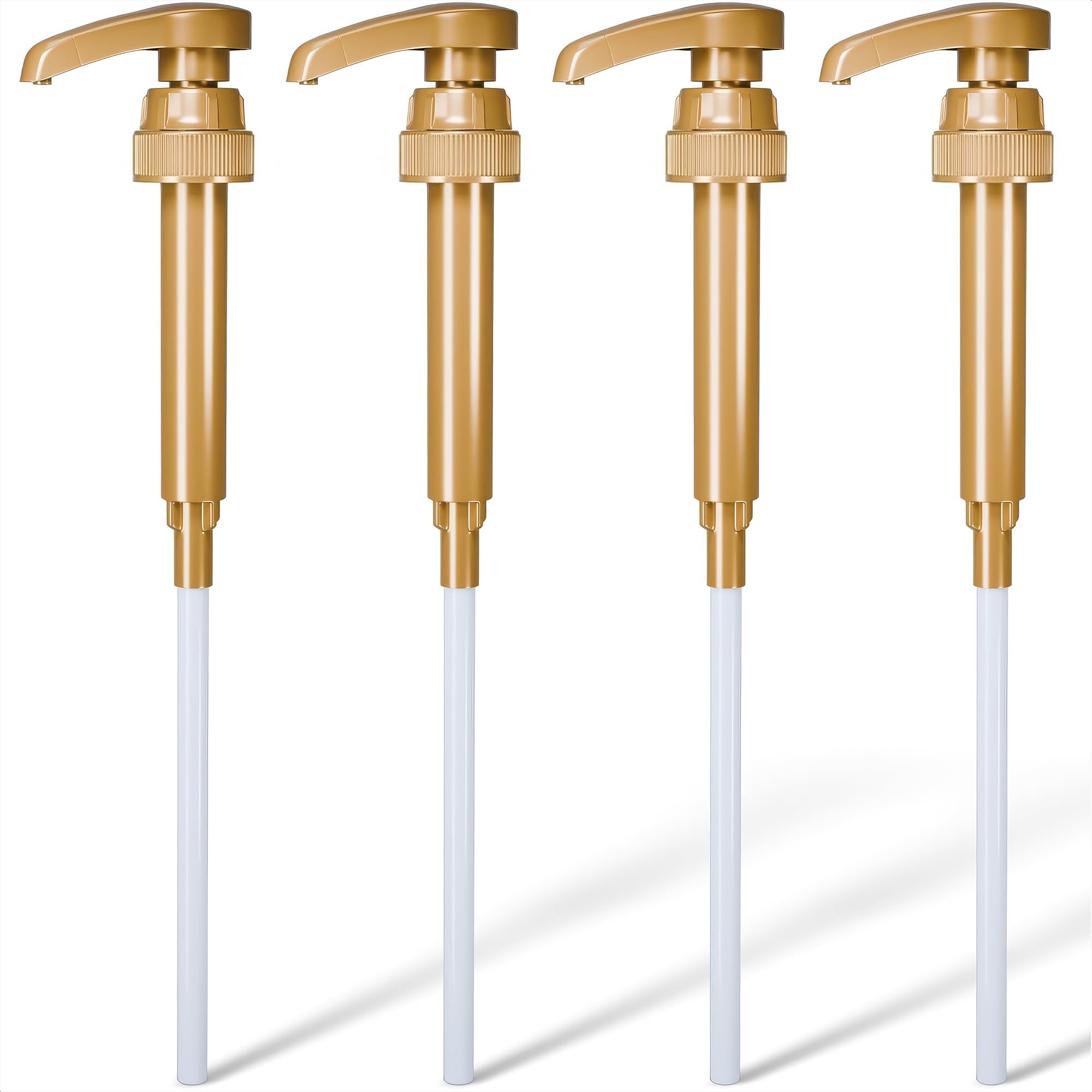
Six and seven-tenths inches is the number that matters here: long enough to reach the bottom of a tall mug or a thermos, short enough to sit in a sugar bowl without looking odd. The four-spoon set is the sort of thing you buy for a coffee bar and then find yourself using everywhere.

The finish is the selling point. Mirror-polished gold over 304 stainless reads warm rather than brassy, and against a dark counter or a wood tray it looks deliberate — the kind of small object that makes a corner of the kitchen look considered rather than assembled.

They are listed as dishwasher-safe, and a plated finish always lasts longer hand-washed, which is the trade you are making at this end of the market. The edges are smooth and burr-free, the bowls are shallow enough for a proper stir, and four to a pack means one is always clean.

Where they earn their place is the coffee station rather than the dinner table. They are long enough for an iced coffee in a tall glass, gold enough to look intentional on a tray, and inexpensive enough that losing one to the sink does not ruin the week. We kept them out on the tray instead of in the drawer, which is the highest compliment a spoon gets.

Bottom line: These are the spoons we leave out on the coffee tray: long enough for a tall mug, gold enough to look intentional, sturdy enough for daily stirring.

4

Hario V60 Filters, Size 02

Hario V60 Filters, Size 02

Pour-over brewing

Our Score 9.4/10
Check Price

Worth Noting

  • Single-use paper is an ongoing purchase
Count
100 filters
Shape
Cone
Material
Unbleached paper pulp
Filter Size
02 (1 to 4 cups)
Read the full review

A cone filter has one job — sit flush against the dripper's ribs and let water through evenly — and the Hario size 02 does it with no folding, no tearing and no paper taste in the cup. It is the filter the V60 was built around: 100 unbleached cones to a box, sized for one to four cups, with tabs at the seam that give your fingers something to grab when you are separating them.

What we noticed in use is how little attention they need. They hold their shape through the pour instead of collapsing into the cone, the paper leaves no sediment behind, and the tabs mean you are not picking at a stuck filter with wet fingers before the coffee has kicked in. That sounds minor until you have fought a cheaper cone that folded in on itself halfway through the brew.

The one wrinkle is restocking. The paper in current boxes has changed weight from older stock, and a slower drawdown is the thing you notice first if you are replacing a box you have had for a while — grind a touch coarser before you blame the beans. And this is a size 02 cone: check the size marker on your dripper, because 100 of anything is a long commitment to the wrong shape.

Bottom line: If a V60 or a Switch is your brewer, this is the filter to buy: clean, sediment-free cups and tabs that make a wet cone easy to handle.

5

Perfect Pod Café Save

Perfect Pod Café Save

Budget single-serve

Our Score 9.4/10
Check Price

Worth Noting

  • Fits one-stream Keurig brewers only
BPA-free
Yes
Material
Plastic and stainless steel
Pack Size
4 pods
Brewer Fit
One-stream Keurig brewers
Read the full review

Buying single-serve pods means paying for the coffee, the plastic and the packing line. The Café Save cups are four refillable pods that take whatever ground coffee is already in your cupboard: fill, snap the lid down, brew. They are BPA-free plastic with a stainless mesh basket, and they replace the disposable cup rather than the coffee.

We think these make the most sense for a one-stream Keurig — the models where a single needle pierces the top — because that is the layout they are built for, and it is where most of the frustration with reusable pods comes from. Fill below the rim, press until the lid seats, and the brew runs clean. Overfill it and the lid lifts under the water pressure, which is exactly how grounds end up in your cup.

Cleaning is the easy part: knock the puck out once it has cooled, rinse, and let it dry, or send it through the dishwasher. Four to a pack means one can be drying while another brews, so the routine never stalls on a wet pod.

Bottom line: Four refillable pods turn any ground coffee into a single-serve cup — the practical fix for a one-stream Keurig.

6

Owala SmoothSip 12 oz

Owala SmoothSip 12 oz

Commuting

Our Score 9.2/10
Check Price

Worth Noting

  • Cup is hand wash only
  • Twelve ounces is a single serving
Lid
Leak-proof slider spout
Care
Hand wash cup; dishwasher-safe lid
Capacity
12 fl oz
Retention
6 hours hot, 24 hours cold
Read the full review

Twelve ounces makes this a coffee cup with a lid rather than a flask: one mug's worth, sized to be finished while it is still hot. The SmoothSip's trick is the slider on top, which closes flat over the spout and seals hard enough that we stopped thinking about it once it was in a bag.

What we noticed is how much the lid defines the whole experience. The slide takes a firm thumb and the lid seats with a positive click; it is a two-handed job until you have done it a few mornings running, and then it is not. The body is easy to carry one-handed, the cup and lid come apart for washing, and the double wall holds heat for hours rather than minutes — the listed figures are six hours hot and up to 24 cold.

Where it earns its place is the commute and the desk, not all-day hydration. Twelve ounces is one generous mug; if you are the sort of person who refills a large bottle three times before lunch, this will feel like a thimble. For a single cup that goes into a bag without a second thought, the leakproof slider is worth the size.

Bottom line: For one cup carried in a bag, this is the tumbler we reach for: a flat-sealing slider, six hours of heat and no spills.

7

Quick & Clean Cleaning Pods

Quick & Clean Cleaning Pods

Keurig upkeep

Our Score 9.0/10
Check Price

Worth Noting

  • Keurig-style pod brewers only
  • A recurring buy on top of descaler
Type
Aftermarket rinse pods
Formula
Non-toxic, biodegradable
Pack Size
6 pods
Brewer Fit
Keurig 1.0 and 2.0
Read the full review

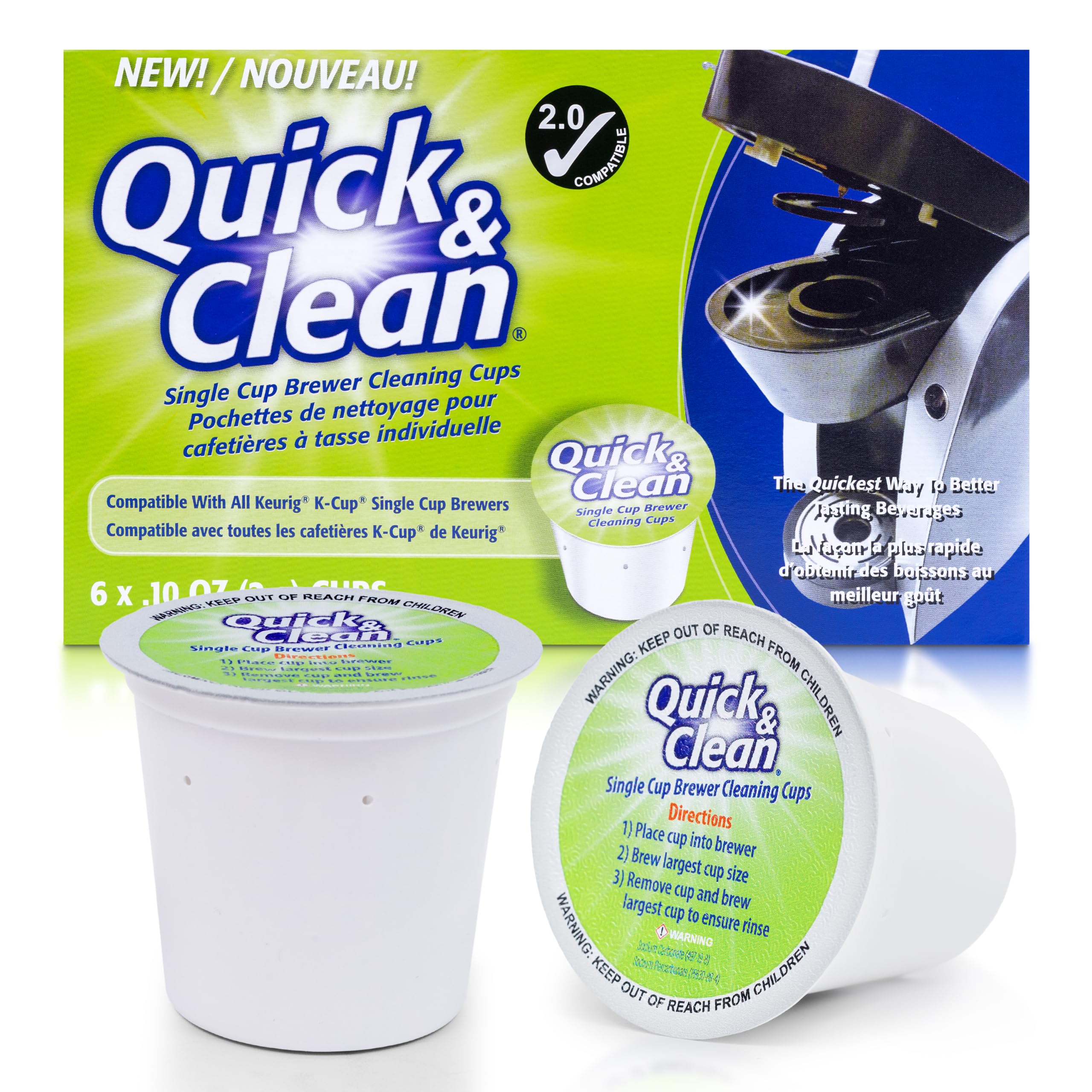
When coffee starts tasting flat and slightly bitter and the beans are the same as last week, the brew path is the suspect — old oils sitting in the pod holder and around the exit needle. Quick & Clean's pods work like a K-cup for the machine rather than for you: brew one through, and the residue leaves with it. It is the lowest-effort maintenance step we have added to a pod brewer.

Six pods come in a pack and each one runs a full cycle, so a box sits in a drawer for months rather than weeks. They are listed for Keurig 1.0 and 2.0 machines, non-toxic and biodegradable, and there is no vinegar smell to flush out afterward — run a plain water cycle and the next cup tastes like coffee again.

Two things to keep straight. These are an aftermarket product, unaffiliated with the brewer maker, so the machine's own manual still governs what you run through it. And they clean oils, not scale: if the machine is slow or the descale light is on, you need a descaler, not another rinse pod.

Bottom line: The simplest fix for coffee that has gone flat in a pod machine: brew one pod through and the oils come with it.

8

IMPRESA Coffee Descaler

IMPRESA Coffee Descaler

Hard water

Our Score 8.8/10
Check Price

Worth Noting

Dose
4 oz per session
Form
Unscented liquid
Volume
8 fl oz (pack of 2)
Compatibility
Pod, filter and automatic machines
Read the full review

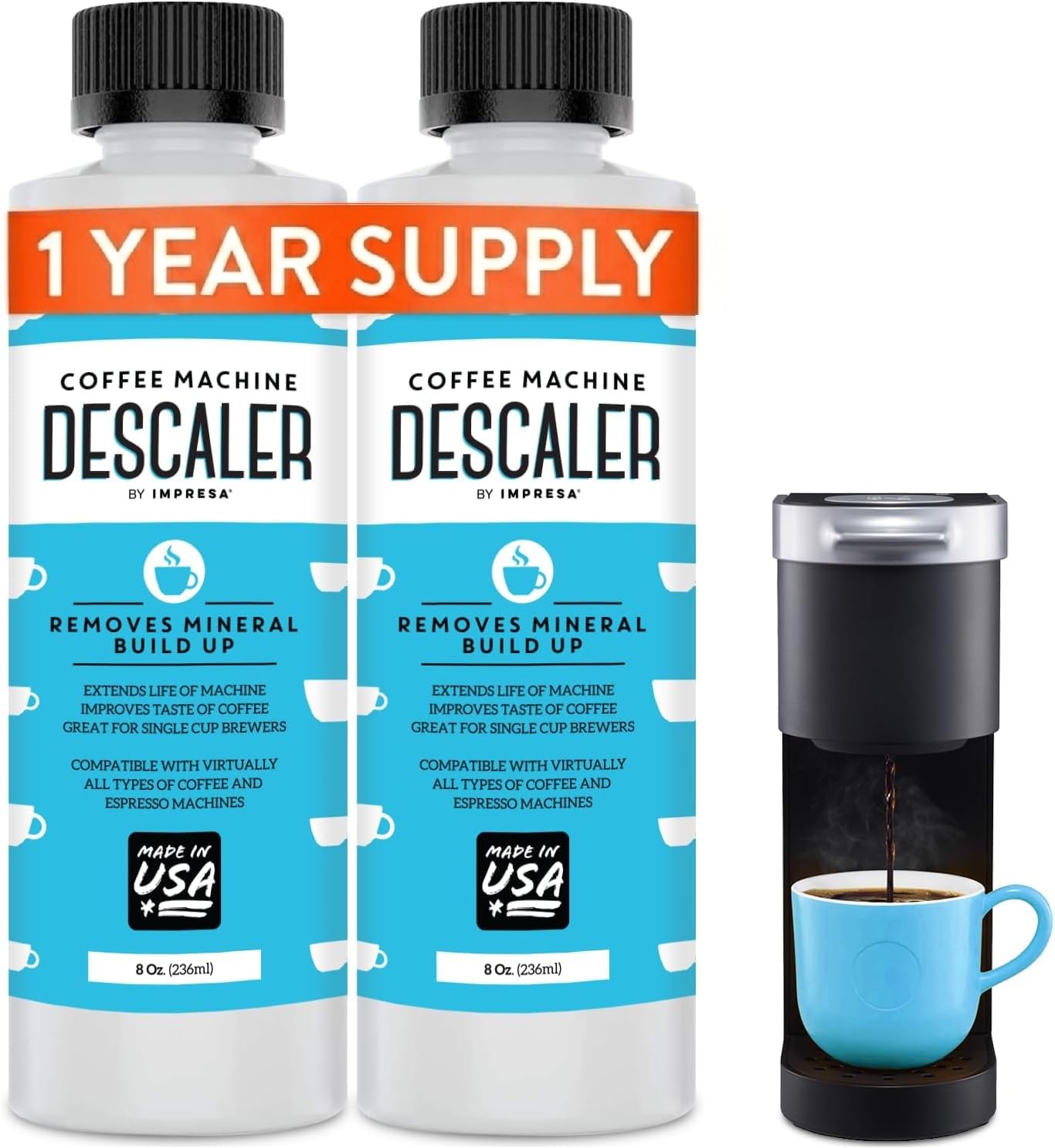
Scale is what hard water leaves in the boiler and the lines, and it does not announce itself — the machine just gets slower, runs hotter and starts tasting muddy. A liquid descaler dissolves it. Impresa's comes as two 8-ounce bottles, dosed at 4 ounces per session, so a pack covers several descales rather than one.

It is unscented and made to rinse clear, and it is listed for essentially every machine type: pod brewers, automatic espresso machines and filter machines, including Keurig, Nespresso, Breville, De'Longhi, Jura and Ninja. Against the vinegar shortcut, the absence of aftertaste is the real argument — one full rinse cycle and the next coffee tastes of coffee.

Where it earns its place is a hard-water kitchen, where scale arrives faster than any cleaning routine keeps up with. Our one reservation is not about the solution: on many machines the descale light stays on after a successful descale until you complete the brewer's own reset sequence, so follow the reset steps before deciding the bottle failed. If the machine has gone years without one, run a second session rather than a stronger dose.

Bottom line: Hard water wins eventually; keep this unscented, easy-rinsing descaler under the sink and the machine keeps its flow and its flavor.

How We Tested the Best Coffee Accessories

We started by mapping the accessories that genuinely change what lands in your cup: grinders, gooseneck kettles, brewers, scales, milk frothers, and the cleaning and descaling supplies that keep all of it working. From there we cut anything with unpublished specs, no available replacement parts, or a manual that assumed we already knew how to use it. That left 14 pieces, which we used for eight months.

Testing happened in the kitchen, at the hours coffee actually gets made: 6 a.m. weekday brews where nobody wants to weigh anything, slow weekend pour-overs for two, and cold brew batches set up on Sunday nights. We noted setup time out of the box, whether the instructions made sense without a video, and how many attempts it took before the coffee tasted right.

For grinders, we sifted the grounds and rubbed them between our fingers to check for boulders and dust, then brewed the same beans side by side. Kettles got a probe thermometer and a timer, with temperature logged at 30-second intervals to see how well it held. Every piece was cleaned after each use for a week, then weekly, watching whether grounds packed into corners, whether parts survived the dishwasher, and whether anything stained or held onto smells. In a hard-water kitchen, we ran descaler through a kettle and a brewer and recorded how long the descale light took to clear — and whether one cycle was enough.

Durability came later: burr shafts checked for wobble, lids for looseness, scale batteries for drift, coatings for chips. We also paid attention to the purchase itself — whether boxes arrived intact, whether a missing part got a real reply, and whether the price held up against what the thing would cost to replace.

How to Choose Coffee Accessories

Compatibility comes before features

Reusable pods are where this bites hardest. A pod built for a single-stream Keurig, where one needle pierces the top, will not work in a MultiStream model that punctures in several places: the lid cannot seal and the brewer may not close at all. We check the needle layout before anything else on the box, and we ignore the word universal.

The same discipline applies to paper. A size 02 cone filter belongs in a 02 cone dripper, and a filter that does not sit flush against the ribs brews unevenly no matter how good the paper is. Check the size marker on your dripper before you order a hundred of anything.

Freshness is a seal problem

Beans give up aroma within days of opening, so the container question is really a gasket question. Look for a lid that compresses a silicone ring when it latches and, if you buy freshly roasted beans, a one-way valve that lets carbon dioxide escape without letting air back in.

Then size it to your habits. Every time you open a jar you exchange the air inside, so a container holding about two weeks of beans beats one you open for a month — 1.4 pounds is a sensible middle. Sealed canisters often ask for hand washing, so read the care line before you commit.

Cleaning and descaling are separate jobs

Coffee oils coat the brew path and go rancid; mineral scale from water collects in the boiler and slows the flow. Rinse pods handle the first, a liquid descaler handles the second, and neither substitutes for the other. We keep both on the shelf and alternate them.

The trap is the indicator light. On many machines it stays lit after a successful descale until you run the maker's own reset sequence, so judge the solution by the taste and the flow rather than by the light. If a machine has gone years without a descale, run a second session instead of a stronger one.

Match the vessel to how you drink

A twelve-ounce tumbler is a mug with a lid: right for a commute, wrong if you sip all morning and want the last third still hot. Above that size, look hard at the closure. A sliding spout that seals flat is what makes a cup safe in a bag, but the same slider can need a firm thumb, so test it before you commit if hand strength is a concern.

Read the care instructions too. Plenty of insulated cups are hand wash only, with the lid the one part allowed in the dishwasher.

Measure the counter before the organizer

An organizer earns its place only if it fits under the cabinets and holds what you actually keep out. The caddy here stands 11.5 inches tall and needs clearance above it to lift cups out of the top bays; an overhanging shelf turns a useful station into a daily fight.

Count the cups, lids, stirrers and packets you leave out and check the bay sizes against them. Then decide counter or wall — and note that long stirrers are the usual casualty of a tidy-looking station.

Frequently Asked Questions

Final Verdict

Start with the Veken canister. Freshness is the variable every cup has in common, whatever sits on your counter, and a valve, a gasket and a date dial are the whole fix.

If you pour over a V60, add the size 02 Hario filters — they're the difference between a clean cup and a muddy one. If a pod machine does the work, buy both cleaners: rinse pods for taste, descaler for flow. And if your coffee station is still a heap of cups, the Mind Reader caddy ends that in an afternoon.