Bedding

Best Mattresses of 2026

A mattress is a purchase you make lying down, and it's also the one thing you can't honestly evaluate in ten minutes on a showroom floor. The version of you at 7 a.m. — stiff lower back, one arm asleep, a dip in the middle of the bed where you always seem to land — is the one who actually knows how it's going. What a good mattress fixes isn't just comfort; it's the reason you stop thinking about your bed at all.

Over the past year, my team and I have slept on eight different mattresses, hauling them into our own bedrooms and handing the spare keys to side sleepers, stomach sleepers, kids who jump, and one tester with a bad back. The lesson that saved us the most grief: firmness labels aren't standardized, so a medium from one brand can land like a firm from another — and the return policy is part of the product, not fine print. What follows are the ones we'd buy again with our own money.

1

Ashley Chime 12 Inch Full

Top Pick
Ashley Chime 12 Inch Full

Everyday adult sleep

Our Score 9.0/10
Check Price

Worth Noting

  • Firmer in practice than the medium firm label
  • Chemical smell right out of the wrapper
Profile
12 inches
Firmness
Medium firm
Warranty
10 years, non-prorated
Construction
3-layer memory foam
Read the full review

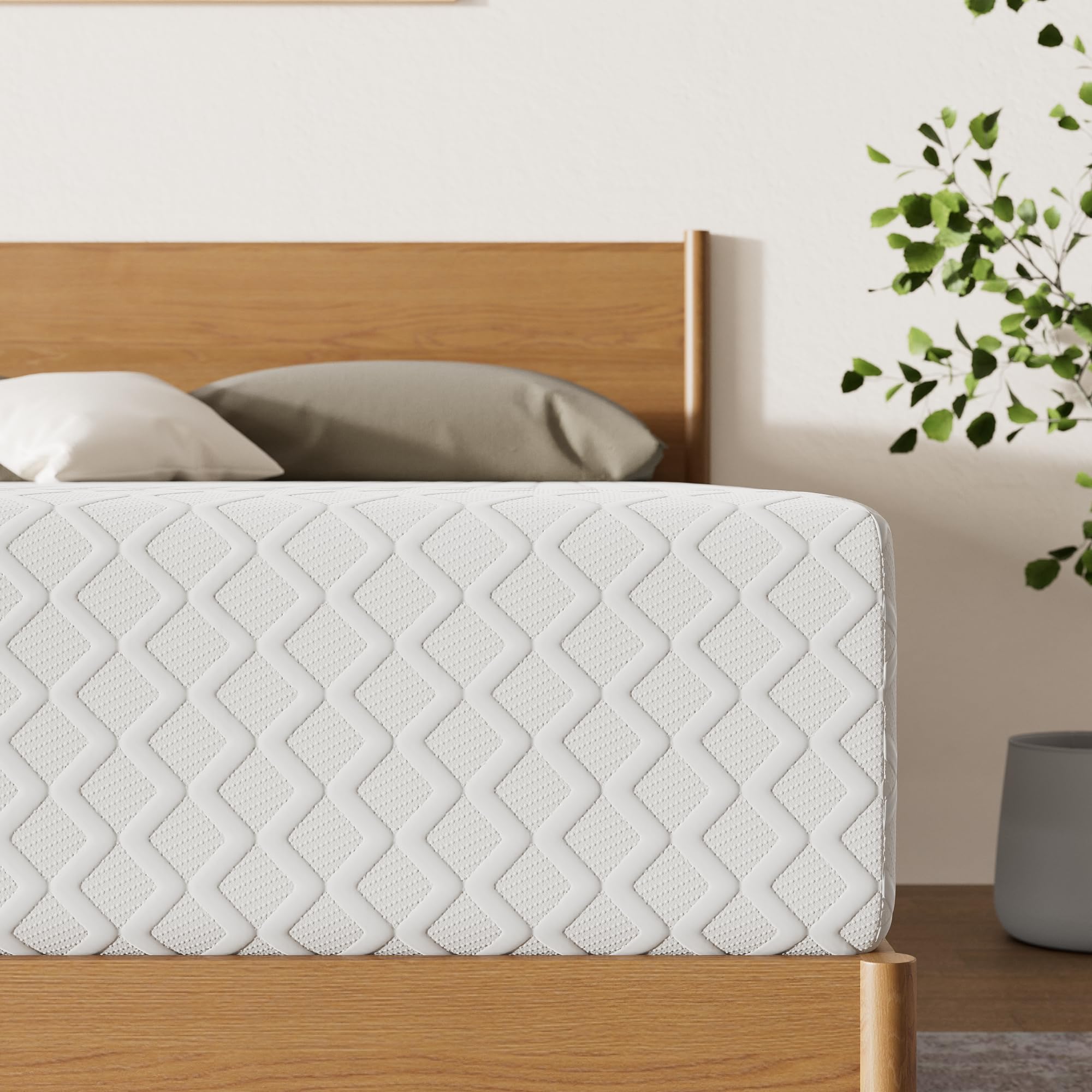
Memory foam has a reputation for swallowing you, and this mattress does not. The Chime 12 Inch lands on the firm side of its medium firm label, with a tight top and a support base that keeps you up on the surface rather than down in it. Back and stomach sleepers tend to take to that immediately; if you want to sink into a cloud, plan on a topper.

That firmness isn't why it's our top pick, though it doesn't hurt. It's the top pick because almost nothing about owning it is a gamble. The foam is CertiPUR-US certified, the warranty runs ten years and is not prorated rather than limited, and the support base is substantial enough that the mattress holds its shape when you sit up to read. We gave it the full 48 hours to expand before judging it, and what we got was a bed that stays put: no roll-together in the middle and no hollow where the heavier sleeper lies.

Two practical notes before you order. It's a full at 74 by 52 inches, so it suits a small room or a guest space rather than a couple's master, and it's rated for an adjustable base, which not every foam bed at this level is. The cover is a tight-top polyester with spot-clean care, so buy a protector the same week — it's the single thing that decides whether a foam mattress still looks new in three years.

Bottom line: We recommend it as the default mattress here: firm, supportive, certified foam and a non-prorated ten-year warranty, with the deepest track record of anything in this guide.

2

Novilla 12 Inch Queen

Novilla 12 Inch Queen

Value queen beds

Our Score 8.8/10
Check Price

Worth Noting

  • Medium plush gives back sleepers little to push against
  • Cover is hand wash only
Profile
12 inches
Firmness
Medium plush
Construction
3-layer gel memory foam
Weight Capacity
500 lb
Read the full review

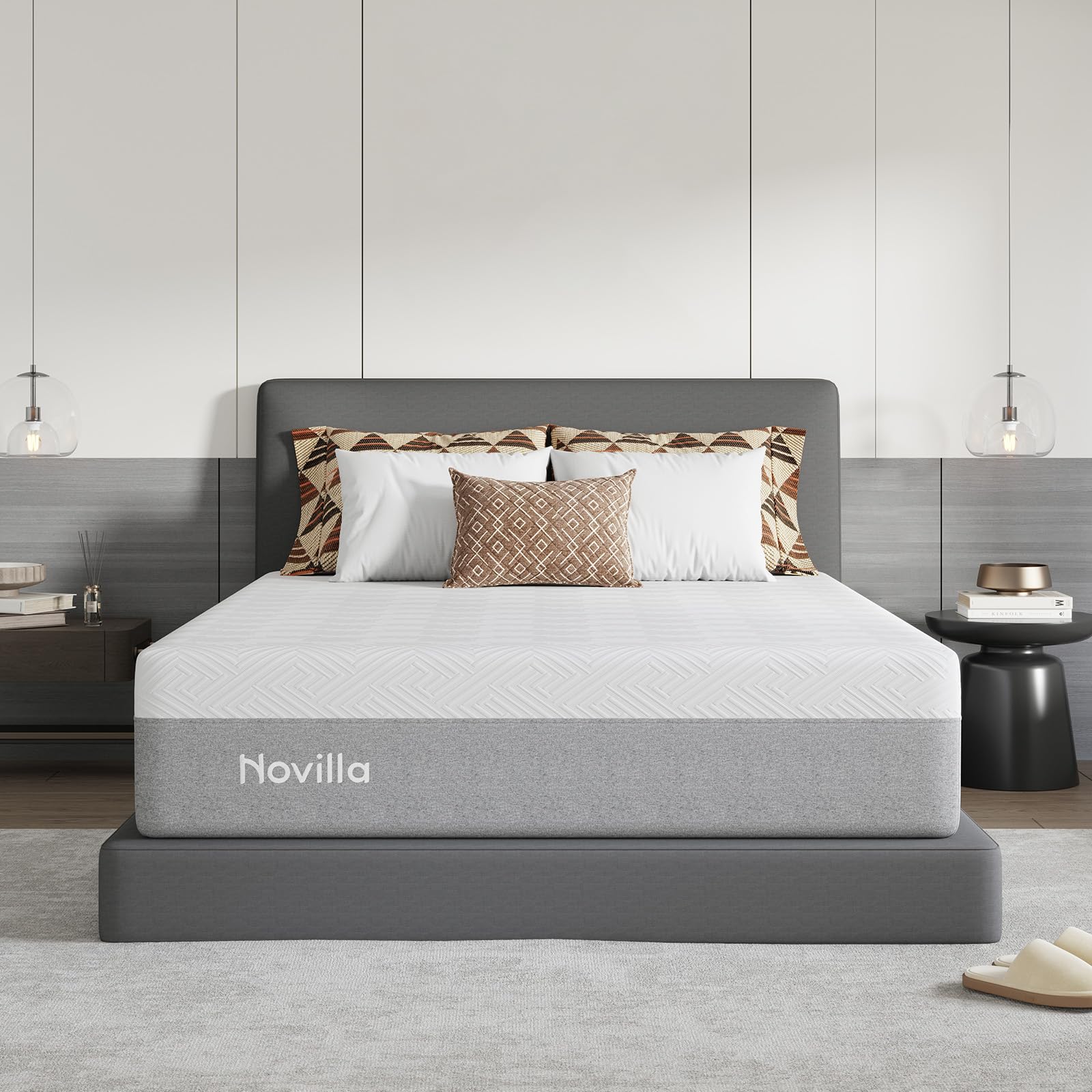
The Novilla 12 Inch is what we point to when a queen is the requirement and the top pick is more mattress than the budget allows. It's the least expensive queen in this group, and it doesn't feel like a compromise when you lie down on it: a real medium plush, soft at the shoulder and hip without letting you wallow.

Setup is the least dramatic part. It unrolls, it expands, and it doesn't announce itself with the chemical smell that follows a lot of boxed foam around for a week. We noticed nothing worth airing out, which is rare enough in this category to say out loud. Three layers of gel-infused foam absorb movement well, so a partner rolling over at 5 a.m. is a rumor rather than an event, and the 500-pound rating covers two average adults without an argument.

Where it gives ground is support and history. The softer surface suits side sleepers better than back sleepers who need to be held up, and it is less proven than the Chime. For a guest room, a first apartment or a teenager's upgrade, the savings are the right trade. For the bed you sleep in every night for the next decade, the firmer, more established Chime is the safer spend.

Bottom line: This is our pick for anyone who needs a queen and would rather not pay the most for one: it sets up clean, sleeps neutral and asks nothing of you afterward.

3

Novilla Bliss 14 Inch Queen

Novilla Bliss 14 Inch Queen

Side sleepers

Our Score 8.8/10
Check Price

Worth Noting

  • Less support for back sleepers than the firmer picks
  • Cover is hand wash only
Profile
14 inches
Firmness
Medium plush
Construction
4-layer gel memory foam
Weight Capacity
600 lb
Read the full review

Fourteen inches is the thickest bed here, and it changes the furniture around it: you sit higher, the mattress swallows the fitted sheet, and a low platform frame suddenly looks like the right height. For a side sleeper who wants to sink in a little, that extra foam is the whole point.

The Bliss is Novilla's plush end, and it is honest about it — medium plush, soft at the shoulder, a knitted cover over gel memory foam. Four layers absorb movement well, which is the quiet advantage of a thick foam bed: a partner who gets up at 5 a.m. barely registers.

Expansion is where our enthusiasm cools. The 14-inch profile is the product, and some of these queens stop short of it, arriving lumpy at the corners and staying that way. Give it the full window in a warm room before you measure anything, and if the corners are still low after that, start the return conversation rather than hoping it catches up.

We like it for a guest room or a side sleeper's master, where the plushness is the point. Buy the sheets with the bed, too: at 14 inches, standard fitted sheets pop off the corners by the second night, and that small annoyance sours a mattress you otherwise like.

Bottom line: For side sleepers who want to sink in, and guest rooms that should feel generous, this is the plushest bed we tested.

4

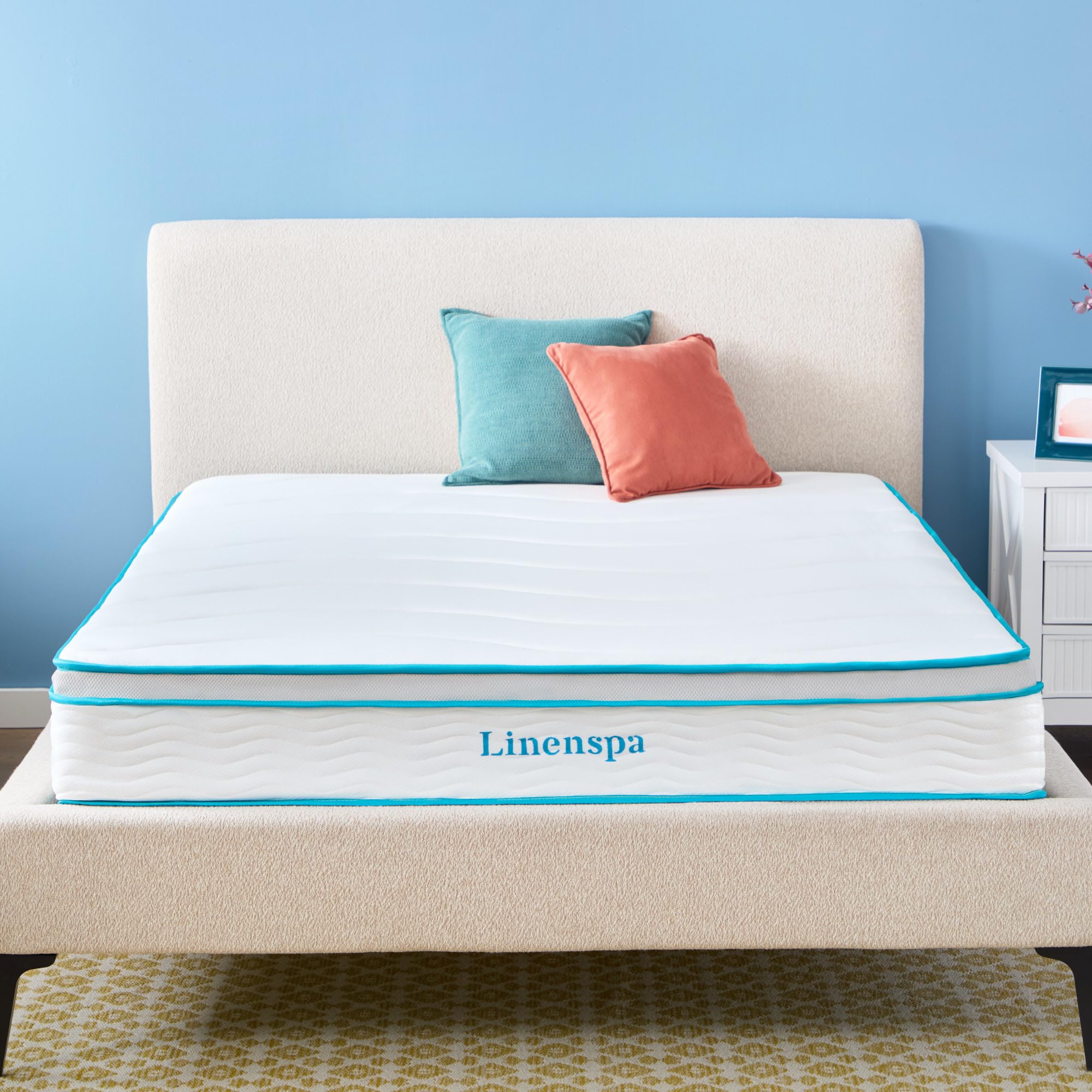
Linenspa 10 Inch Hybrid Twin

Linenspa 10 Inch Hybrid Twin

Kids and bunks

Our Score 8.8/10
Check Price

Worth Noting

  • Coils can be felt through the thin foam
  • 300-pound weight limit is the lowest here
Profile
10 inches
Firmness
Medium firm
Construction
Foam over continuous coils
Weight Capacity
300 lb
Read the full review

A bunk room is a specific problem: the mattress has to be thin enough to leave the guardrail useful, light enough to get up a ladder, and cheap enough that you don't wince when a seven-year-old jumps on it. This is the one that fits that brief.

Under the cover it is 1.5 inches of quilted memory foam, 2.5 inches of comfort foam and 6 inches of tempered steel springs — 228 continuous coils in the twin. Ten inches of total profile, 32 pounds in the box, and no box spring required, which means it can go straight onto a slatted bunk base. One adult can carry it upstairs without help.

The compromise is the coil feel. With that little foam over the springs you can feel them, particularly under an adult, and a side sleeper will notice the pressure at a hip or shoulder. We are comfortable recommending it for kids, guest rooms and rentals furnished on a budget; put a grown-up on it every night and you will both be shopping for a topper.

The cover doesn't come off, so a waterproof protector is doing all the work — buy it with the mattress. It is also one of the quicker ones here to come back into shape after unboxing, which matters when the bed has to be slept in that same night.

Bottom line: We keep this one for bunks and guest rooms: light, inexpensive and thin enough to leave the guardrail doing its job.

5

EGOHOME 10 Inch Queen

EGOHOME 10 Inch Queen

Firm-sleeping adults

Our Score 8.6/10
Check Price

Worth Noting

  • Firm enough to feel hard to side sleepers
Profile
10 inches
Firmness
Medium firm
Construction
4-layer gel memory foam
Weight Capacity
750 lb
Read the full review

The number that stopped us on the EGOHOME listing is 750 pounds — half again the rating of most queens here, and the highest in this group by a wide margin. That is the figure that matters if you and a partner are both solid sleepers, and it is the reason this is our pick for heavier buyers.

The feel backs it up. This is a firm mattress, and firm in the way back and stomach sleepers tend to like: even support from shoulders to hips, no hammock in the middle, no fight to roll over. Side sleepers often find it too much, because shoulders and hips don't get enough give, so it is the wrong pick if you sleep curled up. Four layers of gel foam with a green tea infusion, a knit cover, and a ten-year warranty.

Ten inches is the slimmer end for a queen, which matters if you're replacing a deep mattress inside a fixed frame — the bed sits lower and the nightstand suddenly looks tall. One detail is odd enough to mention: the foam is specified to hold its feel between 4°C and 30°C, which is a technical way of saying it won't turn to cardboard in a cold bedroom.

Bottom line: We choose this one when the sleepers are heavy, the bedroom runs cold, or a back needs a firmer plane than foam usually gives.

6

Zinus 8 Inch Full Cooling

Zinus 8 Inch Full Cooling

Guest rooms

Our Score 8.6/10
Check Price

Worth Noting

  • Sides have no edge reinforcement
  • Cover is spot clean only
Profile
8 inches
Firmness
Medium
Construction
2-layer gel memory foam
Weight Capacity
500 lb
Read the full review

Cheap boxed foam often leans on a fiberglass barrier sewn inside the cover to meet flammability rules, and that is the material people find on their floors and curtains a year later. Zinus builds this one around a carbon-rayon barrier instead and says so on the label. In a kid's room, that detail is worth more than another inch of foam.

Price is the other half of the argument. This is the least expensive full-size mattress here, and it still gets you 8 inches of gel memory foam over a high-density base, a 500-pound rating and a medium feel that is actually in the middle rather than disguised firm. It is the one we recommend for guest rooms and first apartments, where the mattress needs to be decent and forgettable.

Eight inches doesn't leave much to sink into, so a heavier sleeper meets the base sooner — that is the trade you make for the money. The other thing to watch is expansion. Give it the full window before you judge it, and check the corners, because a short corner on an 8-inch bed shows through the sheets.

Bottom line: For a guest room or a kid's first bed, this is the one we buy: fiberglass-free, cheap for a full, and firm enough to take a few years of occasional use.

7

Ashley Chime 12 Inch Hybrid King

Ashley Chime 12 Inch Hybrid King

King-size couples

Our Score 8.6/10
Check Price

Worth Noting

  • Comfort foam softens first under heavier sleepers
  • Spot clean only
Profile
12 inches
Firmness
Medium
Construction
Gel foam over pocketed coils
Pocketed Coils
360
Read the full review

Three hundred and sixty pocketed coils across a king is not as many as it sounds. The interesting part is that two rows of them run around the perimeter, which is what keeps the edge from collapsing when you sit down — and it is why this is the hybrid here we are comfortable recommending to people who hate feeling tipped out of bed.

Coils change how the bed behaves. Turning over takes less effort than on an all-foam mattress, and the gel memory foam and quilt foam on top keep it from feeling like a trampoline. It is a medium feel, though a divided one: lighter sleepers tend to call it soft and heavier ones call it firm, which is the usual signature of a mattress whose coils do more of the work than the foam.

Two things to plan for. It arrives at 94 pounds, so get it to the bedroom before you cut the wrap and line up a second pair of hands for the stairs. And rotate it every few months: the comfort foam is the part that gives first under a heavier sleeper, and a king is a lot of mattress to replace because one side has gone hollow. Allow the full 48 hours before you judge the feel.

Bottom line: We point couples at this king when they want coil bounce and an edge they can sit on without sliding off, and can live with foam that softens first where they sit.

What a Year of Sleeping on Eight Mattresses Taught Us

We started by pulling together the models that kept surfacing in owner reviews, retailer best-seller lists, and conversations with salespeople who actually sleep on the floor models. From there we cut anything with a return window under 90 nights, a warranty under 10 years, or a price that didn't line up with what was inside it. That left eight mattresses, which we slept on for a full 12 months, rotating each one between at least two households so no single sleeper's preferences decided the outcome.

Every mattress got at least three weeks as somebody's primary bed, with testers logging how it felt at lights-out and again at 7 a.m. We took photos lying on our backs and sides to see whether spines stayed stacked or hips sank, and noted where pressure built up in shoulders and hips overnight. Our tester with chronic lower back pain kept a morning stiffness score, a tennis ball dropped from shoulder height showed how much bounce came back, and a glass of water set on the far side of the bed revealed how much motion a partner rolling over sent across.

Buying was its own test. We timed delivery windows, noted whether old mattresses were hauled away, and slept on each one through its first week of off-gassing. Kids jumped, spilled juice, and stripped covers in the family homes, which told us whether a spill sat on top or soaked in and whether the cover went back on without a fight. Value came down to the math — warranty length, materials, and how the mattress felt in month ten compared with week one.

How to Choose Mattresses

Firmness labels are vague, so buy for your sleep position

Medium, medium firm and plush are not standardized, and within this group alone the same words cover a bed that reads hard and one that feels genuinely soft. The Chime sits on the firm side of medium firm; the Novilla Bliss is properly plush. If you sleep on your back or stomach, lean firmer than you think you want. Side sleepers need give at the shoulder and hip, which is where the plush beds earn their place.

The practical rule: a topper can soften a mattress that is too firm, and nothing rescues one that is too soft. Heavier sleepers also sink further into the same bed, so a couple with a big weight difference is usually better served by coils than by deep foam.

Judge the mattress on day three, not night one

Compressed foam needs time and warmth to come back. Most of these list a window somewhere between 24 and 72 hours, and the cheaper the mattress, the more likely it is to arrive short at the corners. Unwrap it in the morning, keep the room warm, and leave it alone for the full window before you decide anything about it.

Then measure it. A 12-inch mattress reading 10 inches after three days is not a break-in period, it is a return. Do not judge firmness on the first night either, when the foam is still catching up and the whole bed feels tighter than it will later.

Foam or coils: pick by how the bed behaves

All-foam isolates movement well and sleeps warmer, and its edges give way unless the maker reinforces them. Pocketed coils add bounce, let air move, and hold an edge properly when there are perimeter rows, which is why the hybrid king here is the one to sit on without sliding off. Continuous coils under a thin layer of foam, as on a budget twin, are the ones you can feel through the mattress.

Couples who wake each other should favour foam or a pocketed hybrid. Anyone who sits on the edge of the bed to dress, or who needs to turn over easily, gets more from coils.

Match the weight rating and the warranty to the room

The stated capacities here run from 300 to 750 pounds, and that figure is per mattress, not per sleeper. Two average adults on a queen are already asking a lot of a 500-pound rating. Add a thin profile and you get the sagging that shows up in the second year.

Warranties are worth reading past the number of years. A non-prorated ten-year warranty, like the top pick's, covers the full value for the whole term; a limited one often shrinks what you get back as the years pass. For a guest room that gets used a dozen nights a year, that difference matters less than it does in a master bedroom.

Frequently Asked Questions

Final Verdict

Our default is the Ashley Chime 12 Inch Full. It does the least controversial thing well: firm, even support, twelve inches of certified foam, a non-prorated ten-year warranty and more history behind it than anything else here. If you want a mattress you do not have to think about again for a while, that is the one.

Two changes push you elsewhere. If a queen is the requirement and the budget is tighter, the Novilla 12 Inch Queen gets you a softer, quieter night for less, with a shorter record behind it. And if you sleep on your back or stomach, or share with someone solid, the EGOHOME's 750-pound rating and firm surface are the better fit.