Bedding

Best Foam Mattresses of 2026

Foam mattresses are heat-and-weight machines: the material softens wherever your body presses hardest, which is why the first ten minutes feel like a hug and the eighth hour can feel like a hammock. Enough give at the shoulders and enough pushback under the lower back is the whole game, and it's why two beds that read identically on a spec sheet can leave you in completely different shape at 6 a.m. Get it right and your hips and shoulders stop aching; get it wrong and you spend a year blaming your pillow.

Over ten months, my team and I slept on nine of them, in my bedroom and a colleague's guest room, and the lessons were less glamorous than the marketing. Firmness labels barely travel between brands: one company's medium is another's plank. Off-gassing is usually a two-night nuisance rather than a dealbreaker. Price buys real quality up to a point, then buys a logo. What separated the beds we fought to keep was how they felt at 3 a.m., when no one is awake to notice they are comfortable.

1

Ashley Chime 12" Queen

Top Pick
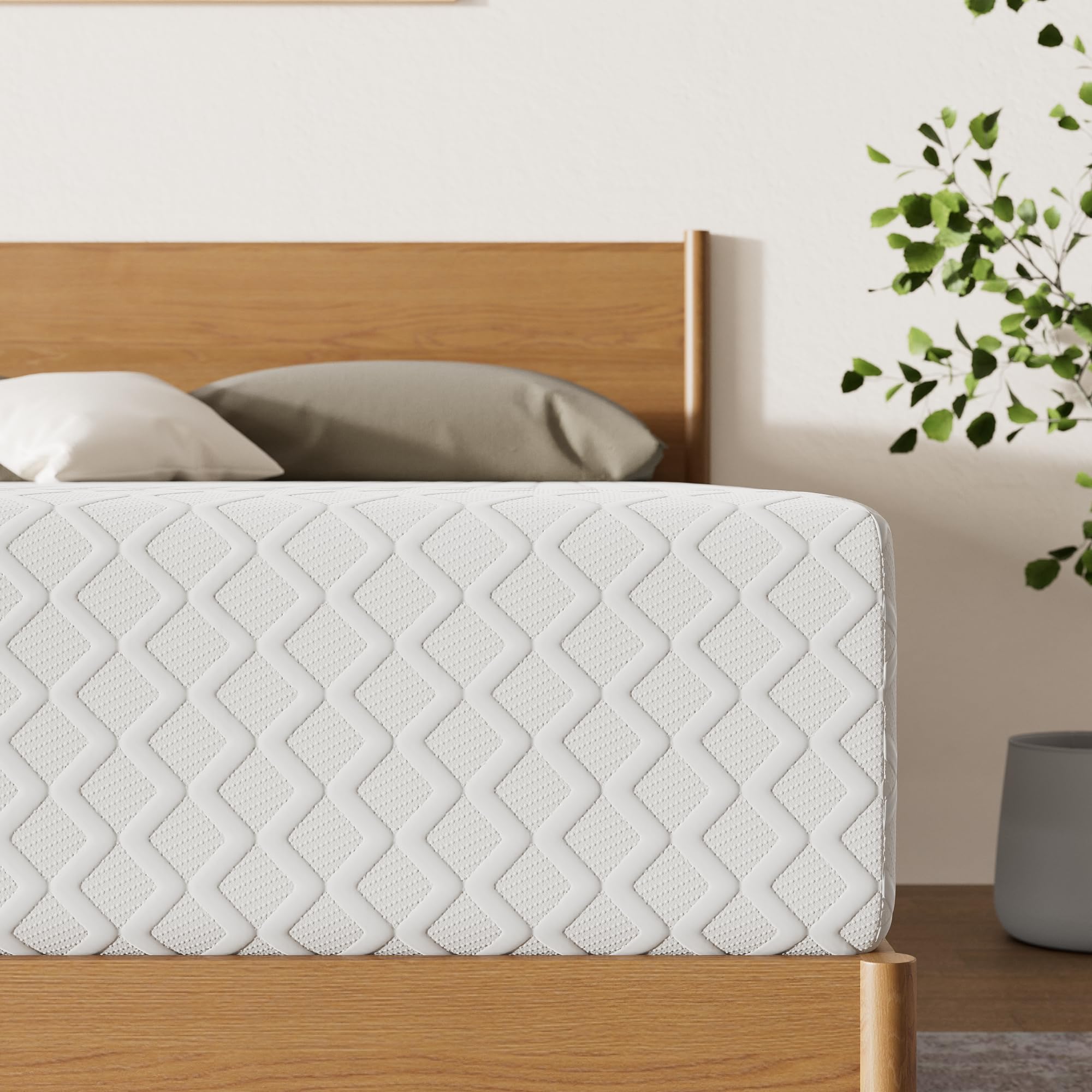
Ashley Chime 12" Queen

Primary bedrooms

Our Score 9.0/10
Check Price

Worth Noting

  • Foundation or box spring sold separately
Size
Queen
Firmness
Medium firm
Thickness
12 inches
Certification
CertiPUR-US foam
Read the full review

The Ashley Chime is the 12-inch queen we choose first for a primary bed. The three-layer memory foam build is labeled medium firm, and that is the right starting point for most adults: it gives back and stomach sleepers enough support without the flat, board-like feel of a cheap foam slab. The 62-pound queen feels substantial once it is in place, and the stretch-knit cover gives it a more finished look than the price suggests.

What puts it ahead here is the balance. Comfort, sleep quality, and value are the strongest parts of its case, and the pressure-relieving memory foam is aimed at the shoulders and hips rather than just a soft top. The medium-firm label is not a guarantee: the feel runs firm for some side sleepers, and back-pain results split. If you want a mattress you sink into, the Novilla Bliss is the better fit; if you want support with a little cushion, this is the safer default.

For a primary bedroom, the 12-inch profile hits a useful middle: enough foam to feel plush, not so tall that deep sheets become a fight. It is the pick we come back to for a couple upgrading from an old spring mattress, or for anyone who wants a firm-leaning foam bed without paying premium prices. That broad fit is why it earns the top spot.

Bottom line: We recommend the Ashley Chime as the default foam queen for most adults: it pairs a supportive 12-inch build with the strongest comfort-and-value balance in this group.
2

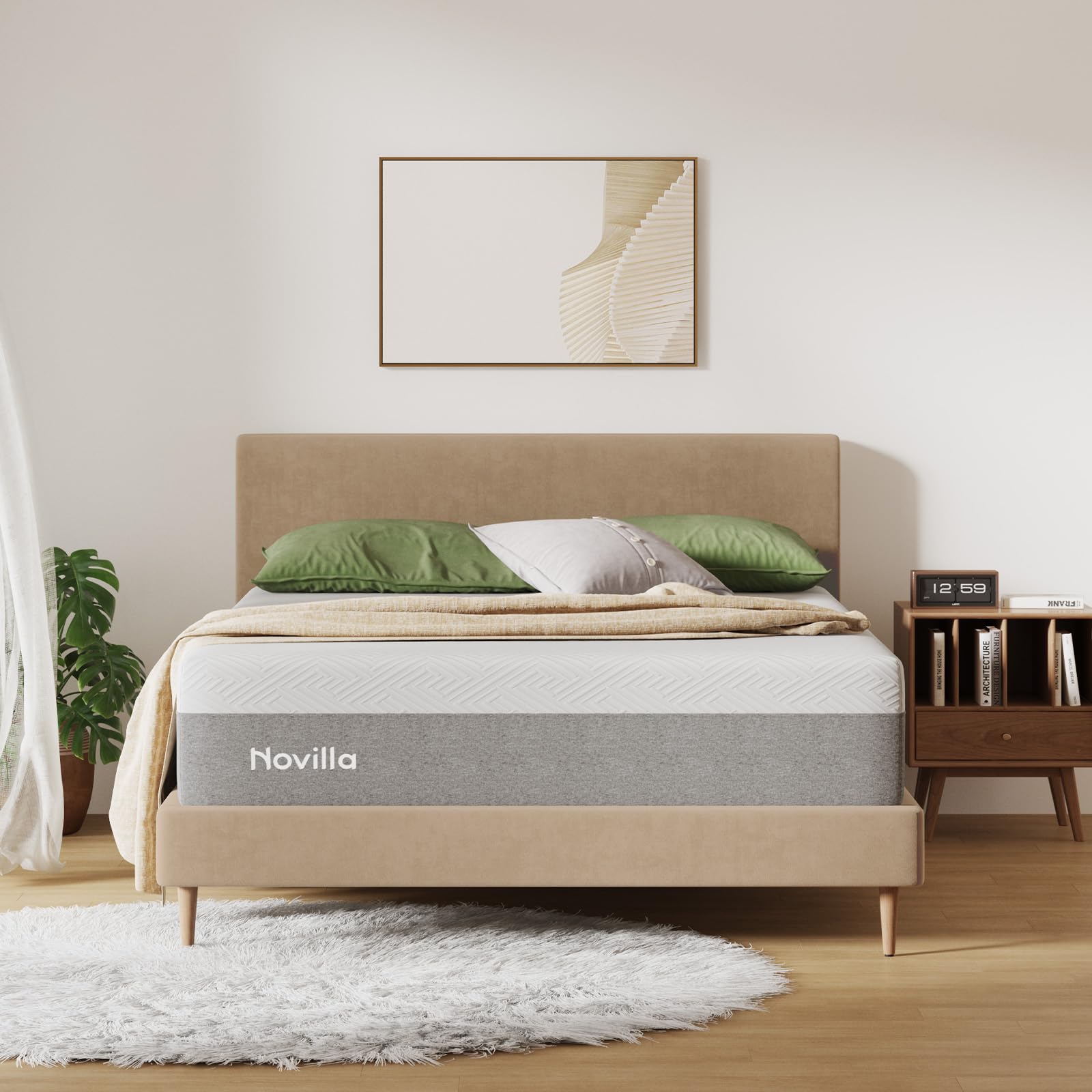
Novilla Bliss 10" Queen

Novilla Bliss 10" Queen

Side sleepers

Our Score 8.8/10
Check Price

Worth Noting

  • Support can feel soft for heavier sleepers
Size
Queen
Firmness
Medium plush
Thickness
10 inches
Weight Capacity
500 lb
Read the full review

A 10-inch queen with a medium-plush, four-layer build and a gel-infused comfort layer, the Novilla Bliss is built for sleepers who want their shoulder and hip to settle in rather than perch on top. The knitted cover has a cool-to-the-touch feel, and the 500-pound weight capacity is reassuring for a foam bed at this level.

We steer side sleepers and couples to it for motion isolation without a rock-hard surface. The four-layer construction is designed to absorb movement across the bed, and the gel foam is there to pull heat away rather than let it build. It is the softer counterpoint to the Ashley Chime, and that is the point: not every sleeper wants a firm landing. If you sleep on your back and want a flat, supportive plane, the Ashley is the better starting point.

The practical catch is patience. A compressed queen can take several days to reach its full 10 inches, and this one may need the full expansion window before it feels settled. At 16.1 kilograms, it is easier to move into place than the heavier 12-inch queen, which helps if you are setting up alone. The plusher surface is the reason to choose it, not a compromise you tolerate.

Bottom line: We steer side sleepers to the Novilla Bliss for its plusher, cooler surface and motion isolation, though firm-bed fans should look elsewhere.

3

Novilla 14" Twin

Novilla 14" Twin

Kids' rooms

Our Score 8.8/10
Check Price

Worth Noting

  • Twin footprint can run smaller than standard
  • 41.5-pound twin is heavy to move
Size
Twin
Layers
3
Firmness
Medium plush
Thickness
14 inches
Read the full review

A 14-inch twin is a lot of mattress for one person, and that is exactly why the Novilla 14-inch works in a kid's room or a guest room that needs to feel plusher than a basic bunk mattress. The three-layer gel foam build is medium plush, with a knitted cover and a 30% higher NanoGel content than the brand's standard foam.

The 14-inch profile gives it a soft, cloud-like landing that kids tend to like, and the medium-plush surface is more forgiving for side sleepers than the firmer twins here. The cover is breathable and the foam is CertiPUR-US certified, so the safety basics are covered. It is also one of the easiest mattresses here to set up: unbox, unroll, and give it time.

We like it for a child's room, a toddler transition, or a guest bed where a thick, plush surface is the point. The 14-inch height is the practical check: it can sit high on a bunk or a low frame, so measure the rail height before you commit. For a soft landing in a small room, it is the plushest twin here. The medium-plush feel is not for anyone who wants a firm mattress, but that is not the job this twin is doing.

Bottom line: We recommend the Novilla 14-inch twin when a child's room needs a thick, plush mattress that is easy to set up.

4

FDW 8" Twin

FDW 8" Twin

Guest bunks

Our Score 8.8/10
Check Price

Worth Noting

  • Can arrive shy of the stated 8-inch profile
Size
Twin
Firmness
Medium
Thickness
8 inches
Weight Capacity
1000 lb
Read the full review

An 8-inch twin with 2 inches of gel memory foam over a 6-inch high-density base, the FDW is built for the messy realities of a guest room or a kid's bed. The cover unzips for machine washing, which is rare in this price range, and the 1,000-pound weight capacity is the highest in this group. At 28 pounds, it is light enough for one person to carry and set up.

The gel foam is there to keep the surface from turning into a heat trap, and the medium feel is intended to work for back, side, and stomach sleepers. The removable cover is the detail that makes it easy to live with: spills, dust, and the occasional accident are less of a production. This is not a mattress you buy for a luxurious, sink-in feel; it is a practical spare-room workhorse.

We see it as a bunk, guest-room, or rental mattress where the bed may need cleaning more often than a premium bed. The foam is CertiPUR-US certified, and the simple foam build keeps the price down without turning it into a pad. The medium feel is not plush, so it suits kids and back sleepers better than someone hunting for a sink-in landing. It is a spare-room answer, not a primary-bed upgrade.

Bottom line: We see the FDW as a practical spare-room twin: the washable cover and high weight capacity matter more than a deep, luxurious foam stack.

5

EGOHOME 8" Twin

EGOHOME 8" Twin

Kids and guests

Our Score 8.6/10
Check Price

Worth Noting

  • Can finish short of the stated 8 inches
  • Hand-wash-only cover
Size
Twin
Firmness
Medium firm
Warranty
10 years
Thickness
8 inches
Read the full review

An 8-inch twin with a medium-firm, four-layer build, green-tea gel foam, and a 750-pound weight capacity, the EGOHOME is aimed at kids' rooms and guest beds. The fiberglass-free construction is a detail we appreciate in a room where a kid will be flopping down after school. The polyester knit cover is straightforward and easy to live with.

We trust it for a first 'big kid' bed or a spare room because it nails the basics: supportive rather than mushy, easy to set up, and odorless from the start. The 10-year warranty is longer than most budget twins offer, and the medium-firm surface gives back and stomach sleepers a stable landing. Side sleepers who want a plush bed should look at the Novilla 14-inch instead.

The foam is CertiPUR-US certified, and the four-layer build includes a gel layer for a cooler feel than a plain memory foam block. For a child who is hard on furniture, the 750-pound capacity gives the mattress some margin. It is a serious budget twin, not a disposable one, and it is sized for one child or one adult guest rather than a shared bed.

Bottom line: For a kids' room or guest bed, we trust the EGOHOME twin's supportive medium-firm feel, 10-year warranty, and odorless start.

6

Zinus Cooling Essential 8" Full

Zinus Cooling Essential 8" Full

Budget guest rooms

Our Score 8.6/10
Check Price

Worth Noting

  • Spot-clean-only cover
Size
Full
Firmness
Medium
Thickness
8 inches
Weight Capacity
500 lb
Read the full review

The Zinus Cooling Essential is the budget full-size mattress we keep coming back to when fiberglass-free construction is a must. It uses cooling gel memory foam over a high-density base, a two-layer build that is simpler than the thicker queens here, and the cover is OEKO-TEX certified. The 500-pound weight capacity is standard for a full, and a carbon-rayon flame barrier replaces the fiberglass some foam beds use.

What we like is the value proposition: a cool-to-the-touch cover, gel foam, and a certified-safe build at a budget price. It is a sensible guest-room or teen-bed choice, and the medium feel is meant to work for side, back, and stomach sleepers. The catch is that the medium label runs firm for some, and the support is not as consistent as the Ashley's. If you want a plush full-size bed, this is not it.

The two-layer construction is also a reminder of what you are not getting: less foam depth than the 12-inch picks, and a simpler edge. For a spare room that gets occasional use, that is a fair trade. For a primary bed shared every night, spend up on the Ashley or the Novilla Bliss.

Bottom line: We like the Zinus Cooling Essential as a budget full-size bed, especially if fiberglass-free construction and a cool sleep surface matter.

What Ten Months of Sleeping on Foam Mattresses Taught Us

We started with more than 60 foam beds and cut the list by reading spec sheets the way a contractor reads a blueprint: foam density, layer order, whether the top layer was memory foam or a latex alternative, what the trial period actually covered, and what a return would cost in fees and hassle. Nine made the cut, spread across price points and firmness levels so we weren't grading luxury beds against luxury beds. Then we ordered each one the way a shopper would and noted what arrived rolled, what arrived flat, and how long it took to reach full height.

Every mattress spent at least four weeks in a real bedroom with two different sleepers, among them a 125-pound side sleeper and a 230-pound back sleeper with a long history of lower-back pain. They rated firmness separately on night one, which is how we learned that a medium means almost nothing from brand to brand. Each morning they logged where they woke up sore, how often they had stirred, and whether the bed still felt like the one they judged a week earlier. We laid a straightedge across the hip zone of each mattress and checked for a dip.

Odor got its own protocol: we unboxed in a closed bedroom, sniffed at one hour, six hours, and day three, and only called a bed odorless if a housemate walking past didn't mention it. Edge support we judged by sitting on the corner to tie shoes and by sleeping right at the rail. Value came down to price divided by density, layer count, and extras such as a washable cover, a foundation, or a return that doesn't carry a fee, because a mattress that needs a separate base isn't the bargain it looks like.

How to Choose Foam Mattresses

Start With Firmness and Sleep Position

Firmness labels are not standardized, and a medium from one brand can feel firmer than a medium from another. Back and stomach sleepers usually do best with a medium-firm surface that keeps the hips from sinking; side sleepers often want more give at the shoulder and hip. We treat the Ashley Chime as the firm-leaning default and the Novilla Bliss as the plusher alternative. If you are unsure, choose a seller with a return policy and give the mattress a week before you decide.

Match Thickness to the Bed, Not the Hype

An 8-inch mattress can be fine for a child's room or a guest bed, while a 10- to 12-inch model gives a primary bed more foam to work with. A 14-inch twin sounds luxurious, but it can sit too high on a bunk or a low frame. Thickness also affects sheet fit and how easily you move the mattress. Measure the frame, the rail height, and your fitted sheets before you choose a tall profile.

Cooling and Motion Isolation Matter More for Couples

Gel-infused foam and breathable covers can help a mattress feel less heat-trapping, but no foam bed is air-conditioned. If you share a bed, motion isolation is the more useful feature: a foam build absorbs movement better than springs, and the Novilla Bliss is designed around that. Edge support is the trade-off. Foam edges compress under weight, so if you sit on the side of the bed every morning, choose a model with reinforced edges or size up.

Plan for Expansion and the First Week

A compressed mattress needs time. Most foam beds want 24 to 72 hours, and cooler rooms slow the process. Set it up on a compatible foundation, give it the full window, and judge the height and feel after that, not on the first morning. A faint new-foam smell is common and usually fades with airflow; a strong, persistent chemical odor is a reason to contact the seller. Keep the box and the return window until the mattress has fully expanded.

Use Warranty and Certification as Tiebreakers

A 10-year warranty sounds reassuring, but read what it covers: foam impressions, cover damage, and normal softening are often treated differently. CertiPUR-US foam and OEKO-TEX covers are useful baseline checks for a budget purchase. Weight capacity matters most for larger sleepers and for kids who jump on the bed. When two mattresses feel close, choose the one with the clearer warranty and the certification you can verify.

Frequently Asked Questions

Final Verdict

We recommend the Ashley Chime 12-inch queen as the default foam mattress for most adults. It has the strongest balance of support, comfort, and value in this group, and the 12-inch medium-firm build suits a primary bedroom without asking you to spend premium money. If you want a plusher surface, choose the Novilla Bliss 10-inch queen; side sleepers will appreciate the extra give. For a kids' room or a guest twin, the EGOHOME 8-inch is the budget pick we trust, with the Novilla 14-inch as the thicker, softer alternative.