Outdoor

Best Mailboxes of 2026

A mailbox is the one piece of your home's exterior that strangers open every day. It has to look good from the curb, keep envelopes dry, and survive weather and the occasional bored teenager. The wrong one shows its flaws fast: a door that flaps in the wind, a lock that sticks by the second winter, or a box that bends a magazine sideways. The right one fixes an annoyance you barely notice until it’s gone—mail stays dry, a magazine fits flat, and the front of the house looks cared for.

I’ve lived with mailboxes that looked nice but couldn’t survive a rainy week, so I judge the hinge and latch as closely as the finish. Over eight months, we tested 12 mailboxes, from simple curbside boxes to locking wall-mount styles. We paid attention to installation, usable space, security, and whether each one felt worth the money. The keepers got the small things right: a door that closes with a click, a lock that doesn’t fight you, and a finish that looks sharp after a season outside—start there.

1

Mail Boss Mail Manager

Top Pick
Mail Boss Mail Manager

Theft-prone curbsides

Our Score 9.6/10
Check Price

Worth Noting

  • Lock can stiffen with age
  • Outgoing mail clip is awkward
Lock
Keyed wafer lock
Weight
22 lb
Capacity
1760 cubic inches
Dimensions
21"D x 10.75"W x 11.25"H
Read the full review

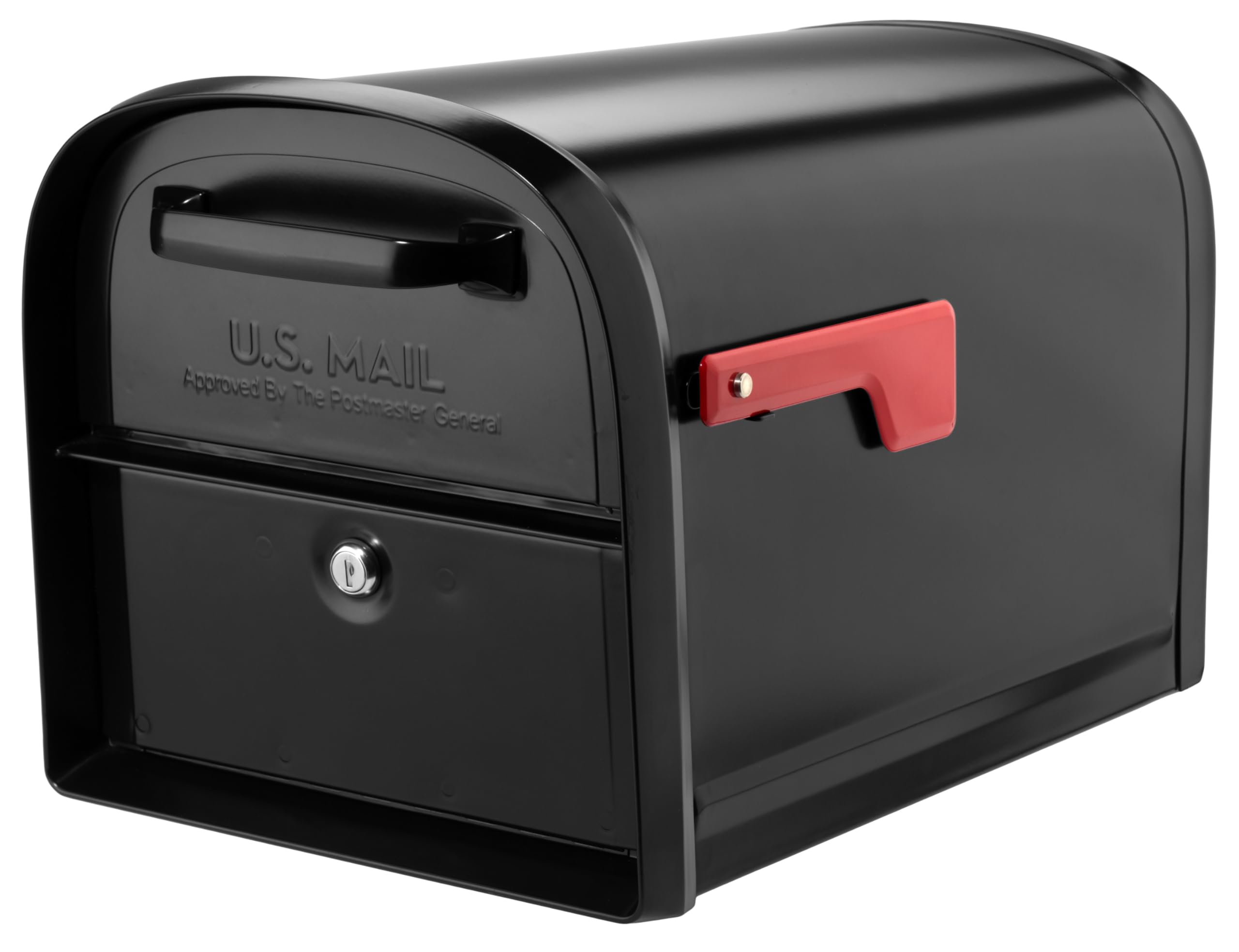
Reach into a Mail Manager and your fingers stop short. There's a baffle behind the opening — a plate that lets a carrier drop in a small parcel but keeps a hand from fishing mail back out — and that is the detail most locking boxes miss. It's the thing that decides this category for us.

The rest of the build backs it up. Fourteen- and 16-gauge galvanized steel, welded, with stainless hinges and an anti-pry latch designed to defeat a screwdriver; press on the door and it doesn't flex the way a stamped box does. The lock is a 10-disc wafer cylinder rather than the usual barrel key, and three metal keys and the installation hardware come in the box.

Capacity is 1,760 cubic inches, enough for several days of mail plus the small boxes carriers leave, and the body bolts straight to an existing post through multiple hole patterns in the floor. Mail Boss doesn't need a separate mounting plate, which is one less thing to order. At 22 pounds, though, it wants a post that isn't already wobbling.

Two things to know. The lock can stiffen after a few winters of weather, so keep a spare key somewhere that isn't the mailbox. The concealed outgoing-mail clip is also awkward to reach. If your carrier leaves things much bigger than a box of checks, a parcel box is the better shape.

Bottom line: We recommend it for any curb a stranger can reach: welded steel, an anti-pry latch, and a baffle that keeps a hand from reaching the mail.

2

Simplay3 Classic Mailbox Kit

Simplay3 Classic Mailbox Kit

Easy weekend install

Our Score 9.6/10
Check Price

Worth Noting

  • Not a locking box
  • Existing 4x4 may need cutting down
Doors
Two magnetic access doors
Mount
4x4 wood post
Dimensions
23"D x 12.5"W x 49.75"H
Read the full review

This is the mailbox for the household with a 4x4 already in the ground and no appetite for a project. The kit arrives with the mailbox, a post cover, mounting hardware, a flag and two sizes of adhesive house numbers; it slides over the post and takes a few screws. Of everything here, we rate it the easiest to install.

The two magnetic doors are the real argument. The carrier fills it from the street, you empty it from the yard side, and on a corner lot or a fast road that is worth more than a lock you have to fumble for with an armful of groceries. Inside, it takes catalogs, envelopes and small boxes, and it's built to USPS standards for curbside delivery. One install catch: on an existing post you may need to cut the 4x4 down to about 22 inches so the cover sits right.

Plastic is the trade. It won't rust or dent, but it also won't shrug off a plow the way steel does, and the doors are held by magnets rather than a latch — a heavy snow load or a hard slam can leave one sitting ajar. There's no lock here, which for a lot of porches is fine: the rear door is a convenience, not a defense.

Bottom line: We point to it when the 4x4 is already in the ground: everything but the post comes in the box, and nothing on it will rust.

3

Gibraltar Patriot

Gibraltar Patriot

Budget volume

Our Score 9.4/10
Check Price

Worth Noting

  • No lock or baffle
Weight
4 lb
Capacity
1200 cubic inches
Material
Plastic
Dimensions
21.2"D x 12.4"W x 9.45"H
Read the full review

The Patriot answers a question the steel boxes can't: how much mail can you hold for very little? Twelve hundred cubic inches of rust-proof plastic, wide enough for magazines to lie flat and for a medium flat-rate box to go in without bending. When someone wants capacity and doesn't want to think about rust, this is the box we name.

The detail that sells it is the flag. On most boxes here the flag tells the carrier there's outgoing mail; on this one it's an arrival indicator, popping up when the door is opened so you know at a glance whether the carrier has been. That sounds trivial until you have walked to the curb three times in an afternoon for nothing.

The door is where it gives ground. The catch is magnetic on a plastic body, and a door that won't stay shut is the failure to watch for — check the alignment as soon as it's on the post, while swapping it is still easy. Otherwise it's plain plastic: no lock, nothing to rust, and a body that has held up through hard winters.

Bottom line: We choose it when capacity is the whole point: 1,200 cubic inches of rust-proof plastic on the post you already have.

4

Architectural Oasis 360

Architectural Oasis 360

Parcel deliveries

Our Score 9.2/10
Check Price

Worth Noting

  • Key can be fiddly to seat
Lock
Keyed lock
Weight
15.8 lb
Capacity
1534 cubic inches
Dimensions
20"D x 11.4"W x 11.5"H
Read the full review

If the Mail Manager is the box for a road you don't trust, the Oasis 360 is the box for a road you have to stand in. It's galvanized steel, keyed at both ends, and that second door means you can empty it from the yard side instead of stepping into the lane.

It's built around the fact that carriers leave packages now. The body is 1,534 cubic inches — closer to a small locker than a letterbox — and it takes padded envelopes and small boxes that a medium steel box turns away. Fifteen pounds of powder-coated steel is heavy enough to feel solid without needing the post a 22-pound box does.

The lock is the part to think about. It works, and it's half the reason to buy the box, but the key can be fiddly to seat and the cylinder gets stubborn on some of these. Try the key a few times before the box goes on the post, while returning it is still simple.

What you give up against the top pick is the baffle, the anti-pry latch and six pounds of steel. What you keep is the key, the parcel space and a door at each end. That trade is worth naming plainly, because the money you save is real and the security you give up is specific.

Bottom line: We like it for the parcel capacity and the door at each end, which lets you empty it from the yard side of the post.

5

Jssmst Locking Wall Mailbox

Jssmst Locking Wall Mailbox

Porches and fences

Our Score 9.2/10
Check Price

Worth Noting

  • No outgoing-mail flag
  • Thin steel, hinges and locks can fail
Lock
Keyed lock
Mount
Wall or fence
Exterior Size
4.1"D x 14.3"W x 11.8"H
Interior Size
12.25 x 10 x 3.7 inches
Read the full review

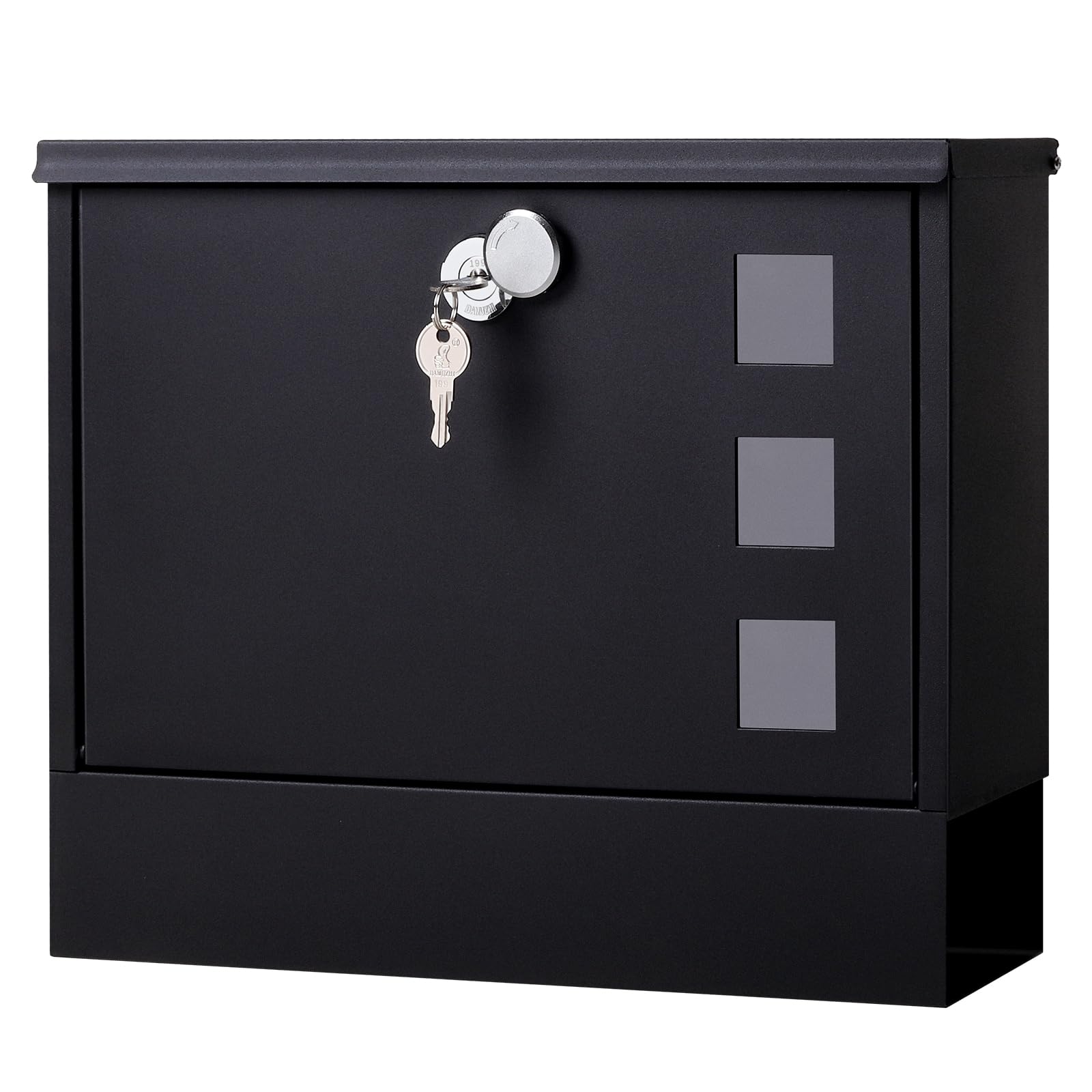
Hinges and locks are where inexpensive wall boxes fail, and this one shows both: a door that stops closing squarely, or a cylinder that quits after a few weeks, is the failure to watch for. We still put it near the top of the wall-mount group, because the body mounts flat and solid and the key genuinely secures what's inside.

On a wall it does the job we ask of it. Interior space is 12.25 by 10 by 3.7 inches — a few days of letters and small padded envelopes — and it hangs on siding or a fence with the hardware in the box. The lid lifts from the top, the lock is sold as waterproof, and the shape is plain enough to sit on a porch without drawing the eye.

Two things to accept. There's no outgoing-mail flag, so letters going out need a clip or a hand-off, and the steel is thin enough that a hard knock leaves a mark. Add a clip when you mount it and neither is a problem.

Bottom line: We recommend it for a porch or fence that needs a lock and has no post to mount a box on.

6

Architectural Chadwick

Architectural Chadwick

Everyday curbside mail

Our Score 9.2/10
Check Price

Worth Noting

  • Mounting hardware sold separately
  • Too narrow for parcels
Weight
4.6 lb
Capacity
838 cubic inches
Material
Galvanized steel
Dimensions
21.1"D x 6.9"W x 8.9"H
Read the full review

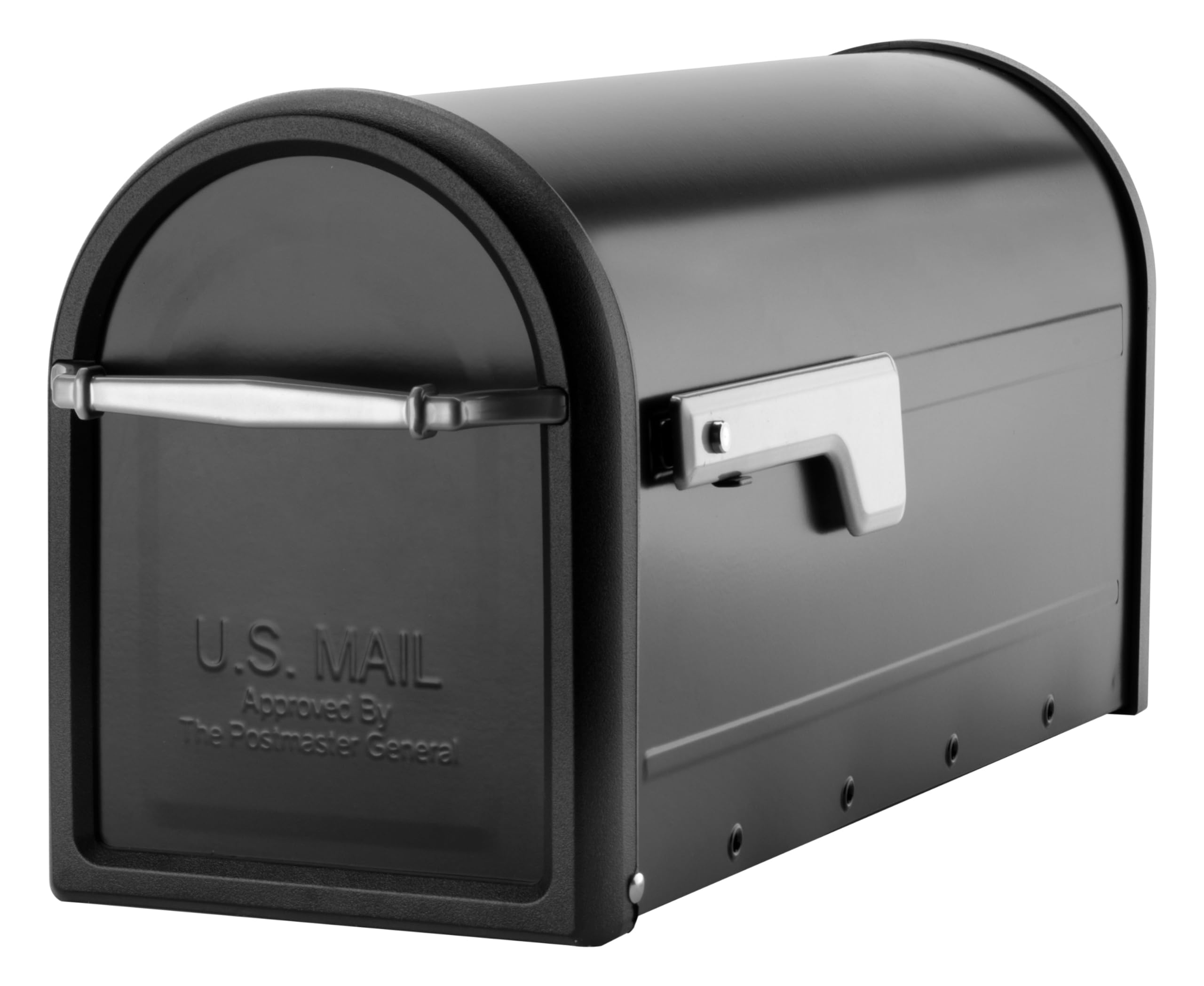
The Chadwick is the box you buy when the old one has rotted off the post and you want the same thing again, made properly. Galvanized steel with a powder coat, USPS approved, fully assembled, with a latch on the door and a handle above it that you notice every time your hands are full.

Medium is the honest word for it: 838 cubic inches and 6.9 inches across, which takes magazines, catalogs and a padded envelope but nothing that counts as a parcel. Against the plastic boxes here it's narrow, and that's the trade for steel and a profile that sits neatly on a standard post.

What we appreciate is how little there is to go wrong: no lock to stiffen, no magnet to weaken, and a flag that stays up when you set it. Order the screws with it, though — the mounting hardware ships with Architectural's posts rather than with the box, and a post that isn't one of theirs needs the matching adapter.

Bottom line: We buy it for a standard curbside post when the budget is tight and neither a lock nor parcel space matters.

7

KYODOLED Wall Mailbox

KYODOLED Wall Mailbox

Rentals and porches

Our Score 9.2/10
Check Price

Worth Noting

  • No lock or baffle
  • Finish can lift and let water in
Weight
3.9 lb
Capacity
8.6 liters
Material
Galvanized steel
Dimensions
3.4"D x 15.7"W x 9.9"H
Read the full review

Not every mailbox belongs on a post. This one screws to a wall, a porch column or a fence — four pre-drilled holes for screws, four zip ties for a fence rail — and at 15.7 inches wide and 9.9 tall it takes more than the shallow profile suggests, with magazines lying flat in the bottom. It is 3.4 inches deep, though, so it's envelopes and magazines, not parcels.

The lid lifts the full 90 degrees and stays up while you sort, which matters on a narrow porch where you are holding mail in one hand, and the address stickers save a trip to the hardware store. The sloped lid does shed water off the top.

What it isn't is secure. There's no lock and no baffle: anyone who walks up can lift the lid and take what's inside, so it belongs on a porch or behind a fence rather than at the end of a driveway. The finish is the other soft spot — the powder coat is thin, and paint lifting with water finding its way in is the failure that turns up on these. None of that matters much under a porch roof, where the box is really a sorting tray with a lid.

Bottom line: We use it where a wall box has to hold a lot and cost little, and where the mail inside isn't worth stealing.

How We Chose and Tested 12 Mailboxes

We started with a shortlist of more than 40 mailboxes sold by major home and hardware retailers, then narrowed it by construction material, mounting style, listed dimensions, and price relative to what the box actually offered. We ruled out models with vague specs or hardware that looked flimsy in the product photos. The final 12 included simple curbside boxes, wall-mount designs, and locking models in metal and plastic, because the right choice depends on where the box will live and how much mail it needs to hold.

We installed each one on a standard post or exterior wall following the manufacturer’s instructions and using only the hardware that came in the box, timing the job solo and noting whether the mounting holes lined up, whether the door opened freely after tightening, and whether the box sat level without shims. Then we lived with them for eight months, collecting bills, magazines, padded envelopes, and the occasional small parcel. We checked usable capacity by seeing whether a magazine could lie flat, whether a stack of envelopes slid out without tearing, and whether a padded mailer forced the door open.

Security got its own round of checks. We locked and unlocked each locking model several times, including in the rain and after a cold snap, noting whether the key or combination turned smoothly and whether the door still latched firmly. We also pushed and pulled on closed doors to see how much they flexed and whether a firm tug could pop the latch; we looked for gaps that let water in and watched for finishes that chalked, rusted, or dented after repeated wet-dry cycles. At the end, we compared what each box cost against its hardware, capacity, and how well it still closed—because a mailbox that looks good but needs fiddling every day isn’t a bargain.

How to Choose Mailboxes

Who can reach your box

A lock keeps the door shut; a baffle keeps a hand from reaching through the opening. Plenty of locking boxes have the first and not the second, which is why a determined thief with a coat hanger still wins. If your box sits within arm's reach of a sidewalk, or a car can pull up beside it, buy the lock and the baffle together — the Mail Boss is the clearest example of both.

On a porch, behind a fence or in a lobby, the calculation changes. A lock there is about peace of mind and keeping a curious neighbor out of your statements rather than stopping someone who came prepared.

Capacity is about the opening, not the number

Cubic inches measure the whole body, including corners a package can't reach. What decides whether a parcel fits is the size of the opening and the depth behind it. A 1,200-cubic-inch box with a letter-sized door still turns away a flat-rate box; a 1,534-cubic-inch box with a wide mouth takes it.

Match the box to what actually arrives. Letters and catalogs need a medium steel box, which looks neater on a post. If small boxes turn up regularly, pay for the parcel shape — a box 6.9 inches wide will not take them however many cubic inches it claims.

Post mount, wall mount, and what's in the box

Post mount is the curbside standard, and it presumes something already in the ground: nearly every post-mount box here slides over or bolts to a 4x4 wood post, and the post is almost never included. Wall mount suits a porch, a fence line or an apartment entry, and it needs nothing but anchors and a surface you trust.

The screws are the part buyers forget. Architectural's hardware ships with their posts rather than with their boxes, so a box going onto someone else's post may need an adapter; the Simplay3 kit is the exception that arrives with a cover, hardware and house numbers. Measure the bolt-hole spread on your post before ordering.

Steel or plastic, and the part that fails first

Steel doesn't flex, takes a hit from a plow, and can be re-keyed; it also rusts at a scratch and is heavy enough to demand a solid post. Plastic never rusts, costs less and shrugs off weather, but it fades, can crack in hard cold, and never feels as solid in the hand.

On either material the body usually outlives the fittings. Flags snap, hinges work loose, magnetic catches stop catching — so look at the flag and latch before the shell. Metal where the moving parts are is the detail that separates a box you keep from one you replace.

Frequently Asked Questions

Final Verdict

For most houses the answer is the Mail Boss Mail Manager: welded steel, a baffle that stops a reaching hand, and 1,760 cubic inches that will take the small boxes carriers now leave.

If your box stands on a road you have to step into, the Oasis 360's rear door earns its place. And if the 4x4 is already in the ground and you want the job finished on a Saturday morning, the Simplay3 kit arrives with everything except the post.