Outdoor

Best Leaf Blowers of 2026

Every leaf blower is a tradeoff you agree to before you squeeze the trigger. More power usually means more weight hanging off one arm, a bigger battery, and a machine loud enough to end a Saturday morning truce with your neighbor, while the corded bargain that never runs out of juice also never lets you walk past the end of an extension cord. The real work of shopping for one is figuring out which of those tradeoffs you can actually live with, so that a driveway full of wet oak leaves stops being an all-day project and goes back to being a twenty-minute chore.

I've got a yard full of maples and a shoulder that complains, so weight matters to me more than it might to you. Over six months, from spring pollen on the deck to the first wet leaf drop in October, we ran 12 leaf blowers side by side on the same lawns — battery, corded, and gas. One thing worth knowing before you read a single spec sheet: mph is speed, CFM is air volume, and the second number is what clears a pile instead of just skimming the top layer off it. Every pick below earned its spot on power, weight, and what the price actually buys you.

1

VIBOGEN HG0645

Top Pick
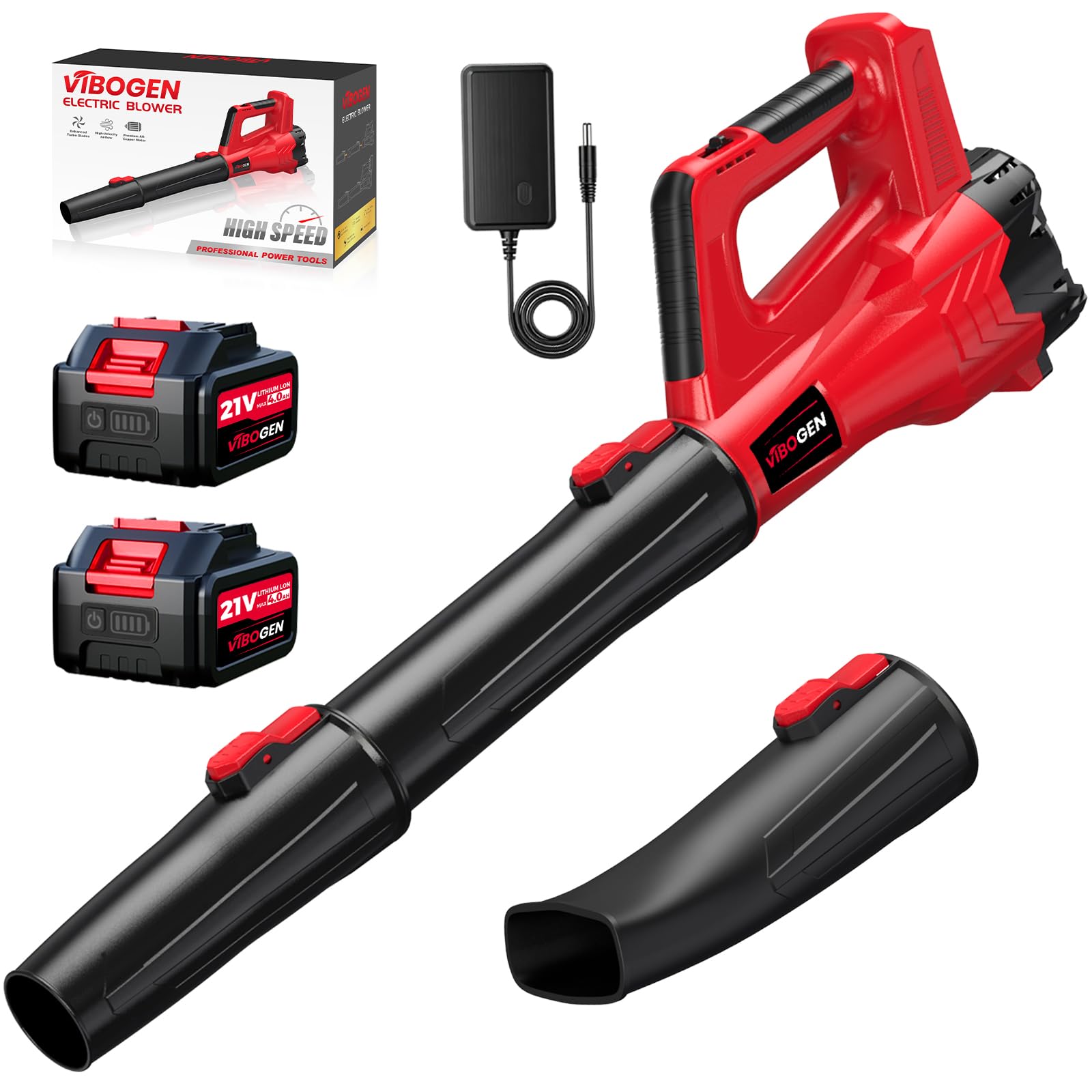
VIBOGEN HG0645

Small patios

Our Score 9.4/10
Check Price

Worth Noting

  • Airflow suits light debris only
  • 75 dB is the loudest rating here
Weight
2 lb
Airflow
420 CFM
Air Speed
150 MPH
Batteries
Two 21V 4.0Ah
Read the full review

Two pounds is the whole pitch, and it's a good one. This is light enough to hold at arm's length with one hand while you chase clippings out from under a grill or along a fence line, and light enough to hang on a hook instead of hauling it out of a shed. With 420 CFM and 150 MPH, the airflow is respectable for the size and honest about its limits.

The kit is more complete than the price suggests: two 21V 4.0Ah batteries, a charger, an extension nozzle, and a battery-level indicator on the body. At roughly 31 inches assembled it breaks down and tucks onto a shelf, and the red housing makes it easy to spot in a crowded garage.

Where it stops is anything heavy. Patios, garages, sidewalks, decks, and dry leaves on hard surfaces are its territory; a wet, knee-deep leaf drop or a long gravel drive is not. At 75 dB it's also the loudest machine listed here. For a townhouse patio or a garage that fills with leaves every fall, none of that matters much.

Bottom line: For patios, garages, and sidewalks rather than a whole lot of leaves, the HG0645 is the one we hand people: two pounds, two batteries, and 420 CFM for light work.

2

EGO Power+ LB8803-2

EGO Power+ LB8803-2

Large leafy yards

Our Score 9.2/10
Check Price

Worth Noting

  • Heavy over a long one-handed session
  • Turbo drains both batteries quickly
Airflow
880 CFM
Warranty
5 years
Air Speed
200 MPH
Batteries
Two 56V 4.0Ah
Read the full review

880 CFM is the biggest airflow figure in this group, and it's the reason this blower takes the top spot. Turbo mode is where that number lives: hold the button and the airflow climbs to the full 880 CFM, which is enough to lift a soaked maple leaf off asphalt instead of pushing it around in circles. On a dry day you'll rarely need it. After two days of November rain, you'll use nothing else.

The controls are the part we didn't expect to care about. A digital display shows output and charge in real time, and the cruise-control dial sets anywhere from 270 to 700 CFM without holding the trigger down for an hour. Working along a mulch bed or a gravel path, that dial is the difference between clearing debris and redistributing it.

Two 56V 4.0Ah batteries come in the kit, and EGO rates the pair for up to 90 minutes. Treat that as the low-speed figure. Turbo is thirsty and this is a big handheld, so plan on short full-power bursts with the strap carrying the weight. The included 320W charger refills a pack in about 70 minutes, which is why two batteries matter more than one larger one.

A five-year tool warranty covers it, and the 56V packs run in more than 100 other EGO tools, so the batteries keep earning if you add a trimmer or mower later. It is comfortably the most expensive blower here, and for a quarter-acre lot with two maples that headroom is money you don't need to spend. For a property ringed by oaks, it's the difference between one pass and three.

Bottom line: For big yards and wet, matted leaf drops, the LB8803-2 is the one we recommend: 880 CFM in turbo, two batteries, and a digital display that shows exactly what's left.

3

BLACK+DECKER LB700

BLACK+DECKER LB700

Corded driveway work

Our Score 9.2/10
Check Price

Worth Noting

  • 180 CFM is too narrow for wet piles
  • Reach ends where the extension cord ends
Weight
4.4 lb
Airflow
180 CFM
Air Speed
180 MPH
Power Source
7-amp corded
Read the full review

A cord is a commitment, and the LB700 is the best argument for making it. Seven amps push 180 MPH out of a 4.4-pound body at the lowest price in this group, with no battery to age out in a cold garage. Nothing about it needs charging, and nothing about it gets weaker as the afternoon goes on.

We think it's the right blower for a driveway, a deck, and a garage floor within reach of an outlet. The 180 MPH air speed is genuinely quick, enough to flick pine needles out of a gutter line and strips of bark off a walkway. The cord retention hook is the detail we appreciate most: the extension cord stays seated while you drag the blower around, the sort of thing you notice only when it's missing.

The limits are real. 180 CFM is a narrow stream, so dry leaves and clippings clear beautifully while a wet, matted pile needs the bigger cordless machines. The box holds the blower and the tube but no cord, so plan on a heavy-gauge outdoor extension cord sized to your run. And the two-year warranty is the shortest here.

Bottom line: If an outdoor outlet reaches your driveway, the LB700 is the simplest, toughest value here: no battery to charge, no battery to replace, and 180 MPH on tap all afternoon.

4

EGO Power+ LB5302

EGO Power+ LB5302

Suburban all-round use

Our Score 9.0/10
Check Price

Worth Noting

  • One 2.5Ah battery in the kit
  • Lowest air speed of the full-size picks
Noise
65 dB
Airflow
530 CFM
Battery
56V 2.5Ah
Air Speed
110 MPH
Read the full review

530 CFM and 110 MPH put this in the middle of the pack on paper, and that's exactly where most yards sit. The variable-speed trigger dials between 250 and 400 CFM with a lock-on button, so you can set a comfortable pace and keep it without squeezing for twenty minutes straight. Turbo gives you a burst when a pile needs moving.

At 65 dB it's one of the quietest full-size blowers here, quiet enough for an early Sunday pass without becoming the neighbor everyone talks about. Seven pounds is manageable one-handed for a driveway and noticeable by the end of a long session, and the flat and tapered nozzles cover everything from a wide sweep to a focused jet.

What sells it is the combination: a five-year warranty, the same 56V platform as the rest of the EGO line, and a price well below the flagship. The catch sits in the box. One 2.5Ah pack, about 50 minutes to recharge, and the lowest air speed of the full-size machines here, so wet, matted leaves take patience. Buy a spare battery, or already own one, and this is the easiest recommendation in the range.

Bottom line: For a normal suburban yard and dry leaves, the LB5302 is the sweet spot: quiet, easy to handle, backed by a five-year warranty, and the cheapest way into EGO's 56V batteries.

5

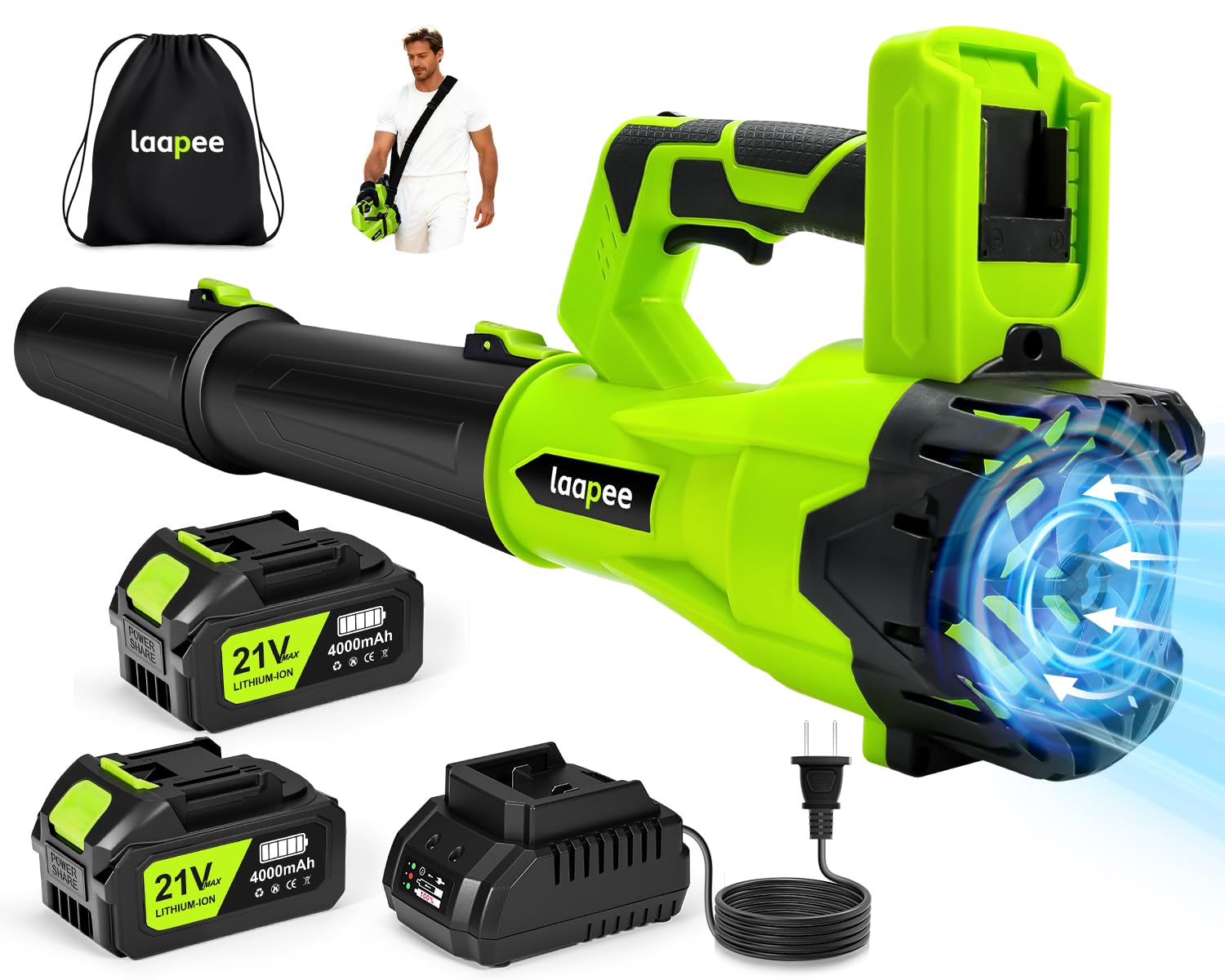
laapee BF868

laapee BF868

Variable-speed control

Our Score 8.8/10
Check Price

Worth Noting

  • Runtime falls well short of 30 minutes at speed
Motor
Brushless
Air Speed
80 to 180 MPH
Batteries
Two 20V 4.0Ah
Speed Settings
6
Read the full review

Six speeds between 80 and 180 MPH sounds like a marketing line until you work along a bed of bark mulch. Drop to the low end and the airflow lifts leaves without launching the mulch onto the lawn; open it up on the driveway and the same tool behaves like a proper blower. That range is the reason this one made the list.

The brushless motor is the other reason we rate it. Brushless designs run smoother and last longer than the brushed motors common at this price, and the airflow stays steady rather than surging. The shoulder strap moves the weight off your forearm for longer sessions, two detachable nozzles let you reach under a car or into a gutter, and the tube length adjusts without tools. Six speeds is more control than most people need, and it's also what makes this the most precise blower in the mid-price group.

The runtime claim deserves a caveat: 30 minutes is quoted at the lowest speed, and the 4.0Ah packs will not last that long at full tilt. Two batteries in the kit are the answer, with the charger turning one around while you drain the other. For anyone who spends as much time on borders and beds as on pavement, the dial is worth more than raw airflow.

Bottom line: If you blow along beds, mulch, and gravel as often as pavement, the BF868's six-speed dial is worth having, just plan on short high-speed runs and a battery swap.

6

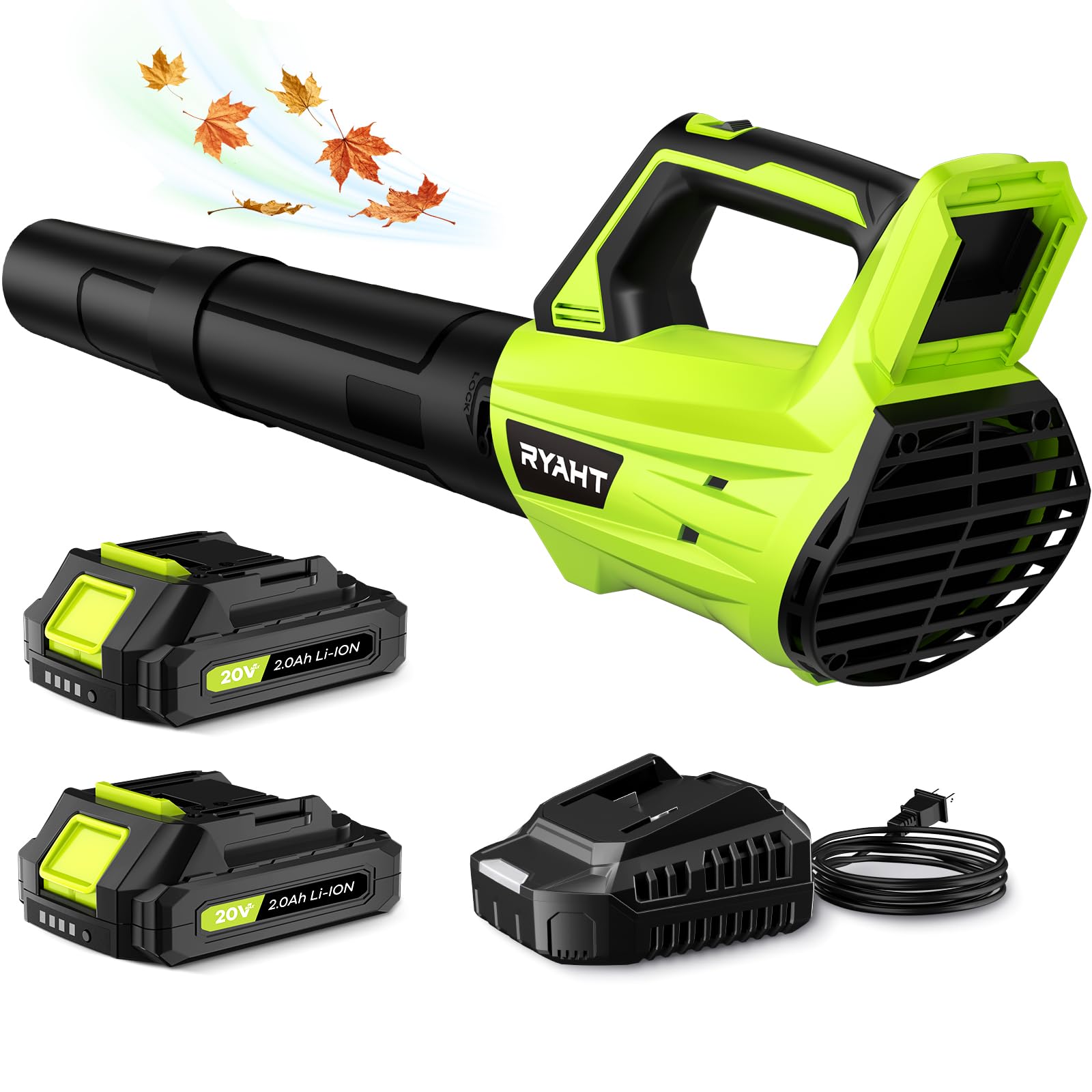
RYAHT DD8179

RYAHT DD8179

Porch and garage

Our Score 8.8/10
Check Price

Worth Noting

  • Small 2.0Ah packs run out quickly
  • Two speeds and no dial for delicate work
Weight
3.4 lb
Warranty
2 years
Batteries
Two 20V 2.0Ah
Speed Settings
2
Read the full review

At 3.4 pounds this is among the lightest full kits in the group, and weight is what decides whether a small blower gets used. It hangs off one hand while you nudge a doormat aside with the other, and it comes inside with you instead of living out in the garage, which is the main reason a light blower earns its keep twice a week.

The kit covers the basics: two 20V 2.0Ah batteries, a charger, and an extension nozzle for reaching under a car or into a porch corner. Two speeds is all you get, and for porch, walkway, and garage duty that's plenty, because you'll use the high setting and be done.

The 2.0Ah packs are the compromise. They're small, which is exactly why the blower is so light, but they run out faster than the 4.0Ah and 5.2Ah batteries on the bigger machines. The two-speed trigger also gives you no way to dial back near gravel or fresh mulch, and the two-year warranty is the shortest in the group.

None of that makes it a bad buy, just a specific one. This is the blower for a porch, a driveway apron, a garage floor, and a camper pad, the ten-minute jobs that a rake somehow turns into thirty. If that's your list, the light weight and the quiet running are worth more than airflow you'll never need.

Bottom line: The one to keep by the back door: 3.4 pounds, two batteries, and enough airflow for a porch, an apron, and a garage floor in ten minutes.

7

WOLFMEN LB-8197

WOLFMEN LB-8197

Quick tidy-ups

Our Score 8.6/10
Check Price

Worth Noting

  • Not enough airflow for wet leaves
  • Only two speeds, no fine control
Weight
3.8 lb
Airflow
450 CFM
Air Speed
150 MPH
Speed Settings
2
Read the full review

Power is the honest question with this one. 450 CFM and 150 MPH will clear dry leaves, grass clippings, and dust off a driveway quickly, and they will not budge a wet, matted pile. Whether that matters depends entirely on how you use it: blow twice a week through October and you'll never notice the ceiling; wait until the whole canopy comes down at once and you will.

At 3.8 pounds it moves from the deck to the driveway to the garage in one hand without a second thought, and two speed modes cover light dusting and a more forceful sweep. It stores upright in a corner, and a blower that lives near the door is a blower that actually gets used.

Two 20V batteries and a charger come in the kit, so you swap rather than wait when one dies. Expect the pair to see you through a quick tidy-up; a long high-speed session drains both, and the modest airflow means you'll be running it on the higher setting most of the time.

Where it earns a place is the pairing of weight and price. It's one of the lightest and least expensive cordless kits here, and for dry leaves on flat hard surfaces with low patience for a two-hour cleanup, it does the job asked of it. Buy it for the quick pass, not the marathon.

Bottom line: Buy the LB-8197 for the light weight and the quick pass over dry leaves, not for a wet November leaf drop; it's one of the least expensive cordless kits here.

8

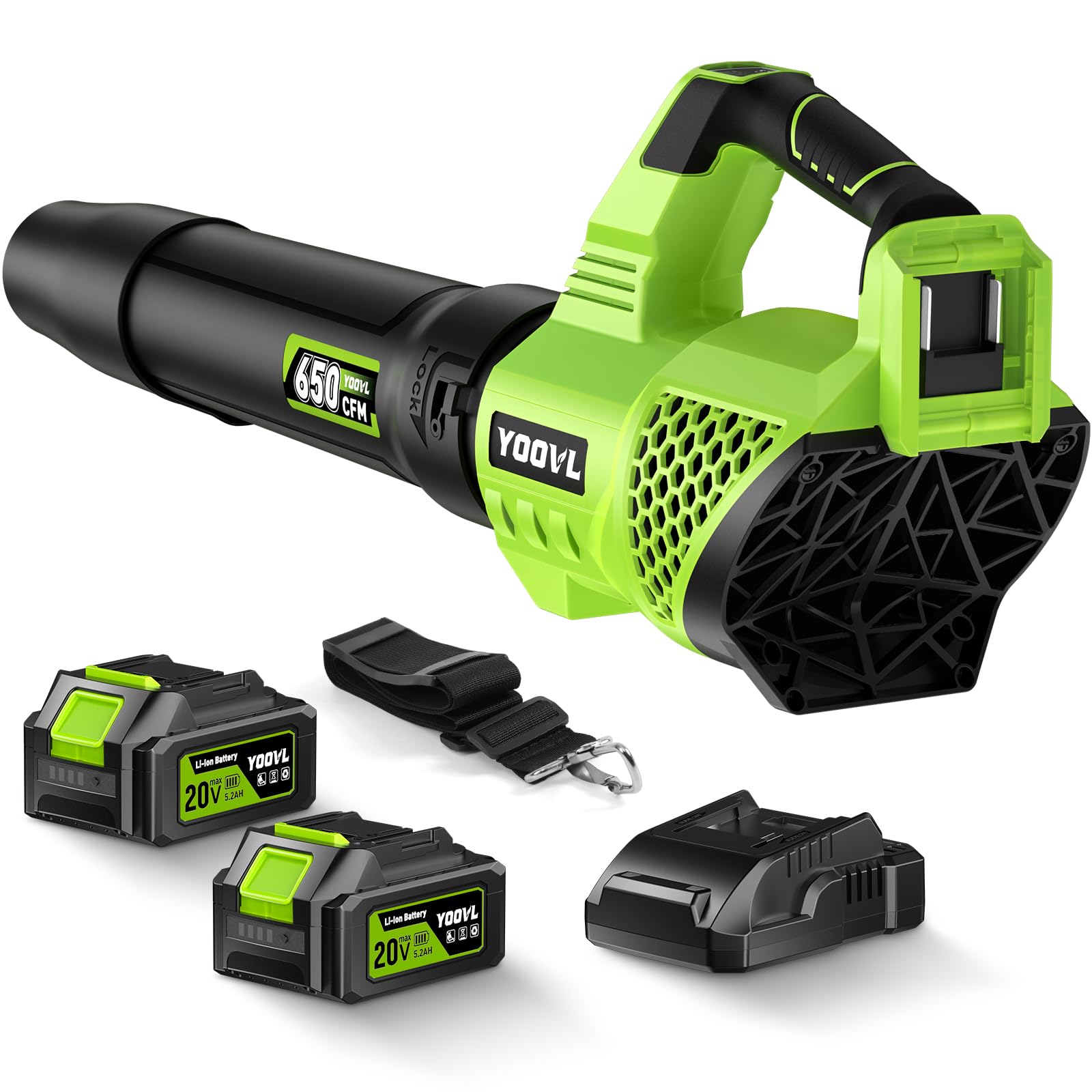
YOOVL LB-8184

YOOVL LB-8184

Long low-speed runs

Our Score 8.6/10
Check Price

Worth Noting

  • High-speed runtime falls well short of the claim
Airflow
650 CFM
Batteries
Two 20V 5.2Ah
Shoulder Strap
Included
Speed Settings
3
Read the full review

The battery kit is the reason to look here: two 20V 5.2Ah packs, the largest capacity in this group, plus a charger, a shoulder strap, and an extension nozzle. The 150-minute runtime on the box is a low-speed figure, as these figures always are, but the capacity behind it is real, and two big packs mean fewer interruptions than the 2.0Ah and 4.0Ah kits here.

Three speeds give you a low setting for the garage floor and a high one for the lawn, and the strap shifts the weight to your shoulder for anything overhead. The extension nozzle adds reach along gutters and the top of a hedge, and the whole unit breaks down small enough to hang flat on a wall.

The 650 CFM headline is the number to treat with some skepticism. This blower clears dry leaves, dust, and clippings well, and it feels noticeably weaker than the EGO machines when leaves are wet and heavy. If a long runtime and a complete kit matter more to you than outright force, it's a sensible buy. If you're clearing a soaked leaf drop in November, put the money into airflow instead.

Bottom line: For long, low-speed sessions where runtime matters more than raw force, the LB-8184's two big 5.2Ah batteries and shoulder strap make it an easy recommendation.

How We Tested: Six Months, Twelve Blowers, and a Lot of Wet Leaves

The shortlist started with research, not leaves. We gathered corded, battery, and gas models priced from roughly $50 to $400, dropped anything with thin replacement-part support or no usable return window, and lined up the spec sheets on CFM, mph, battery voltage, and what came in the box. That left 12 blowers, all of which we bought ourselves so nothing arrived pre-tuned for a reviewer.

Each one got the same first afternoon in my garage: unboxed and timed for assembly, weighed on a luggage scale with the battery attached, then carried one-handed along a fence line to see how fast my wrist noticed. Corded units were dragged behind me on a 100-foot extension cord to count how often they snagged on shrubs and downspouts. We also noted the footprint — whether it hung on a wall hook or ate a shelf — because storage matters when you're squeezing past a car.

Then the real work. We ran every blower over dry leaves on gravel, wet leaves the morning after a rain, grass clippings on concrete, sawdust in a shop, and pollen across a deck, starting each test with the same size pile and watching whether it moved the whole thing or just the top layer. Battery models ran from full charge to cutoff with a stopwatch going, and we recorded noise with a decibel meter at the handle and again 50 feet away, since that's the distance your neighbor hears it from. Value came down to what the price actually delivered — a battery and charger, a second nozzle, or nothing but the tool.

How to Choose Leaf Blowers

Match airflow to what's on the ground

CFM measures how much air moves; MPH measures how fast it comes out. Volume shifts piles, speed flicks single leaves off a hard surface, and you need both. Dry leaves on a driveway come clean around 400 CFM. Wet, matted leaves want 600 CFM and a turbo mode. Anything claiming the second job on a two-pound battery is really selling you the first one.

Pick your number from the worst day of your fall, not the average one, and look at the air speed figure too. A wide, slow stream pushes leaves along the pavement instead of lifting them, which is why a 180 MPH blower with modest volume still cleans a walkway quickly.

Runtime, batteries, and the turbo trap

Advertised runtimes are measured at the lowest speed, and turbo can cut them in half or worse. That's physics, not a defect. So count batteries rather than minutes: two 4.0Ah packs you can swap beat one bigger pack you have to wait on, and charge times in the 50-to-70-minute range make a spare the difference between finishing the job and taking a coffee break.

If the kit ships with a single pack, price a second one before you decide. It's the upgrade that changes how the tool feels to own.

Cord or battery: pick by where you stand

A corded blower never runs flat and usually costs the least, but it tethers you to an outlet and, in nearly every case, to an extension cord you buy separately. Before you commit, walk the distance from the outlet to the far corner of the yard and buy a heavy-gauge outdoor cord rated for that run; a light indoor cord on a long run is how breakers trip.

Battery power wins on any job where a cord would be in the way: a back fence, a roof line, the far side of a parked car. If your whole cleanup happens within sight of the garage, corded is the better tool.

Weight and balance decide how often you reach for it

A two-pound blower and a seven-pound blower do different jobs, not because of airflow but because of what you'll tolerate. One hand at arm's length for twenty minutes is a different proposition from a two-handed session with a strap over your shoulder.

Be honest about the pattern of your cleanup. A daily five-minute pass wants the light machine. A twice-a-season marathon wants airflow, a strap, and a second battery.

Noise is the spec nobody checks until a neighbor mentions it

Listed sound figures in this group run from 65 dB to 75 dB, and the gap is noticeable at the handle. Quieter machines let you work earlier on a weekend and closer to an open window, and they're easier on your ears across an hour of turbo work.

Many towns also restrict blower hours or set seasonal limits, so check the local rule before you buy the loudest model on the page. Ear protection is cheap; keep a box with the blower.

Frequently Asked Questions

Final Verdict

The EGO LB8803-2 is the blower we recommend when your yard has real trees on it. 880 CFM of turbo, two batteries, and a five-year warranty make short work of wet leaves, and nothing else here matches that headroom.

For a smaller lot and dry leaves, the LB5302 does the same job more quietly and for a lot less, while the BLACK+DECKER LB700 beats both on simplicity if an outlet is within cord's reach.