Home Decor

Best Artificial Christmas Trees of 2026

The fear with a fake tree is that everyone will be able to tell. You drag the box up from the basement expecting something a little sparse, a little shiny, a little plastic, and forty minutes of branch-bending later it still looks like a bottle brush. A good artificial tree solves that in one move, giving you something you actually want to decorate rather than something you have to apologize for, and then it holds up to being crammed back into the box in January without shedding half its needles onto the carpet.

I grew up with real trees, including the yearly argument about needles in the rug, so I came to this category with opinions. Over the past four months, my team and I have set up, fluffed, lit, decorated, and packed away 12 artificial trees, and the gap between a great one and a cheap one is wider than the price tags suggest. One thing first-time buyers don't know: fullness comes down to branch tips and how many of them you're willing to bend, not height. The ones worth the money are below.

1

Yaheetech Flocked 6 ft

Top Pick
Yaheetech Flocked 6 ft

Snowy small rooms

Our Score 9.2/10
Check Price

Worth Noting

  • A light section may fail
Height
6 ft
Lighting
250 warm incandescent
Tip Count
820
Base Width
47.2 in
Read the full review

The white flocking is the whole pitch: this is a tree for someone who wants the snow-dusted look without spraying a green tree at home. The coating is dense enough to read as snow rather than dust, and it softens the silhouette in a way that makes the 820 tips look fuller than the number suggests. At 6 feet tall with a 47-inch base, it has a wide, generous footprint for a smaller living room, so tape the base size on the floor before you commit.

We choose it when the pre-lit convenience matters and the room can take a little extra cleanup. The 250 warm incandescent lights give a softer, warmer glow than the cool-white LEDs on some trees here, and the hinged sections go together quickly. This is not the tree for a minimalist who wants crisp white light; it is the cozy, snowy centerpiece.

The flocking also hides gaps better than plain green needles, which is why it holds its look with fewer ornaments. Keep the tree in a spot where falling flakes will not land on a dark rug, and plan to vacuum after setup. For a small room that wants a snowy tree without the fuss of flocking it yourself, this is the most convincing budget option here.

Bottom line: We choose the Yaheetech flocked tree when you want a snowy look without stringing lights, and you can accept some cleanup.

2

National Tree Kingswood Slim 7 ft

National Tree Kingswood Slim 7 ft

Narrow corners

Our Score 9.2/10
Check Price

Worth Noting

  • Can wobble on uneven floors
  • Some branch hinges feel light-duty
Height
7 ft
Weight
11.7 lb
Lighting
Unlit
Base Width
29 in
Read the full review

Twenty-nine inches across is the footprint here, and at 7 feet tall the Kingswood is a tree for a narrow corner rather than a broad living-room centerpiece. The slim silhouette leaves less floor to work around, but it also means the branches have fewer places to hide the center pole. It is the kind of shape that makes a small apartment feel like it has room for a real tree.

The 11.7-pound frame is light enough for one person to move, and the hinged sections go together simply. Shaping takes more care than on a full tree: pull the branches forward and spread them in layers, or the narrow profile starts to look flat. The payoff is a tree that reads as tall and full from the front, even when it is tucked into a corner.

Storage is straightforward: the sections fold back, and the light frame is easy to carry to the basement or closet. The slim tree also takes less room in a box than a full-width tree, which is part of the appeal in a small home.

We recommend the Kingswood when the ceiling is generous and the floor plan is not. It is not the tree for a room that wants a fat, old-fashioned silhouette; it is the one for a hallway, apartment, or narrow corner that still needs height.

Bottom line: The Kingswood is the slim tree we point to when a room needs height but only a narrow slice of floor.

3

DUUDO Mini 3 ft

DUUDO Mini 3 ft

Tabletop displays

Our Score 9.2/10
Check Price

Worth Noting

  • A few branches can loosen with handling
Height
3 ft
Weight
2.2 lb
Lighting
Unlit
Base Width
17.7 in
Read the full review

A three-foot tree is not a scaled-down living-room tree; it is a tabletop decoration, and the DUUDO is sized for that job. At 17.7 inches across and 2.2 pounds, it fits on a dining table, a desk, or a narrow entry console without blocking the room. The hinged branches and foldable base make it easy to set up and take down.

We think it's the easiest tree here to live with in a small space. It fluffs quickly, holds a few favorite ornaments, and looks cheerful rather than miniature. The 2.2-pound frame is light enough to move from room to room, and the included stand keeps it upright on a flat surface.

The limits are obvious: it is small, so use light baubles and a modest topper rather than heavy glass pieces. A short strand of lights and a few favorite ornaments finish it; you do not need a full decorating plan. For a desk or a tabletop that needs a little Christmas, that is enough.

Bottom line: The DUUDO is the tabletop tree we keep coming back to for desks, entry tables, and small rooms that still need a lift.

4

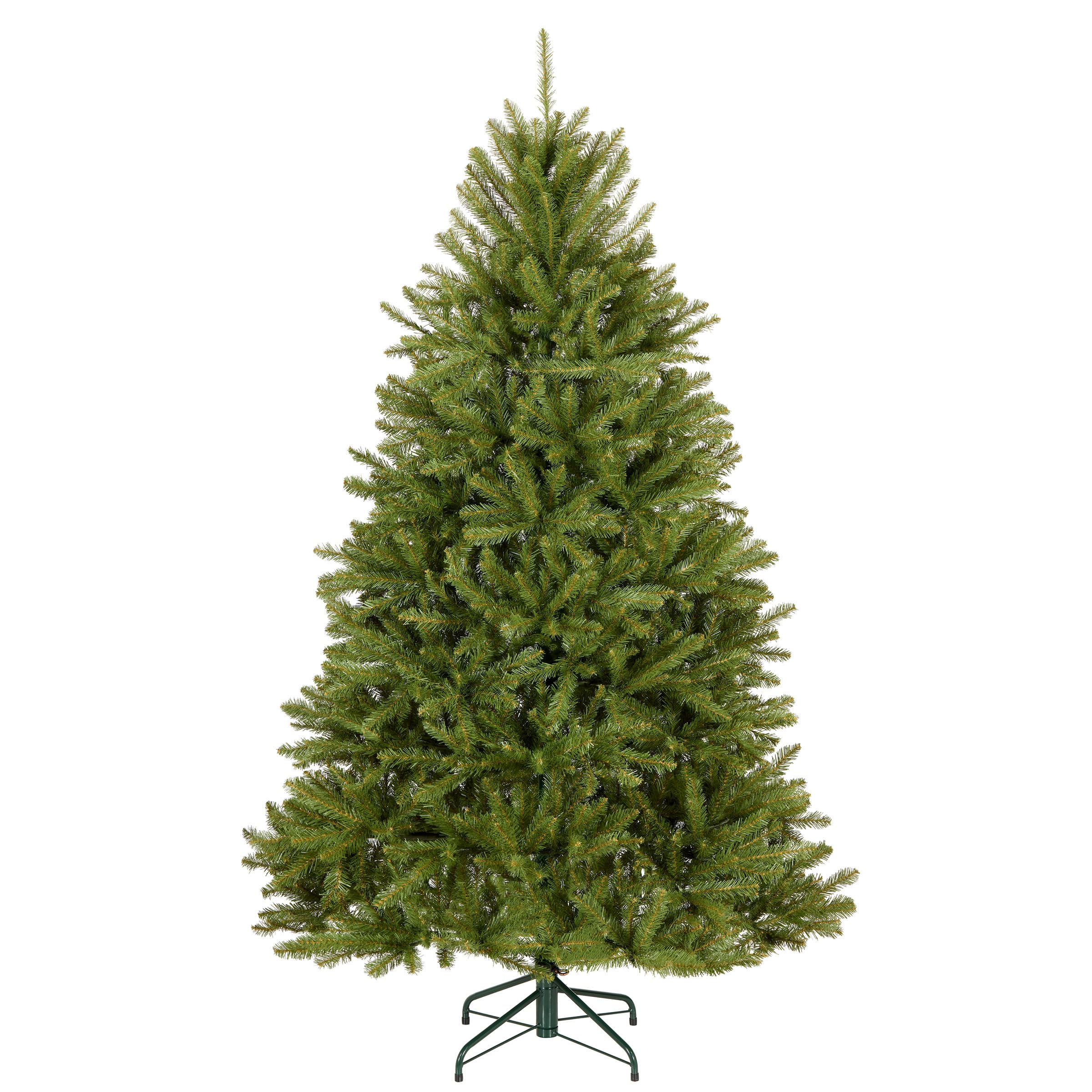
National Tree Dunhill Fir 6 ft

National Tree Dunhill Fir 6 ft

Full-size living rooms

Our Score 9.0/10
Check Price

Worth Noting

  • Unlit; you supply and string every light
Height
6 ft
Lighting
Unlit
Tip Count
1,430
Base Width
46 in
Read the full review

A 6-foot tree with 1,430 tips is unusually dense for this group, and that density is the reason the Dunhill Fir is our top pick. The branches fill in closely enough that you can hang a full ornament collection without hunting for bare spots, and the shape stays full from the floor to the top. It is also unlit, which we count as a strength: you choose the lights, replace them when you want a different look, and never deal with a dead section of factory wiring. For a tree you plan to keep and decorate year after year, that flexibility matters more than a few built-in strands.

The first setup is the slow part. The hinged sections drop into place, but the 1,430 tips arrive compressed and need real shaping, especially on the lower third. We worked from the bottom up and kept the branches separated rather than brushing them all outward at once; that made the silhouette look fuller and kept the ornament hooks from tangling. The 46-inch base is wide enough to feel generous in a living room, but check the corner first, because it needs more floor space than a slim tree.

Against the Balsam Hill, the Dunhill gives up some tip density and a little realism, but it is easier to handle and leaves more budget for lights and ornaments. Against the cheaper Best Choice, it is denser and more consistent. That middle ground is why it suits most homes: full enough to look convincing, plain enough to decorate your way, and not so heavy that putting it away becomes a two-person job.

Bottom line: For a full-size tree you plan to light yourself, the Dunhill Fir is the one we trust most: dense, realistic, and built to be decorated year after year.

5

HOMCOM Pencil 6 ft

HOMCOM Pencil 6 ft

Tight apartments

Our Score 9.0/10
Check Price

Worth Noting

  • Plastic stand feels less planted than metal
Height
6 ft
Weight
4.6 lb
Tip Count
390
Base Width
21.75 in
Read the full review

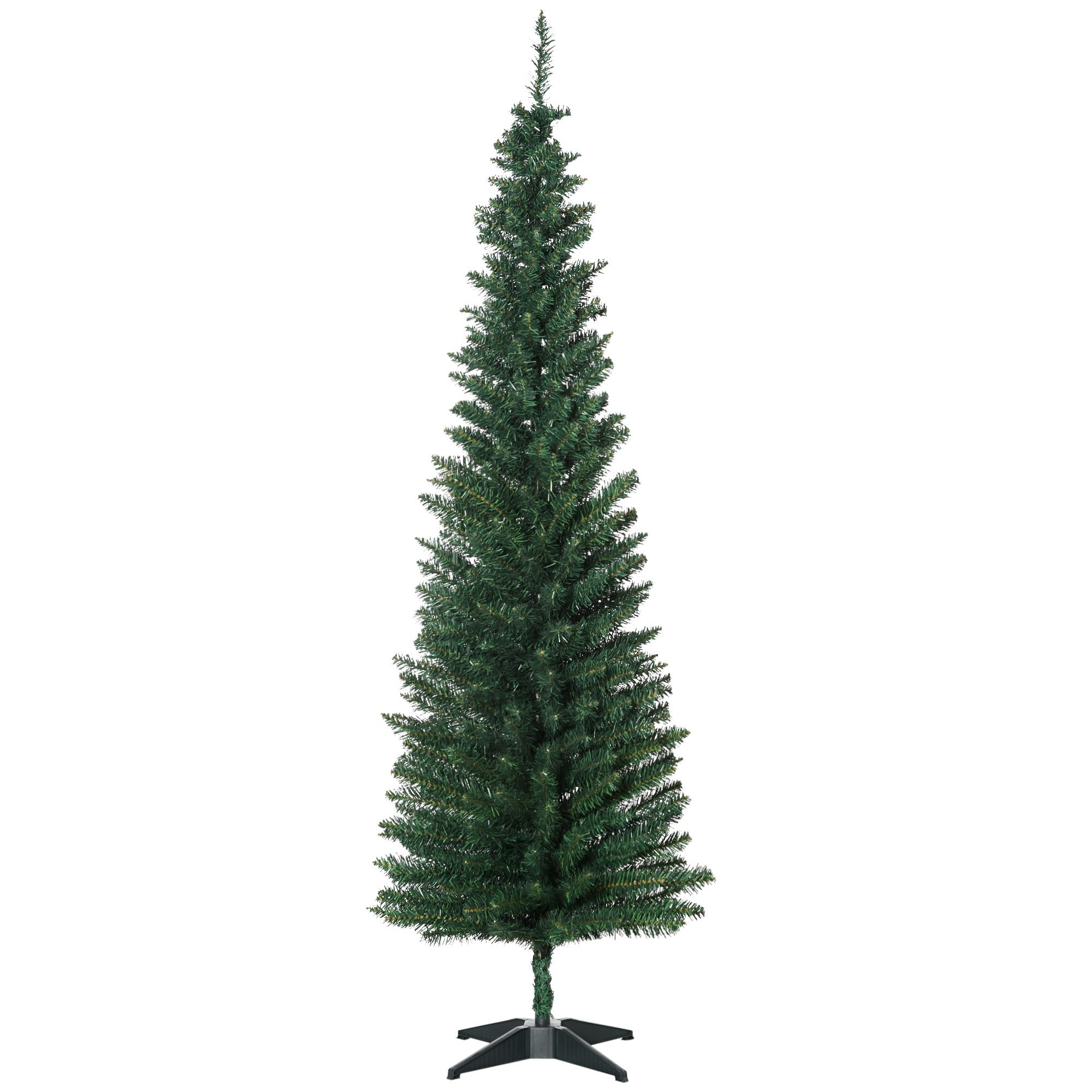
A 21.75-inch footprint is the reason to look at this tree. At 6 feet tall, the HOMCOM gives you height without taking over a room, and the 390 tips are deliberately sparse: this is a pencil tree, not a scaled-down full tree. We think it's the right choice for a first apartment, a landing, or a corner where a full-width tree would crowd the furniture.

The 4.6-pound frame is easy to carry and set up alone. It comes in sections, the stand connects simply, and the smaller tip count makes shaping less of a marathon than the big full trees here. That is the trade: less fullness, much less effort.

It is not the tree for heavy glass ornaments or a room that wants a lush, old-fashioned silhouette. The narrow branches suit light baubles, ribbon, and a few favorites, and the slim profile looks best when you keep the decorations from crowding it. If you want a tree that disappears into a corner in January, this is the one.

Bottom line: We point to the HOMCOM pencil for a truly tight corner or a first apartment, where it delivers the shape without demanding much space.

6

Balsam Hill Blue Spruce 7.5 ft

Balsam Hill Blue Spruce 7.5 ft

Maximum realism

Our Score 8.8/10
Check Price

Worth Noting

  • May arrive shorter than the listed height
Height
7.5 ft
Lighting
Unlit
Tip Count
2,960+
Base Width
60 in
Read the full review

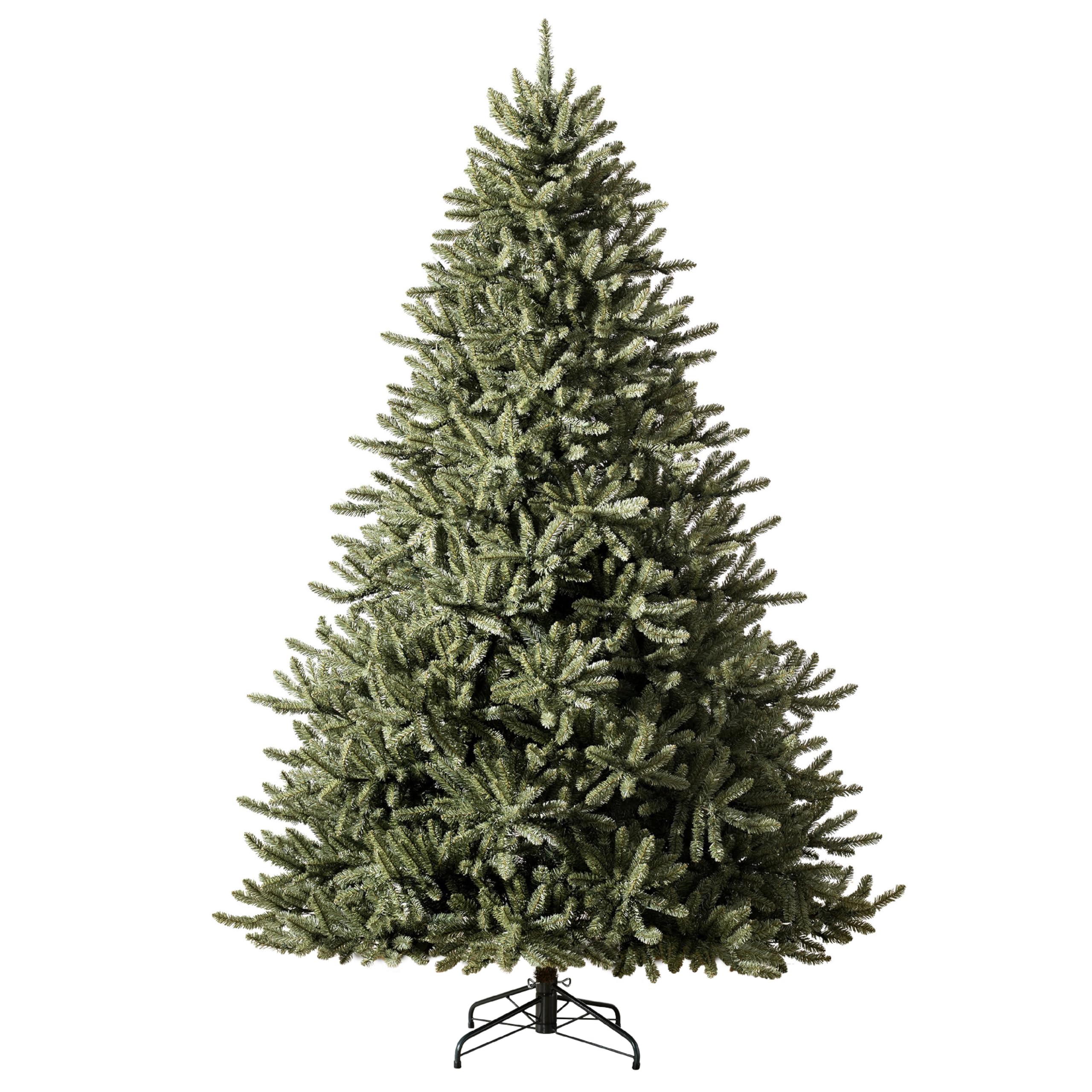
At 40 pounds, the Balsam Hill is the heaviest tree here by a wide margin, and that weight is the first thing we plan around. It is not a tree you assemble in the attic and carry downstairs alone; put it together where it will stand, then shape it. The payoff is a frame and branch structure that feel substantial, with 2,960-plus tips and a 60-inch base that give it the broad, old-fashioned silhouette a lot of full trees promise but do not deliver.

The realism is the reason to pay the premium. The branches are dense, the needles have a blue-spruce cast, and the tree reads as a real evergreen from across the room rather than a green cone. It arrives compressed and takes a long first fluffing; the included gloves are a small but welcome touch, because shaping this many tips is hand work. The storage bag also matters, since a tree this size is a commitment to store.

We recommend it to the buyer who wants the best-looking tree here and has a permanent spot for it. If you move the tree every year or need to carry it up stairs alone, the weight is a real obstacle. For everyone else, the trade is simple: less convenience, more presence.

Bottom line: We recommend the Balsam Hill if realism matters more than budget or convenience; it earns its premium with the densest, most natural-looking branches here.

7

SHareconn Remote 7 ft

SHareconn Remote 7 ft

Changing light moods

Our Score 8.8/10
Check Price

Worth Noting

  • A light section or remote can fail
Height
7 ft
Lighting
280 dual-color LED
Tip Count
1,112
Base Width
49 in
Read the full review

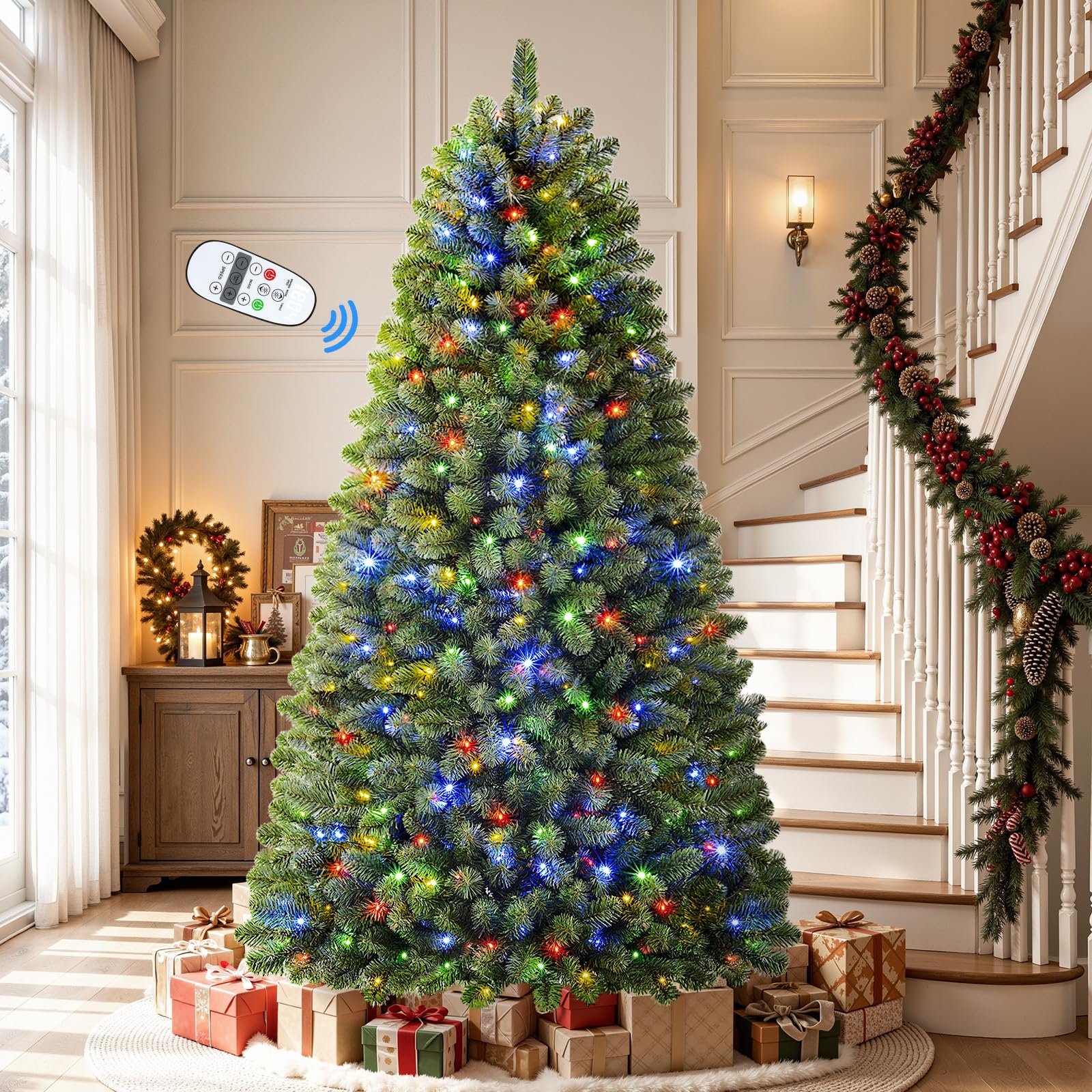
The remote is the feature that sets this tree apart. It switches the 280 LEDs between warm white and multicolor, dims them, and runs a timer, which is more control than most pre-lit trees here offer. If the tree sits in a dark corner or behind furniture, being able to change the mood without crawling under the branches is a genuine convenience.

The rest of the tree is a solid 7-foot full-size shape: 1,112 tips, a 49-inch base, and enough room for ornaments without looking crowded. The color-changing lights are fun, but we expect most people will settle on warm white for everyday use and use the multicolor setting for parties. The remote is the luxury; the tree is the supporting act.

We recommend it to households that like to change the lighting without redecorating. The remote makes the tree feel more like a piece of decor than a fixed decoration, and the timer is the detail that keeps it useful after the novelty wears off. If you want a tree you string once and never think about, an unlit tree is the safer buy; if you want the control, this is the one here that delivers it.

Bottom line: We recommend the SHareconn remote tree to anyone who wants to change the lighting mood without crawling under the branches.

8

Best Choice Products 6 ft

Best Choice Products 6 ft

Budget first trees

Our Score 8.8/10
Check Price

Worth Noting

  • Runs short of six feet
  • Branches can break under load
Height
6 ft
Weight
8 lb
Tip Count
1,000
Base Width
44 in
Read the full review

An 8-pound tree is easy to move, and that matters if you decorate alone or store the tree in a closet. The Best Choice is the lightest full-size tree here, with a 44-inch base and 1,000 tips. It goes up in three sections, and the hinged branches make the basic assembly simple.

The tree is not as dense as the Dunhill or the Balsam Hill. It looks best after a patient fluffing, with the branches separated and the ornaments distributed evenly, and it will still show a little more air than the denser trees here. That is the compromise you make for the lighter frame and lower cost.

The lower tip count means you will see more of the structure than on the Dunhill, especially before the branches are shaped. Work from the inside out and keep the ornaments evenly spaced; the tree looks fuller when the branches are not brushed into a single plane.

We see the Best Choice as a budget tree for patient fluffers who want a light, simple tree. It is not the one for a formal living room or a heavy ornament collection, but it is an easy, low-stakes way to put up Christmas in a small home.

Bottom line: We see the Best Choice as a budget tree for patient fluffers who want a light, simple tree.

How We Set Up, Fluffed, and Packed Away 12 Artificial Trees

We started with every artificial tree we could find in heights from 5 to 9 feet, then cut anything with a skinny center pole, no spare bulbs or fuses, or a pattern of reviews mentioning gaps where the sections join. We also weighed cost against listed tip and light counts, since two trees in the same size class can land very far apart on that math. That left 12 trees, from slim pencil styles to full 7.5-foot firs, which we set up in living rooms with standard ceilings and in one apartment where the ceiling made a 9-footer a genuinely bad idea.

Testing ran four months, from late September through the first week of January, so each tree got a full season of real use. I assembled every one alone and timed it, noted whether the stand needed a second set of hands or a screwdriver, and counted branch tips on the tree against the number on the box. Fluffing got its own stopwatch: I shaped each tree the way a normal person would, pulling branches down and out rather than fussing like a florist, and noted how long it took before it stopped looking like a collapsed umbrella and started looking like a tree.

Then came the part that actually matters. I strung lights, checked for dark patches near the pole and along the bottom third where people tend to run short, and stood back at sofa height to judge how the needles caught light versus how they read from two feet away. I shook each tree over a light-colored rug to see what came off, ran a hand along the branches to check for scratchy wire ends, then took it down, packed it into its own box, and stored it. Two of them came back out for a second December, which told us more about durability than any spec sheet.

How to Choose Artificial Christmas Trees

Start with Height and Footprint

A tree listed as six feet can finish shorter once the stand and topper are in play, so measure from floor to ceiling and leave about a foot of clearance. Then tape the base size on the floor: full six-foot trees here run 44 to 47 inches across, the slim Kingswood is 29 inches, and the pencil HOMCOM is 21.75. We start with the footprint because a tree that crowds a walkway is the mistake you notice every day, not just in December.

Decide Whether You Want Lights Built In

Pre-lit trees save a step, but the lights are the part most likely to need attention later; a failed section can turn a quick setup into a troubleshooting session. Unlit trees let you choose warm or colored lights, replace a strand without matching factory bulbs, and change the look next year. We lean unlit for a long-term tree and pre-lit for convenience, especially when the controls are simple and the bulbs are replaceable. Check how the sections connect before you buy.

Read Tip Count as a Density Clue

Tip count is the closest thing to a fullness measure, but it only works when you compare trees of similar height and shape. A full six-foot tree with 1,430 tips will look denser than one with 1,000, while a 390-tip pencil tree is meant to be airy. More tips also mean more shaping: we plan for a slower first setup on dense trees and a quicker one on pencils. Buy for the silhouette you want, not the biggest number.

Choose a Shape, Then a Finish

Full trees suit living rooms and heavy ornament collections; slim trees fit hallways and corners; pencil trees work in apartments and tight entries; three-foot trees belong on tables and desks. Flocking is a finish rather than a shape, and it changes the upkeep: the snowy look hides gaps, but it can shed during setup. We keep flocked trees on washable floors or over a sheet until the loose material settles.

Plan for Weight, Storage, and Branch Strength

A 40-pound tree is a two-person job for many people, while an 8-pound tree is easy to move alone; the difference matters if the tree goes up stairs or into a closet. Assemble heavy trees where they will stand, and measure the storage box before you buy. Branch strength matters as much as fullness: dense trees hold heavier ornaments, while pencil and slim trees do better with light pieces. Put the heaviest ornaments low and close to the trunk.

Frequently Asked Questions

Final Verdict

For most homes, we recommend the National Tree Company Dunhill Fir. It is dense enough to look good without lights, and it avoids the repair risk that comes with a pre-lit tree. If you want the most realistic tree here and can handle the weight and the premium, the Balsam Hill is the better buy. If the room is narrow, choose the Kingswood; if you want built-in lights with a snowy look, the Yaheetech flocked tree is our pick.