Furniture

Best Office Chairs of 2026

The wrong office chair doesn't announce itself. It waits until hour six of a Tuesday, when your lower back aches and you realize you've been perched on the seat's front edge since morning. A good one fixes that quietly: it holds your lumbar curve, lets you shift without thinking, and rolls out of the way when you stand. We've spent six months with 13 chairs, from task chairs to dining-table lookalikes, and the gap between real support and the appearance of it shows up fast.

Firmness matters more than plushness: a cushion that feels like a sofa in the first five minutes often flattens by lunch, while a firmer seat with honest lumbar support keeps you steady through a day of calls. Assembly is its own tell — chairs that went together in twenty minutes with labeled hardware tended to have tighter tolerances elsewhere. The adjustments that sound like marketing, like armrests that flip up to slide under a desk, turned out to be the ones we noticed daily. The picks below cover different bodies and budgets, but each earned its spot.

1

ELABEST X100 Ergonomic Chair

Top Pick
ELABEST X100 Ergonomic Chair

Long, flexible days

Our Score 9.2/10
Check Price

Worth Noting

  • 18-inch seat depth is short for long legs
  • Heavy at 43 pounds
Lumbar
3D adjustable
Armrests
5D flip-up
Footrest
18 in extendable
Weight Capacity
300 lb
Read the full review

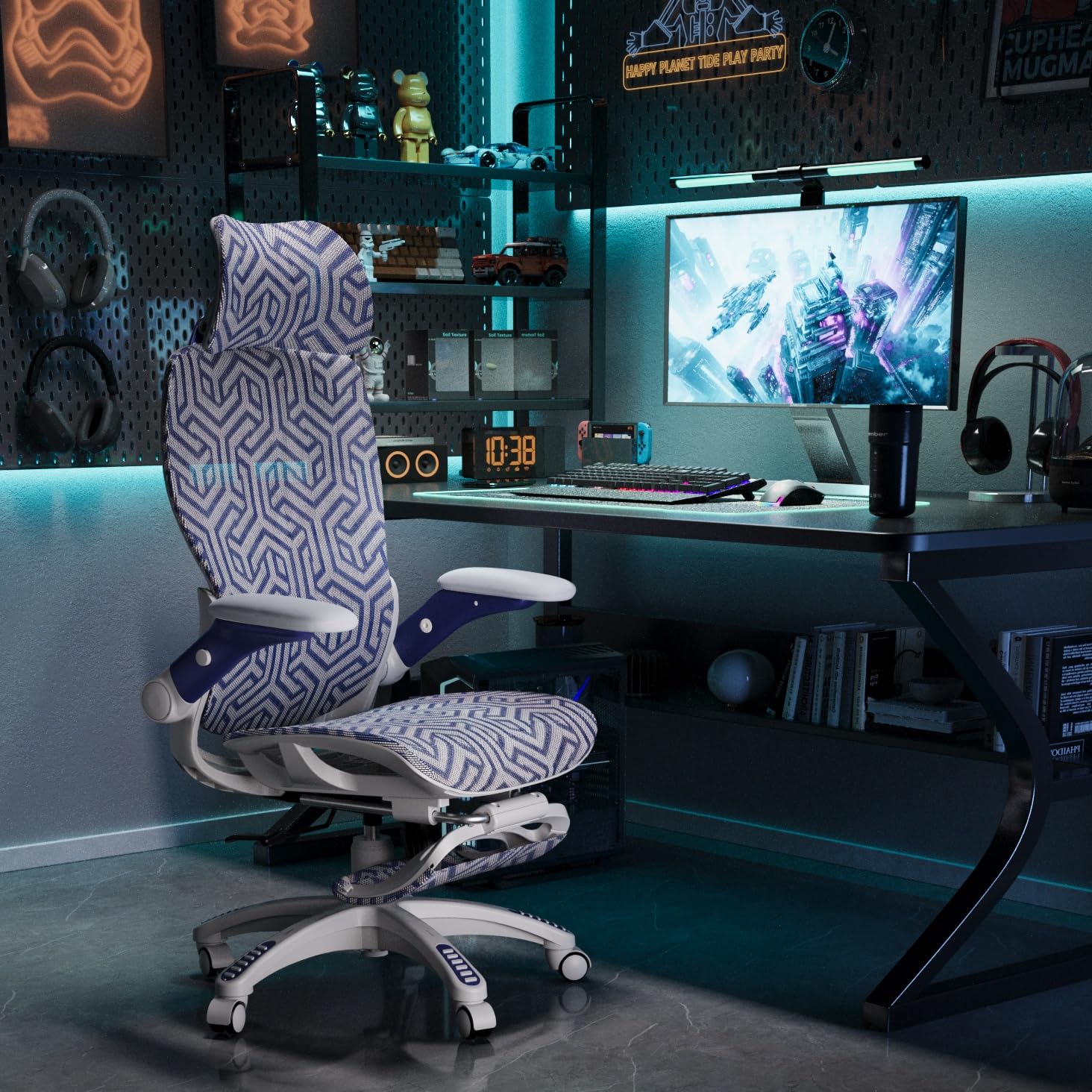
The ELABEST X100 is the only chair here that turns a desk into a place to lie down. An 18-inch footrest extends and angles, the back reclines through three positions with a lock, and the headrest is wide enough to actually rest against. We didn't expect to use the footrest as much as we did.

The depth of adjustment is the real story. The lumbar panel moves 1.6 inches in and out on spring-loaded tracking, two inches up and down, and rotates about 15 degrees, while the arms travel five ways and flip up. That's more positioning than most people need, and it's why the chair settles into a ten-hour day so well.

It's also big. A 26-inch-deep frame sweeps backward when you recline, so measure from the desk edge to the wall before you commit; in a corner with a wall right behind it, that recline is theoretical.

What you're paying for is range. If your day includes calls you take leaning back, or a bad week when sitting upright hurts, the X100 earns its premium over the rest of this group. If you sit up and type, the X XISHE does the same job for less.

Bottom line: For very long days, this is the chair we point to: a real footrest, three-position recline and the deepest lumbar adjustment here, if you have the room and the budget.
2

BERYTH Walnut Armless Chair

BERYTH Walnut Armless Chair

Small, stylish desks

Our Score 9.2/10
Check Price

Worth Noting

  • Shallow 15.2-inch seat
Back
Walnut style, mid-back
Armrests
Armless
Seat Height
19.3–23.3 in
Weight Capacity
300 lb
Read the full review

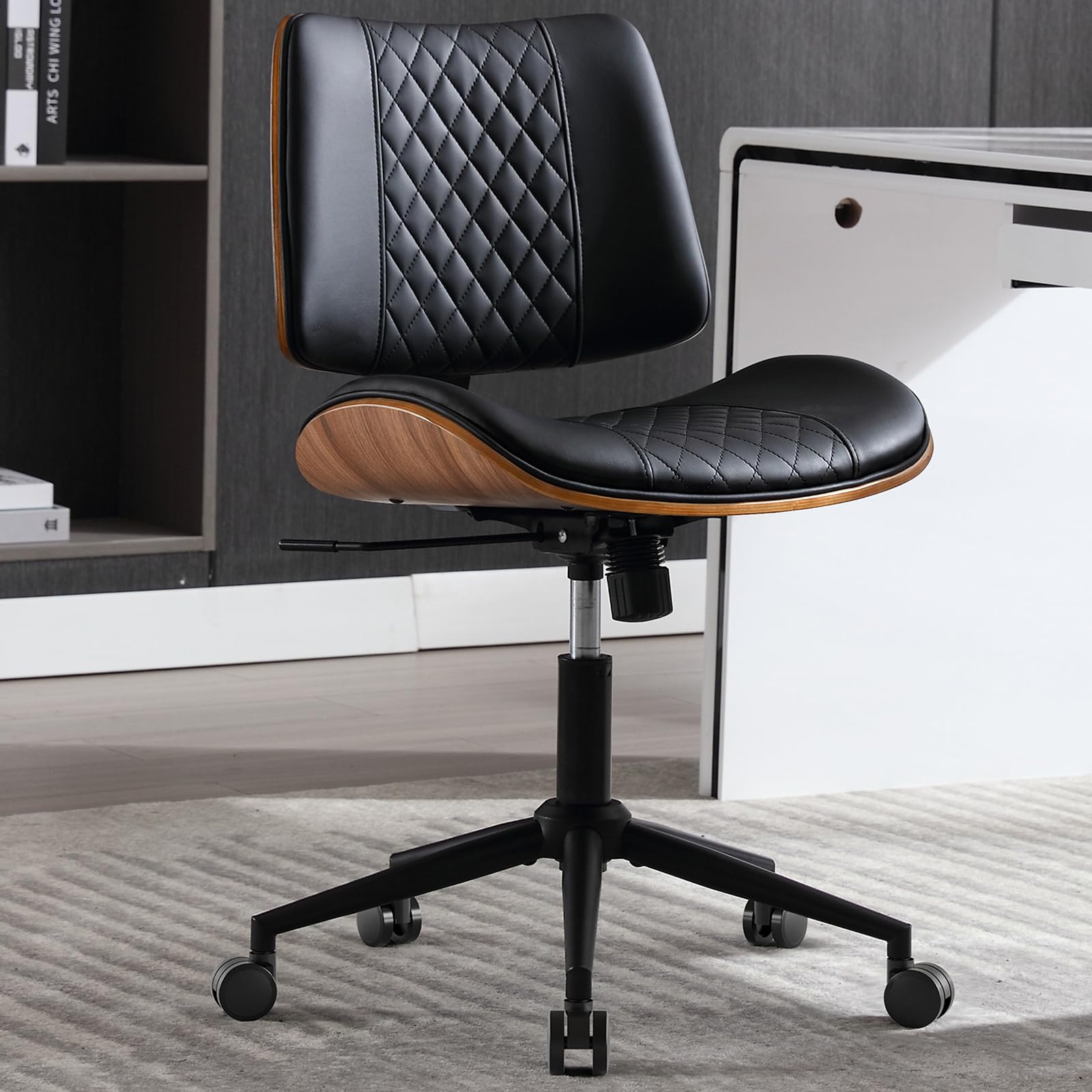
Walnut on an office chair sounds like a gimmick until you picture the room. A black mesh task chair in a bedroom corner looks like office equipment that wandered in; the walnut-toned back and the mid-back frame here look like something you chose on purpose.

It's a real chair underneath, and the height range is what makes it more useful than it looks: 19.3 to 23.3 inches, the highest ceiling in this group, so it suits a taller desk than the rest. The PU leather wipes clean, the rocking function has a locking lever, and the base is rated to 300 pounds.

The casters are the weak point. They roll, but not smoothly on every floor, and a replacement set is the first thing to price in.

What it isn't is an eight-hour ergonomic chair. Height and the rocking lever are the only adjustments, and there are no arms to take the weight off your shoulders, so it suits a writing desk, a guest room or a second workspace far better than a full-time job. We like it precisely because it doesn't pretend otherwise.

Bottom line: Choose it for a small, visible home office where looks count. It is the one chair here that makes a bedroom desk look intentional.

3

YFO Brown Leather Chair

YFO Brown Leather Chair

Warm, traditional offices

Our Score 9.2/10
Check Price

Worth Noting

  • Narrow 15.8-inch backrest
Armrests
Optional
Seat Width
22 in
Upholstery
Brown leather
Weight Capacity
300 lb
Read the full review

Brown leather, a lumbar pad in the back, and a choice of two builds: arms bolted on, or left off for a cross-legged seat. The YFO is the odd one out in this group, and in a good way.

The seat is the widest here at 22 inches, with 20.47 inches of depth, so bigger sitters get real room instead of the usual squeeze. The leather wipes clean, rubber casters keep it quiet on wood floors, and the base is rated to 300 pounds.

As a daily work chair it's a compromise we can live with, but it isn't the chair we point to first. Height and swivel are the adjustments, the lumbar pad is fixed, and the rest is up to how well the shape suits your back. Sit in it before you buy if you have a specific ache; buy it happily if you want a good-looking chair that stays comfortable for a few focused hours.

Where it earns its place is the room itself. A home office that doubles as a study or a guest room can't always take another black mesh chair, and this one looks like it belongs there.

Bottom line: A leather chair that makes a study look like a study: the wide seat and the optional arms are what sell it.

4

X XISHE 929 Office Chair

X XISHE 929 Office Chair

Everyday desk work

Our Score 9.0/10
Check Price

Worth Noting

  • Seat height of 20.5 inches limits it to standard desks
  • PU leather seat runs warmer than mesh
Lumbar
Adjustable up and down
Armrests
Flip-up
Seat Height
20.5 in
Weight Capacity
300 lb
Read the full review

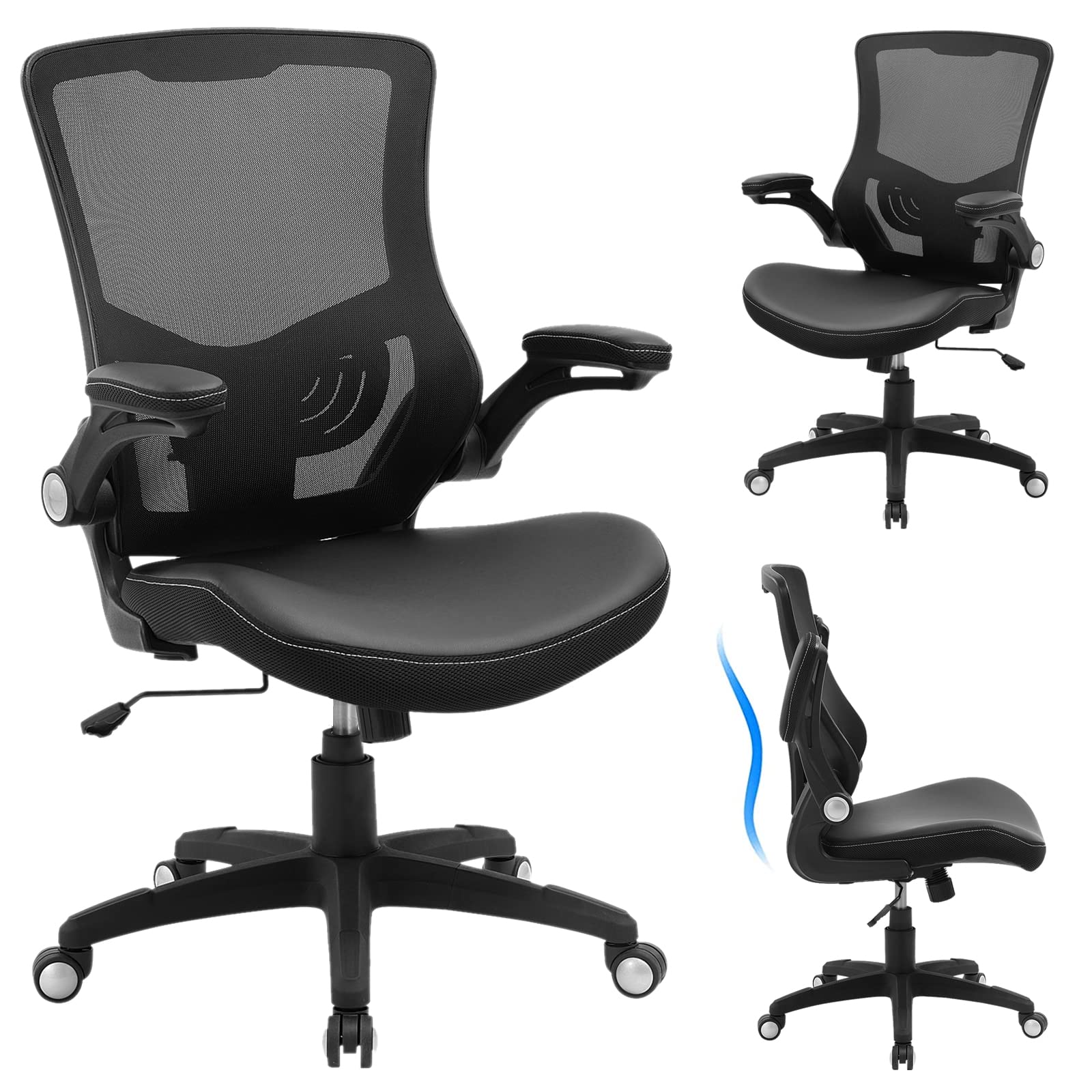
The lumbar panel on the X XISHE slides up and down the backrest, and that single detail is why it leads this list. A molded curve is a guess about your spine; a panel you can raise or lower lands where your lower back actually bends. Setting it takes a moment, and sitting against it for an afternoon is the part that convinces.

Around that panel the chair does the unglamorous work well. The seat is a thick sponge cushion under PU leather, with a mesh back that keeps air moving where you sweat most. The arms flip up out of the way so the chair slides under the desk when the day ends, and the frame is rated to 300 pounds on a BIFMA-tested base with a three-stage cylinder.

The adjustments are honest rather than lavish. The lumbar panel travels vertically but doesn't push in or out, and the arms are height-only, with no sideways or forward movement. At a desk where we sit fairly upright, neither got in the way. If you're chasing one specific ache, the ELABEST has far more knobs to turn.

What settles it is the balance. The base, the cylinder and the cushion density are a step above the budget chairs here, the lumbar panel stays where you set it, and nothing about the chair asks you to work around a quirk. That is rarer than the feature lists suggest.

Bottom line: Our default recommendation. Adjustable lumbar, flip-up arms and a 300-pound rating cover everyday desk work, and the cushion holds up better than the budget chairs here.

5

amseatec LY-9053 Mesh Chair

amseatec LY-9053 Mesh Chair

Tight budgets

Our Score 9.0/10
Check Price

Worth Noting

  • Rocking tilt stops at 110 degrees
  • Seat depth is fixed
Armrests
Flip-up
Warranty
5 years
Seat Cushion
3 in high-density foam
Weight Capacity
300 lb
Read the full review

A five-year warranty on a chair at the bottom of this list is the detail that made us stop scrolling. Warranties are where budget furniture usually goes quiet, and a five-year term on a chair that undercuts everything else here is worth taking seriously.

The chair backs it up with a three-inch high-density foam seat, a mesh back, flip-up arms and a 300-pound rating on a reinforced steel base. Set the tilt tension before you settle in and dial it up if you like to lean back hard, because a light setting lets the whole chair rock further than you expect.

The casters roll well on hard floors and bog down on thick carpet. A chair mat solves it, and it's worth budgeting for one if your desk sits on a rug.

What you don't get is shaping. The backrest is a fixed mesh panel, so the support is whatever its curve gives you. At this end of the market that's the honest trade, and it's the one bargain here we're comfortable recommending.

Bottom line: The bargain here. Flip-up arms, a three-inch cushion and a five-year warranty do the essentials, as long as you want a rocker rather than a lounger.

6

SIHOO M18 Ergonomic Chair

SIHOO M18 Ergonomic Chair

Head and neck support

Our Score 8.6/10
Check Price

Worth Noting

  • Arm pads do not adjust sideways
Recline
3 positions
Armrests
2D
Headrest
Adjustable
Weight Capacity
330 lb
Read the full review

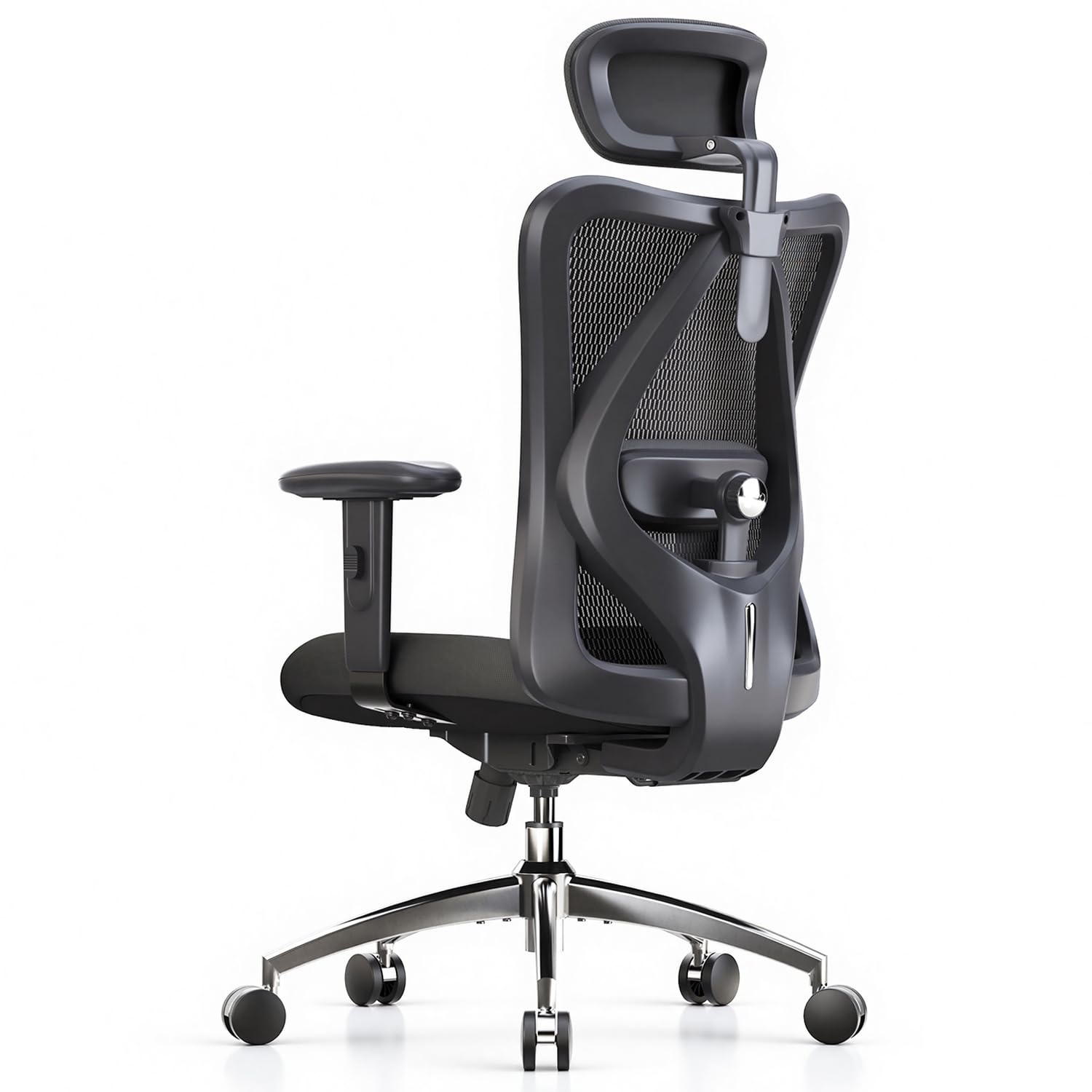
For roughly the same money as our top pick, the SIHOO M18 adds a headrest that tilts to meet your neck, and for a lot of people that's the trade worth making. It's the chair here we hand to taller sitters and to anyone whose shoulders are complaining by mid-afternoon.

The lumbar support is the strongest part. It's a proper adjustable piece rather than a bulge pressed into the foam, and the 330-pound rating with a 20.5-inch-wide back gives a bigger frame somewhere to sit. The mesh back breathes, and the three-position recline locks where you leave it.

The seat is where the chair divides people. It's memory foam over sponge and it runs firm: supportive for the first couple of hours, less forgiving by the end of a long day if you like to sink into a cushion. If a soft seat is what makes a chair feel expensive to you, this isn't that chair.

It's light enough for one person to move between rooms, the base stays compact for a chair rated this high, and the tilt tension is easy to find by feel under the seat. Nothing on it feels improvised.

Bottom line: Buy this one if you want a headrest and a chair that carries a bigger frame; the lumbar and neck support are the strongest of the group.

How We Tested 13 Office Chairs Over Six Months

We built the shortlist by pulling chairs from brands we'd tested before and ones we hadn't, filtering by seat-height range, weight capacity, overall footprint, and price so the group included compact options for home offices and sturdier frames for full-time desks. From that list, we brought in 13 chairs and used them as our daily seats for six months. Each was assembled solo and timed, with notes on whether the hardware came labeled, whether the holes lined up without forcing, and how long it took before the first wobble.

Comfort and support were judged over full workdays, not five-minute sits. Editors of different heights and builds rotated through the chairs, logging where pressure landed after two-hour stretches, whether the lumbar curve actually met the lower back or left a gap, and whether the seat cushion bottomed out by week eight. We leaned back in each chair to see if the backrest flexed with us or dumped us backward, and we noted how often we had to readjust the seat height or armrests because something slipped.

We also paid attention to the parts that wear. Flip-up arms were raised and lowered repeatedly and tested against a standard desk to see if the chair would slide underneath; casters were rolled across hardwood, low-pile carpet, and a rug edge to check for skipping, snagging, and marks. After six months, we re-checked every adjustment mechanism, listened for new creaks, and looked at stitching and welds for signs of strain.

The chairs that held up were not always the most expensive; they were the ones whose adjustments stayed put and whose cushions kept their shape. We're still using them daily and will update this list if anything changes.

How to Choose Office Chairs

Start With the Seat, Not the Backrest

Seat depth is the measurement most shoppers skip and then regret. A deep, plush seat feels wonderful for ten minutes and then cuts into the back of your knees, which is why the chair with the biggest cushion is not automatically the best one for you. Sit with your back against the backrest and slide two fingers behind your knee; if there is no room, the seat is too deep.

Our seats run from a shallow 15.2 inches on the BERYTH to 20.47 on the YFO, so check the number before you fall for the look.

Lumbar Support Only Counts If It Moves

Nearly every chair claims lumbar support. What matters is whether the support is a shape molded into the backrest or a panel you can reposition. A molded curve lands wherever the designer guessed your spine bends; an adjustable panel puts the pressure at the small of your back, which is where it does something useful.

The X XISHE and the SIHOO slide vertically, while the ELABEST adds depth and a little rotation. If a fixed curve happens to fit you, that is fine, but know that you are relying on the fit rather than the adjustment.

Armrests: Flip-Up, Adjustable, or None

Armrests decide two things: whether your shoulders can drop and whether the chair can disappear under the desk. Fixed arms at the wrong height push your shoulders up all day, and arms that only travel vertically cannot drop below the desktop. Flip-up arms, on our top pick, the amseatec and the ELABEST, solve the clearance problem and let you push the chair in when you are done.

An armless chair like the BERYTH trades that support for a smaller footprint and a cleaner line, a fair trade for a writing desk and a poor one for eight hours of typing.

Mesh or Leather, and What the Base Has to Carry

Mesh backs breathe; leather and PU wipe clean and feel warmer in a room that is not a cubicle. Neither is better in the abstract, but if your office runs hot, a mesh back is the difference between a productive afternoon and a sluggish one.

Under the seat, look at the weight rating and the base. The chairs here are rated between 300 and 330 pounds, plenty for most sitters, but that is a static number. Casters are what actually fail, and thick carpet is what beats them, so if your desk sits on a rug, plan on a chair mat.

Recline, Footrests, and Room to Use Them

A recline you can lock is a pleasant thing at four in the afternoon; a footrest is a better one at nine at night. The ELABEST is the only chair here with an extendable footrest, and it reclines through three positions.

The catch is space. A reclining chair sweeps backward, so measure from the desk edge to the wall before you buy, and remember that a 26-inch-deep frame needs more room than its footprint suggests. If your desk backs onto a wall, a rocker like the amseatec is the more realistic choice.

Frequently Asked Questions

Final Verdict

The X XISHE is the chair we recommend without a caveat: an adjustable lumbar panel, flip-up arms, a cushion that holds its shape and a 300-pound frame, all at a midrange price. Spend more only for something specific.

The SIHOO M18 adds a headrest for about the same money, and the ELABEST X100 adds a footrest and a three-position recline for a healthy premium. If the budget is tight, the amseatec covers the essentials with a five-year warranty behind it.