Bedding

Best Duvet Inserts of 2026

I've spent years chasing that just-right bed: cozy but not stifling, fluffy but not a sweaty mess. A duvet insert is the quiet engine behind all of it—the layer that decides whether you wake up warm or kicking off covers at 3 a.m. The wrong one clumps, leaks feathers, or sags to one side; the right one makes your bed feel like a hotel suite without the thermostat fight. It also has to fit your duvet cover properly and hold its shape wash after wash.

Over the past eight months, we've slept under 12 different duvet inserts—down, down-alternative, and a couple of wool options—rotating them across beds in our homes and a guest room. We judged them on softness, warmth without overheating, weight, thickness, and value, plus how well they held up after repeated washings. One thing first-time buyers miss: thread count matters less than fill power and baffle construction. Below, the inserts that earned a permanent spot on our beds.

1

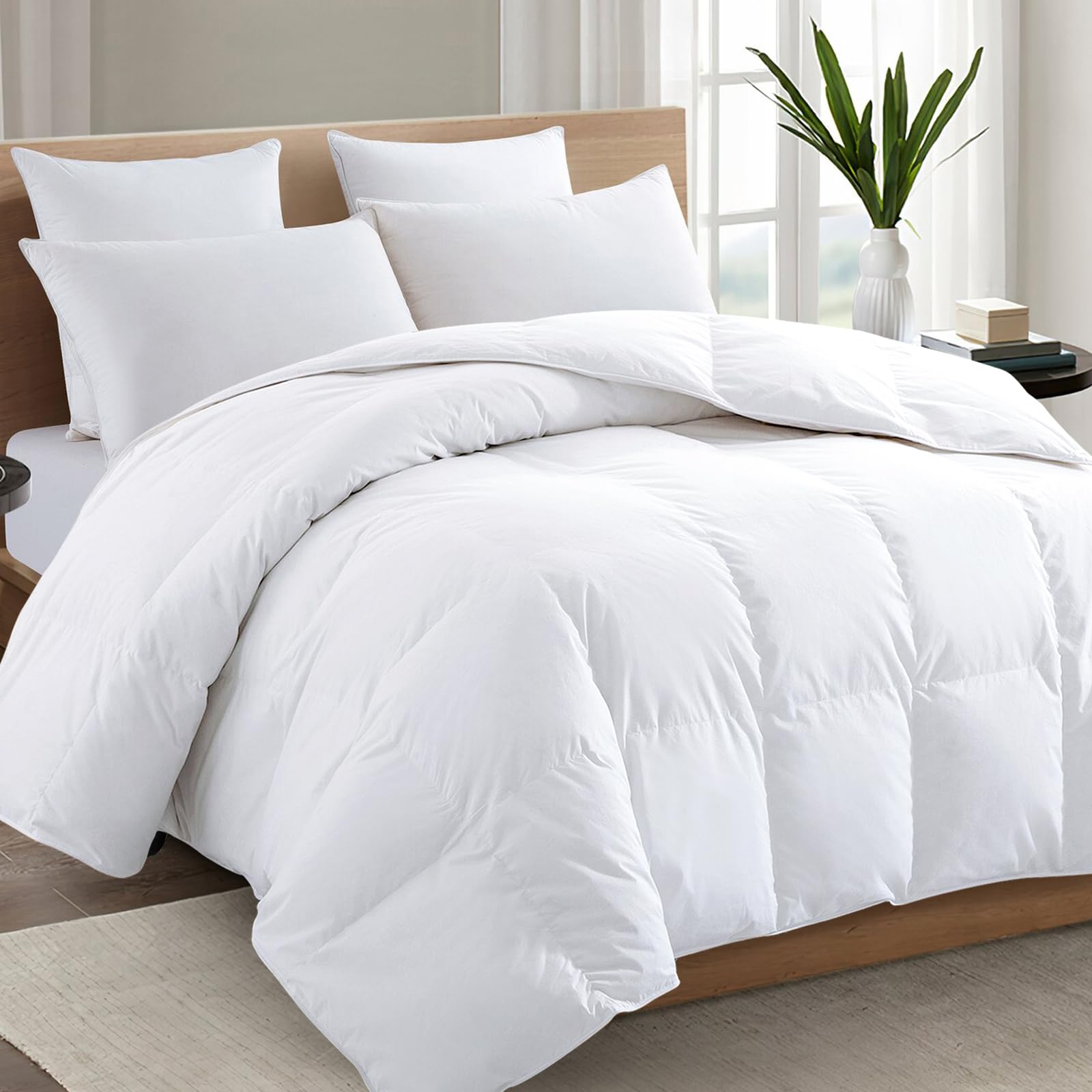
Bedsure Comforter Duvet Insert

Top Pick
Bedsure Comforter Duvet Insert

Everyday all-season beds

Our Score 9.4/10
Check Price

Worth Noting

  • Flatter out of the bag than the photos suggest
Fill
Polyester fiberfill
Size
88 x 88 in
Weight
6 lb
Attachment
Tabs on each side
Read the full review

An insert has one job: fill the cover you already own, stay put overnight, and not turn the bed into a sauna by three in the morning. The Bedsure does all three, which is why it is the one we recommend to almost everyone who asks. Ours is the 88 x 88 inch queen, six pounds of polyester fill in a box-stitched shell, with tabs down every side. We tied it into a queen cover and the corners were still where we left them a week later, which is a small thing that several inserts here get wrong.

Six pounds sounds heavy for something sold as all-season, and it does not sleep that way. The fill is airy rather than dense, so the insert settles around you instead of pressing down, and we were comfortable under it in a warm room with the window open. The loft is the honest part: a little over an inch, nowhere near the cloud in the listing photo. Inside a cover it reads plumper than that, and if you want real drape on a tall mattress, order the Queen Plus or oversized option rather than expecting the standard queen to hang past the rails.

Care is where it quietly wins. It goes through a home washer on cold and comes out square, and the box stitching kept the fill from sliding to the foot end across a couple of cycles. Give it the full day or two out of the bag before you judge it; ours looked like a flat sheet on night one and like bedding by night three. The one thing we minded is the packaging, which compresses it hard enough that the first night is a compromise. Plan for two.

Bottom line: The insert we point friends toward: soft, breathable enough for summer, warm enough for winter, and tabbed on every side so the cover stays square.

2

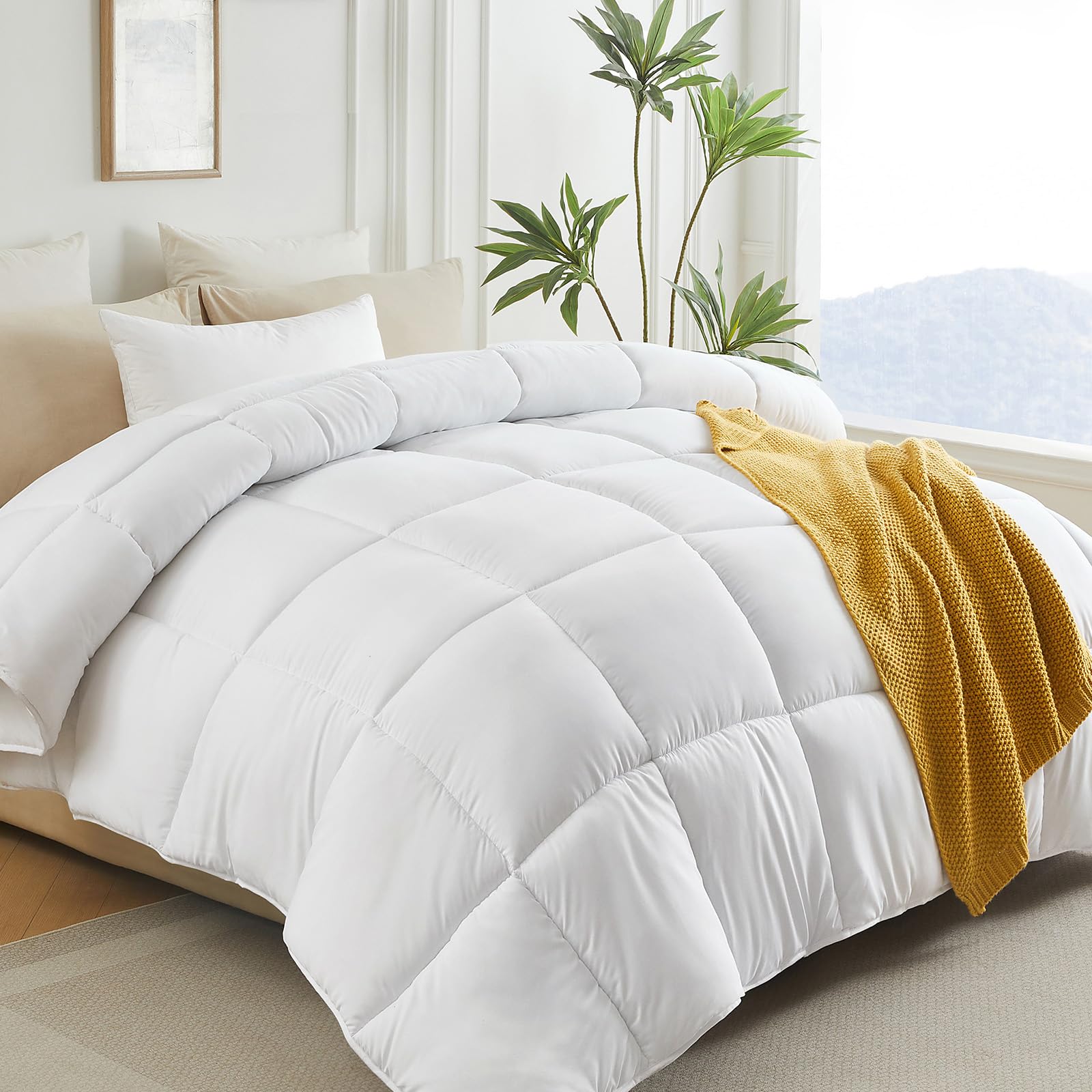
Amazon Basics Down Alternative Comforter

Amazon Basics Down Alternative Comforter

Budget queen beds

Our Score 9.4/10
Check Price

Worth Noting

  • Full/Queen is the only size listed
Fill
300 gsm polyester
Size
88 x 88 in
Weight
5.8 lb
Attachment
Corner tabs
Read the full review

Nothing about this listing sells the fantasy. No brushed-silk adjectives, no hotel photography, just 300 gsm of polyester fill in a plain microfiber shell, 5.8 pounds for a full/queen 88 x 88, with tabs at the corners. That plainness is part of why we like it. We went in looking for what a budget insert usually gets wrong, thin corners, fill that migrates, a shell that crackles, and found none of it. It is soft in the hand, plumps up after a day out of the vacuum bag, and stayed evenly filled across the middle of the bed where cheap inserts go flat.

What surprised us is how well it regulates. It was warm on a cold night without leaving us kicking it off in a heated bedroom, which is unusual for polyester at this end of the price range. The shell is quiet, it took a cold wash and a low tumble without clumping, and it came out of the dryer smelling of nothing at all. The limitation is the size list: this listing is full/queen only, so a king bed or a twin guest room needs another pick. Ours went straight from the bag onto a guest bed and drew no comments, which for a guest bed is the highest praise available.

Bottom line: The best value in the group: a soft, breathable full/queen insert that behaves like it costs more, for anyone furnishing a bed on a budget.

3

L LOVSOUL Duvet Insert

L LOVSOUL Duvet Insert

Generous duvet covers

Our Score 9.2/10
Check Price

Worth Noting

  • Reads thinner in the hand than 300 gsm suggests
Fill
300 gsm whole-piece polyester
Size
90 x 90 in
Weight
5 lb
Attachment
Eight tabs, corners and sides
Read the full review

Eight tabs, one at each corner and one halfway down each side, is the detail that earns this insert a place here. If you have ever woken up with a duvet cover twisted around a lump of fill, you know exactly why. The Lovsoul is a 90 x 90 queen, 300 gsm of whole-piece polyester, five pounds, with piped edges and box stitching. We tied it into a cover that had been swallowing a smaller insert, and the change was immediate: the cover sat full to the corners and stayed there.

The fill is a single piece rather than loose clusters, and it shows in how evenly the insert sits, with no bald patch in the middle and no wad at the foot. Warmth lands squarely in the middle of the range, enough for a cold bedroom and light enough that we did not overheat, and the brushed cover feels smoother than the price suggests. The extra two inches over a standard 88-inch queen are what make it a good match for a cover that is cut generously; ours draped toward the rails instead of stopping short.

Where it lands for us is the practical middle of this list: a workmanlike insert rather than a luxurious one, and we mean that as a compliment. Nothing about it demands attention once the bed is made, which is roughly the highest ambition an insert should have. It is the pick we hand to anyone whose real complaint is corners that never stay tied.

Bottom line: Buy this one when your cover is generous and your insert keeps sliding: eight tabs and a 90-inch square hold the arrangement together.

4

EASELAND Down Alternative Comforter

EASELAND Down Alternative Comforter

Beds without covers

Our Score 9.2/10
Check Price

Worth Noting

  • Thinner than its 300 gsm fill implies
Fill
300 gsm whole-piece polyester
Size
88 x 88 in
Shell
105 gsm brushed polyester
Read the full review

Most inserts here assume a cover. This one is worth considering if you do not use one: the 105 gsm brushed polyester shell is genuinely soft against skin, closer to a comforter than to the slick microfiber on the cheaper picks. Underneath sits 300 gsm of whole-piece fill in a box-stitched 88 x 88 queen, with the fill distributed as one piece rather than clusters, which is why it does not develop bald patches where you sit.

We used it both ways, bare for a week and then inside a cover, and the difference is smaller than you might expect. Bare, it reads like a comforter; covered, it fills out the way a 300 gsm insert should. Warmth is middle-of-the-road all-season, enough on a cold night with a blanket on top and light enough that a heated bedroom did not wake us up.

It is also the easiest of these to live with. Cold wash, low tumble, and it comes out soft rather than crispy, with the fill still sitting in its boxes. If the bed is somewhere people sit and read rather than a styled guest room, that durability of appearance matters more than a half-inch of extra loft.

That is where it earned its slot: it does the bare-bed job better than the budget picks and the covered job just as well, without asking you to buy a cover first. The fill is not as deep as the fill weight implies, so treat it as a neat medium layer rather than a cloud, and it makes sense for a spare room, a rental, or anyone who hates wrangling a duvet cover on laundry day.

Bottom line: The one to buy if you skip the cover: a brushed shell that feels good against skin, over a fill that stays put and survives the wash.

5

TEXARTIST Down Alternative Comforter

TEXARTIST Down Alternative Comforter

Chilly bedrooms

Our Score 9.2/10
Check Price

Worth Noting

  • Medium loft rather than cloud-plush
Fill
4D spiral polyester
Size
88 x 88 in
Attachment
Eight corner loops
Construction
Baffle box
Read the full review

Baffle-box construction is the reason to look at this one. Instead of stitching the top and bottom layers directly together, the box walls let the fill stay expanded inside each channel, so it does not flatten into a pancake after a month of use. Add eight corner loops and a 4D spiral fiberfill and you have an insert built to hold its shape rather than to look dramatic on day one. It is a queen, 88 x 88, in a soft polyester shell.

The feel is closer to brushed cotton than to the slick shells on the budget picks, and the warmth is aimed at cool bedrooms. This is one of the few here that our cold-room testing left us under rather than pushing off, which is exactly what the warmth feedback describes. The eight loops matter more than they sound: tied at all four corners and both mid-points, the insert stayed centered through a week of making and unmaking the bed.

It is not the plushest thing in this group. The fill settles into a medium loft and stays there, and if you press a hand in, you feel the shell before you feel a cushion of fill.

For a cold bedroom and a cover that needs some structure, that trade is the right one, and it is the pick we reach for when a duvet cover looks empty rather than flat. If what you want is the hotel-cloud look, spend the money on a feather insert instead, because no amount of fluffing gets this one to that place.

Bottom line: A structure-first insert for a cold bedroom: baffle boxes keep the fill where it belongs, though the loft stays medium rather than cloud-like.

6

DOWNCOOL Duvet Insert

DOWNCOOL Duvet Insert

Hot sleepers, summer

Our Score 9.0/10
Check Price

Worth Noting

  • Only four corner loops to tie
  • Too thin on its own for winter
Fill
3D/7D down-alternative polyester
Size
88 x 92 in
Weight
2.8 lb
Attachment
Four corner loops
Read the full review

At 2.8 pounds this is the lightest insert in the group, and that is the whole case for it. It is an 88 x 92 queen in a soft microfiber shell, box-stitched, with four corner loops and no bulk to speak of. If you sleep hot, share a bed with someone who does not, or live somewhere the air conditioning runs all summer, this is the weight that stops waking you at two in the morning.

Light does not mean flimsy. The fill is a 3D and 7D down-alternative, the shell is quiet against the ear, and the box stitching held it even across the bed. It is warm enough for spring and fall on its own; in January we layered a blanket over it and it did fine. We wish the attachment were as thorough as the fill, because the four corner loops are the weak point: on a cover with ties halfway down the sides, the middle of the insert drifts. Our cover had corner ties only, so it stayed put by luck as much as design.

Where it stops being the right answer is a cold house and a partner who likes weight on their chest, since there is simply not much of it here. For a summer apartment, a dorm room, or a bed someone sweats in, we kept coming back to this one as the sensible buy.

Bottom line: The insert for hot sleepers and warm rooms: 2.8 pounds, soft, and warm enough for three seasons without ever feeling like a blanket.

7

Cosybay Feather and Down Comforter

Cosybay Feather and Down Comforter

Cold bedrooms

Our Score 9.0/10
Check Price

Worth Noting

  • Loose feathers can work their way out
  • Premium price and heavy for summer
Fill
Feather and down fiber
Size
90 x 90 in
Shell
100% cotton, OEKO-TEX
Weight
7.01 lb
Read the full review

Feather and down fiber in a 100% cotton shell is why this insert feels different from the polyester crowd. It is a 90 x 90 queen, 3.18 kg, box-stitched, with corner tabs and an OEKO-TEX certified cotton cover. The first thing you notice lifting it out of the bag is the weight; the second is the quiet, because cotton does not rustle the way microfiber does.

This is our pick for anyone who misses a real down comforter and has been disappointed by polyester. It lofts faster than the synthetic fills and traps warmth without the clammy feel, and the cotton shell breathes so you are not stuck to it by morning. The trade-off is warmth you cannot escape in July: the maker rates it medium for 55 to 77 degrees and heavy below 64, and our experience matches, so it is a three-season insert in a cool house rather than a summer one.

The cotton shell is the other reason to choose it. It feels cool for the first minute you are under it, it takes a machine wash on gentle without losing its shape, and it looks like bedding rather than a technical layer. It needs a cover for the obvious reason, since white cotton shows every mark, but the cover is a finishing touch here rather than a necessity.

Bottom line: For down loyalists: real feather-and-down loft, a breathable cotton shell, and enough warmth for a genuinely cold bedroom.

8

Egyptian Bedding Down Fiber Comforter

Egyptian Bedding Down Fiber Comforter

King beds, splurge

Our Score 8.8/10
Check Price

Worth Noting

  • Loose feathers can escape onto the bed
  • Far more expensive than anything else here
Fill
80% down fiber, 20% feather
Size
108 x 98 in
Shell
Egyptian cotton
Fill Weight
65 oz
Read the full review

At the top of the price range sits a genuinely different proposition: 65 ounces of 80% goose down fiber and 20% waterfowl feather in a 100% Egyptian cotton shell, baffle-boxed, with eight corner loops and tabs, in an oversized 108 x 98 king. This is the closest thing here to the bedding that makes you look up the brand in a hotel room, and the cotton cover is the first clue, since it feels cool and smooth rather than slick.

The fill is the story. Down fiber lofts like nothing else in this group, so the comforter drapes over the bed instead of sitting on top of it, and after a full day out of the bag ours had recovered enough to look generous rather than flat. Warmth is medium for year-round use, and the baffle boxes keep the fill from collecting at the foot end, which is where cheaper feather comforters fail.

The size is the other half of what you are paying for. At 108 by 98 inches it covers a king mattress with real overhang, something the 88-inch queens here cannot do on a king frame, and the eight loops make it easy to anchor under a cover. Note that this listing is the oversized king, so it is a decision you make once for a specific bed rather than a size you swap later.

What keeps it off a higher tier is the feathers. Loose ones work their way through the shell onto the bed, which is a real annoyance at this price, and it is the sort of thing a tight-weave cover helps with but does not eliminate. If you want the loft and the drape and can live with the occasional quill, this is the one to stretch for; if not, the polyester picks do the everyday job for a fraction of the outlay.

Bottom line: The splurge for an oversized king: real down-fiber loft in an Egyptian cotton shell, if you accept the price and the stray feathers.

How We Chose and Tested Duvet Inserts

We started by researching more than 40 duvet inserts, then narrowed the field to 12 based on fill type, size availability, care instructions, and price. For eight months, those 12 inserts rotated through our bedrooms, guest rooms, and a rental apartment—always under a duvet cover, always on a real bed. Two of our testers sleep hot, one sleeps cold, and one has a dog that claims the foot of the bed.

Each insert got at least two weeks of nightly use. We noted whether it felt soft against bare skin, whether it made us kick off covers at 3 a.m., and how much loft it lost after a week of sleep. We washed every insert at least twice, following the care label, then checked for clumping, shifting fill, and stray feathers poking through the seams. On down and feather options, we inspected the sheets and mattress pad for quills after each wash.

We also paid close attention to size and thickness: a queen insert had to fill a queen cover corner-to-corner without looking sparse or overstuffed, and we measured loft after shaking. To judge durability, we tracked seam strength and fill distribution through repeated washes, and compared each insert's warmth-to-weight ratio against its price to see which ones actually delivered value.

How to Choose Duvet Inserts

Match warmth to how you sleep, not to the season name

All-season is a range, not a promise. Polyester inserts here run from a 2.8-pound summer weight to 300 gsm fills that handle a cold bedroom, and the same insert can feel warm in one house and stifling in another because the shell matters as much as the fill. Read the fill weight or the pounds, then think about your bedroom: a heated apartment suits the light end, a drafty Victorian does not. If you genuinely sleep cold and want warmth without bulk, feather and down fiber does more per inch than any polyester here.

Loft: what arrives versus what the photos promise

Every insert in this group ships vacuum-packed and lands flatter than the listing photo. Give it 24 to 48 hours out of the bag, ideally with a low tumble, before you judge it. What keeps the loft afterwards is the quilting: sewn-through boxes are fine for a light insert, while a baffle-box build lets the fill stay expanded inside each channel instead of flattening with use. Judge the result inside the cover. A generous cut fills a cover better than a thick insert that stops short of the corners.

Size the insert to the cover, then to the bed

A standard queen mattress is 60 by 80 inches, and the queen inserts here run 88 to 92 inches square, so coverage is rarely the problem. The mismatch is usually between insert and cover: a cover cut oversized for its insert is what makes a bed look deflated, and an insert that barely fills its cover leaves the corners empty. If you like drape on a tall mattress, move up the range: the 90-inch squares, the oversize queens, the 108-inch king. Measure the cover flat before ordering and match it, not the mattress label.

Count the tabs before you buy

Four corner loops are the minimum, and four is what the lightest inserts here give you. Eight tabs, on the corners and the sides, hold an insert square through a week of bed-making. The trap is the other half of the equation: count the ties inside your cover too. A cover with four interior ties and an insert with eight tabs leaves four tabs dangling and the middle of the bed free to drift, so match the counts or plan to sew in the extra ties yourself.

Polyester, feather and down fiber: what you're paying for

Polyester down-alternative is the practical default. It takes a home wash without sulking, it does not set off down allergies, and the better versions hold their shape for years. Feather and down fiber lofts faster and sleeps warmer for its weight, usually in a cotton shell that breathes better than microfiber, but loose feathers can work their way out and the price climbs. The shell decides how the insert feels next to skin: brushed microfiber is soft enough to skip a cover, plain microfiber wipes clean and feels cooler, cotton breathes. If anyone in the house reacts to down, stay on the polyester side.

Frequently Asked Questions

Final Verdict

The Bedsure is the insert we put on our own bed: it fills a cover, sleeps cool for its weight, and the tabs keep the whole arrangement square. Pay the small premium over the cheapest picks and you stop thinking about bedding.

If the budget decides, the Amazon Basics does the same job for less in a full or queen. And if nothing but real down loft will do, the Cosybay is the one to stretch for.