Bedding

Best Cotton Sheets of 2026

Cotton sheets are the quiet workhorse of a good night’s sleep — until the fitted sheet pops off a corner at 2 a.m. or the fabric pills after a few washes. What you want is simple: a set that feels soft against your skin, stays put on a deep mattress, and still looks decent when you make the bed in a hurry. I slept on 12 sets over eight months, rotating them across my own bed and a guest room, to find which ones actually deliver that.

One thing I learned: thread count is a poor shorthand. Weave, cotton type, and finishing matter more, and a higher number can just mean thinner yarns. Cotton also softens with washing, but the wrong set can shrink or wrinkle into a crumpled mess — so the best sheets are the ones that improve in the laundry without losing their shape or color. I weighed all of that, plus whether the price felt fair for the quality. The picks below are the sets that survived my rotation and kept earning their place on the bed.

1

California Design Den 400TC Sateen

Top Pick
California Design Den 400TC Sateen

Everyday queen beds

Our Score 9.0/10
Check Price

Worth Noting

  • Pricier than the jersey and percale picks
Weave
Sateen
Material
100% long-staple cotton
Pocket Depth
16 in
Thread Count
400
Read the full review

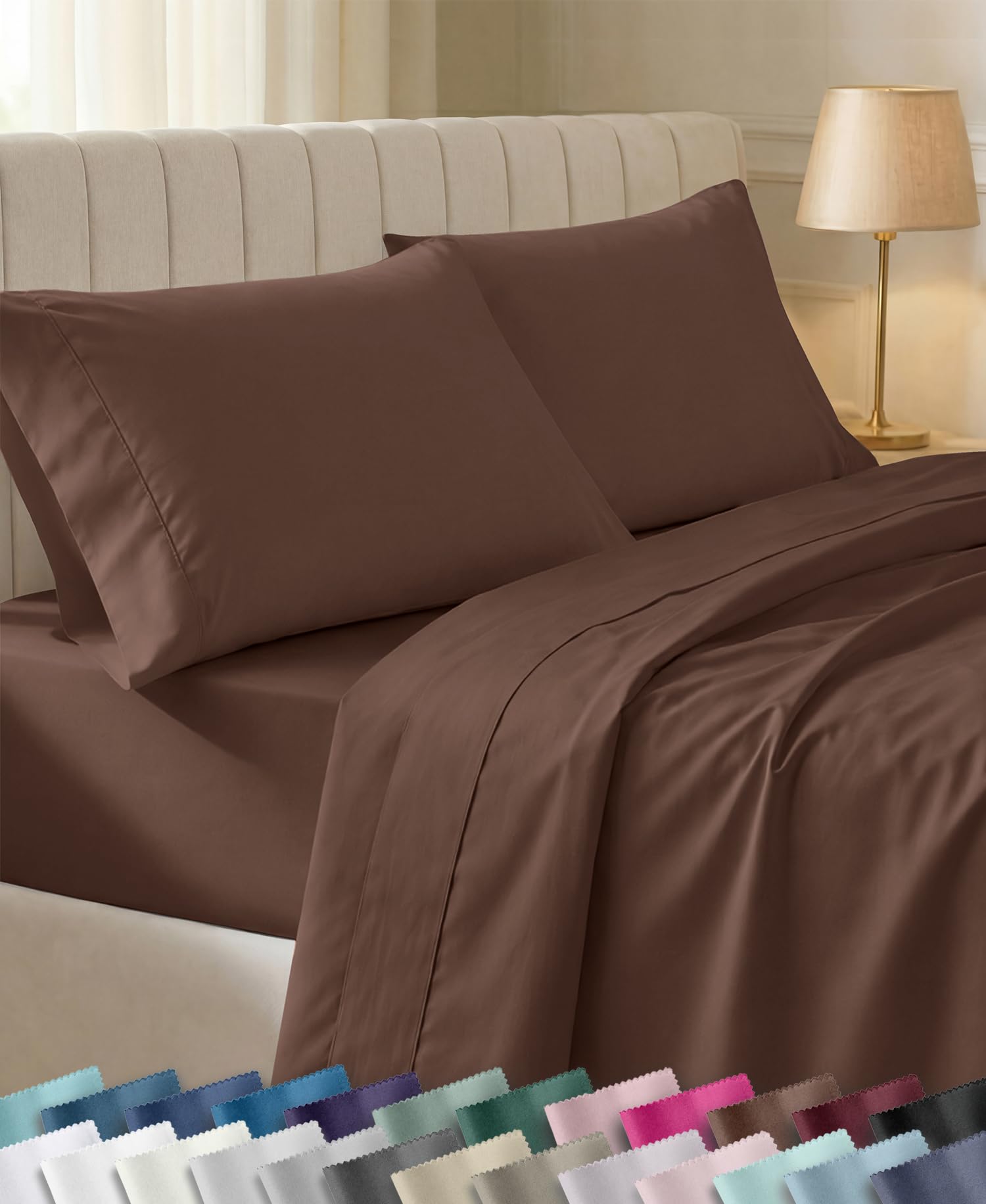
The fitted sheet is where most cotton sets give up, so we started there: a 16-inch pocket with elastic running the whole way around, plus small tags that mark the head and foot ends so you stop fighting the orientation. On a mattress with a thin topper the corners held through a week of ordinary use, which is more than the set it replaced managed. That fit is why this is our top pick ahead of softer-feeling sets that slide off a corner by morning.

The cloth is a 400-thread-count long-staple cotton sateen, which in the hand means smooth and faintly lustrous, gliding rather than scrubbing against skin. It is the lighter of the two sateen sets here, so it drapes and breathes instead of lying on you like a slab, and we noticed it soften across the first few washes without going limp.

The price sits in the middle of this group: more than the jersey and percale picks, less than the 600-thread-count version of the same set. That is the right place to land for a bed you sleep in every night — good enough to feel like an upgrade, reasonable enough to buy a second set and keep them in rotation.

Bottom line: We recommend it to most people buying cotton sheets: a 400-thread-count sateen with elastic all the way around, a 16-inch pocket, and a price below the premium sets here.
2

Feather & Stitch 500TC Sateen

Feather & Stitch 500TC Sateen

Deep mattresses

Our Score 9.0/10
Check Price

Worth Noting

  • Creases more than the sateen sets here
  • Premium price within this group
Weave
Sateen
Material
100% cotton
Pocket Depth
18 in
Thread Count
500
Read the full review

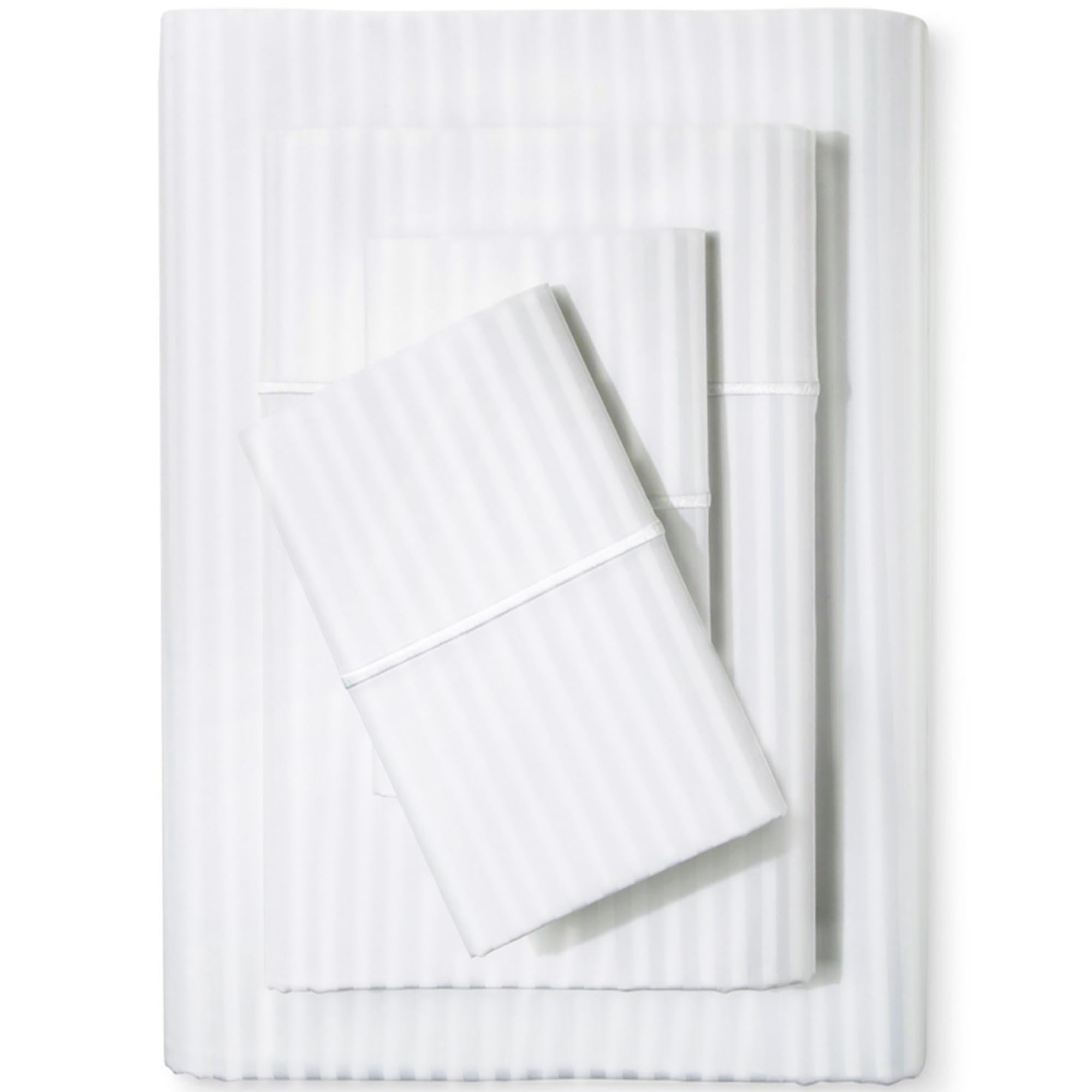
If your mattress and topper together run past 16 inches, most of this list is out. This king set carries an 18-inch pocket, and the fitted sheet adds gathered elastic at each corner on top of the band that runs around the edge — the belt-and-braces approach that keeps a deep bed covered instead of peeling up overnight.

The fabric is 500-thread-count long-staple cotton sateen, mercerized for sheen, and it is the most substantial cotton here after the 600-thread-count set: cool, smooth and heavy enough to hang straight off the sides. The damask stripe and the hem stitching do a lot of quiet work, and the bed looks made even when the flat sheet has only been pulled up rather than smoothed.

We recommend it on the strength of the fit rather than the finish. Anyone who has bought a set advertised as deep pocket and still watched the corners come off knows the specific frustration this solves, and the extra corner elastic is the detail that keeps an 18-inch pocket snug rather than baggy. If your mattress is 12 inches, you are paying for depth you do not need.

Bottom line: This is the set we point to when a mattress and topper run past 16 inches; the 18-inch pocket and corner elastic are what keep a tall bed covered.

3

Amazon Basics Cotton Jersey

Amazon Basics Cotton Jersey

Budget king beds

Our Score 9.0/10
Check Price

Worth Noting

  • 14-inch pocket leaves deep mattresses out
  • Knit can tear where it stretches over corners
Size
King
Weave
Jersey knit
Material
100% cotton jersey
Pocket Depth
14 in
Read the full review

Jersey is a knit, not a weave, and it behaves like a T-shirt: soft, slightly stretchy and warm against the skin. That is a different product from a crisp cotton sheet, and it is the least expensive way onto this list. The stretch is the practical part — the fitted sheet pulls over the corners and stays there, which makes a king bed far quicker to make than a woven cotton sheet you have to tuck and re-tuck.

We like it best for the beds nobody irons: a guest room, a kids' room, a rental. Jersey never looks pressed, so a rumpled sheet reads as intended rather than neglected, and a cotton knit breathes better than a synthetic fleece by a wide margin. In a hot bedroom it holds more warmth than percale or sateen, so it suits a cool room and a sleeper who likes some weight on them.

One thing to check before you order: the listing calls this a four-piece set in the title and describes a three-piece set with a single pillowcase in the bullet points, so confirm the pillowcase count for the size you pick rather than assuming. Everything else about the set is refreshingly plain.

Bottom line: The cheapest cotton set here, and the one we suggest for guest rooms and kids' beds: stretchy jersey that grips the corners and never needs ironing.

4

Shilucheng Egyptian Cotton

Shilucheng Egyptian Cotton

Guest beds

Our Score 9.0/10
Check Price

Worth Noting

  • Fitted sheet can split at the seams
  • Lighter drape than the sateen picks above
Set
4 pieces
Weave
Sateen
Material
100% cotton
Pocket Depth
16 in
Read the full review

The feel is the draw: a smooth, matte cotton sateen with a hotel weight to it, closer to pressed than to silky, and it comes out of the packaging nearly crease-free. The brand calls it Egyptian cotton, which is a fiber label worth taking at face value rather than as a guarantee — what you can actually judge is the hand, and the hand is very good.

The fit is the other reason it stays on this list. A 16-inch pocket with all-around elastic held the corners on a mattress with a topper, and the pillowcases are a standard 20 by 30 inches, so they fit ordinary pillows without a fight. It is lighter in the hand than the California Design Den sets, which some sleepers will prefer once the weather turns warm.

We rank it as an also-consider rather than a runner-up, and the reason is confidence rather than comfort. The feel earns its price; the longevity is the part we cannot vouch for. On a guest bed, or as a set you rotate rather than sleep on every night, that trade looks a great deal better than it does on the bed you use for eight hours.

Bottom line: A lovely hotel-style sateen at midrange money — we rate the feel highly and the longevity cautiously, which makes it a guest-bed set rather than an everyday one.

5

California Design Den 600TC Sateen

California Design Den 600TC Sateen

Weighted sateen fans

Our Score 8.8/10
Check Price

Worth Noting

  • Premium price within this group
  • Seams can fail before the fabric does
Weave
Sateen
Material
100% long-staple cotton
Pocket Depth
16 in
Thread Count
600
Read the full review

More money buys more fabric here, not more features. This is the same long-staple cotton sateen as our top pick, with the same 16-inch pocket, the same all-around elastic and head-and-foot tags, woven denser: 600 thread count against 400, and a slightly heavier set overall. In the hand it reads tighter and cooler, with less of the slippery drape that makes the lighter one feel airy.

Weight is the whole decision. We reach for this one when we want a sheet with body, the kind that stays smooth under a duvet and feels cool rather than silky when you turn over, and we reach for the 400 on a summer bed where airiness counts for more. Neither is the better sheet; they suit different sleepers, and the difference in price is really a difference in density.

What the extra money adds beyond density is OEKO-TEX Standard 100 certification, the label we look for when a set is headed for a child's bed or for someone who reacts to fabric finishes. That is a real reason to spend, just not one that changes how the sheet sleeps.

Bottom line: Our pick for anyone who wants a heavier, denser sateen: the same reliable fit as the top pick, with more body in the hand and a premium to match.

6

RUVANTI Percale

RUVANTI Percale

Hot sleepers

Our Score 8.8/10
Check Price

Worth Noting

  • Wrinkles heavily straight out of the dryer
  • Rough next to sateen until it is washed in
Weave
Percale
Material
100% cotton
Pocket Depth
16 in
Thread Count
200
Read the full review

Percale is the other half of the cotton story, and it is not for everyone. The weave is tight and matte, so the sheet feels crisp and cool rather than silky, closer to a pressed shirt than to a hotel duvet. What it does well is move air: on a warm night it stays dry against your skin where a smooth sateen can start to feel clammy.

This is the percale we recommend here. The fitted sheet has a 16-inch pocket, deeper than the organic percale set further down this list, so it stays on a mattress with a topper, and the botanical print gives a bed some color without needing a duvet. At 200 thread count the fabric is light and airy, which is the whole point of percale rather than a shortcut — a heavier version loses the crispness that makes it worth buying.

We came to it expecting hotel bedding and got something closer to a good button-down, which turned out to be the appeal. It is the set we point to for hot sleepers and for anyone who cannot stand the slip of sateen. It also softens gradually with washing, the way percale does: the crispness fades, but it does not disappear.

Bottom line: For hot sleepers we prefer percale, and this is the one we recommend here: crisp, airy, a 16-inch pocket, and a print that keeps a rumpled bed looking deliberate.

7

Lane Linen Organic Percale

Lane Linen Organic Percale

Organic shoppers

Our Score 8.6/10
Check Price

Worth Noting

  • 14-inch pocket rules out topper-heavy beds
  • Wrinkles heavily and needs prompt ironing
Weave
Percale
Material
GOTS organic cotton
Pocket Depth
14 in
Thread Count
160
Read the full review

Certification is the reason to look at this one. The cotton is grown and processed to a GOTS organic standard that is audited rather than self-declared, and it is woven into a 160-thread-count percale with no synthetic finish. If you want bedding whose fiber you can trace, that is the concrete difference between this set and a plain cotton one at a similar price.

What you get for it is a very crisp, very light sheet — the papery end of the cotton spectrum, closer to fresh hotel linen than to anything brushed. It moves air well, which makes it a sensible summer set, and the price sits at the low end of this group for certified organic cotton.

We treat it as the organic option with a narrow fit window. On a standard mattress it does exactly what percale should, and the feel is the point rather than softness in the sateen sense; nobody is going to call this the plush set they rave about after one night.

Our recommendation is conditional and we are comfortable with that: buy it for the certification and the crispness, on a mattress without a topper. Outside that, the RUVANTI gives the same percale character with a deeper pocket and a printed face.

Bottom line: Buy it if certified organic cotton is the requirement: GOTS-certified percale that sleeps cool and crisp, provided your mattress stays inside 14 inches.

How We Tested Cotton Sheets

We started by pulling together a shortlist of cotton sheet sets from brands we already trusted and newer labels with strong review histories, then narrowed it by fiber content, weave, available sizes, pocket depth, and price. I tested 12 sets over eight months, sleeping on each for at least two weeks and rotating them through my own bed and a guest bed. That meant real life, not a lab: making the bed solo, climbing in after a long day, washing and drying each set repeatedly, and remaking the bed the way most people do — quickly.

Softness was judged by hand and by night: I noted whether a set felt crisp, brushed, or stiff out of the package, then checked whether it softened after the first few washes or turned scratchy. For fit, I tugged the fitted sheet over the corners of a deeper mattress and watched whether it stayed tucked overnight or crept up the sides. Color and appearance got checked under bedroom light after laundering, looking for fading, uneven dye, and whether wrinkles relaxed on the bed or needed ironing.

Durability came down to repeated wash-and-dry cycles: I looked for pilling at the foot of the bed, thinning at the corners, loose seams, and shrinking hems. Thickness was a feel-and-breathability question — whether the fabric felt substantial without sleeping hot. Finally, I compared what each set cost against how it held up, because a fair price on sheets that pill in two months is no bargain. The sets that made the list passed all of it; the ones that didn’t were usually beautiful out of the bag and disappointing by the third wash.

How to Choose Cotton Sheets

Pick the weave before the thread count

Sateen is woven with the threads packed closer on the surface, which gives a smooth, slightly lustrous hand and a touch more warmth. Percale is a tight one-over-one weave that feels crisp, matte and cool. Jersey is a knit, so it stretches and behaves like a T-shirt. We start every sheet decision here, because the wrong weave is the one mistake a higher thread count cannot fix: a dense sateen will never feel crisp, and a light percale will never feel silky.

If you sleep hot, or you dislike the cling of a smooth sheet, go percale. If you want that cool, gliding hotel feel, go sateen. If you want stretch and warmth and never plan to iron, go jersey.

Read thread count inside its own weave

A 400-thread-count sateen and a 200-thread-count percale are not better and worse than each other; the numbers describe different constructions. Our rule is to choose the weave first, then buy the best cotton you can afford within it. Long-staple cotton spins into a smoother, stronger yarn, and it is the marker we look for ahead of any figure on the packet.

Treat a four-figure thread count printed on a synthetic sheet as decoration. It tells you nothing about how a cotton sheet will feel or wear.

Measure the mattress, then match the pocket

Pocket depth decides whether you are re-tucking corners every morning. Measure the mattress, add the topper, and buy a pocket deeper than that total — a 12-inch mattress with a 2-inch pad needs a sheet rated past 14 inches. The sets here run from 14 to 18 inches.

Elastic coverage matters as much as the number, since a deep pocket with elastic only at the corners still rides up. The trap is the phrase deep pocket itself: check the stated depth rather than the label, because a set that stops at 14 inches will not cover a pillow-top however it is marketed.

Plan for wrinkles and for washing

Every pure cotton sheet wrinkles; percale creases harder than sateen, and a print hides it better than solid white. The lever you control is the dryer — take the set out while it is still warm and slightly damp and smooth it onto the bed, and most of the creasing never sets.

Wash cold, tumble low, and skip liquid fabric softener, which coats the fiber and works against the breathability you paid for. Two sets in rotation also last longer than one set washed twice as often.

Count the pieces and the pillowcase size

A four-piece set means a flat sheet, a fitted sheet and two pillowcases; sets advertised with more pieces usually add pillowcases rather than more sheet. Check the pillowcase dimensions against your pillows too — most of the queen sets here list 20-by-30-inch cases, while the king sets list 20-by-40. A standard case on a king pillow leaves the end bare, and that mismatch catches people who bought by bed size alone.

Frequently Asked Questions

Final Verdict

We recommend the California Design Den 400-thread-count sateen queen set for most beds. Elastic running all the way around a 16-inch pocket keeps it square on a mattress with a topper, the sateen breathes well enough for summer, and it costs less than the premium sets here while feeling far closer to them than to the budget picks.

If your mattress and topper together run past 16 inches, fit becomes the requirement that changes the answer — that is where the Feather & Stitch king set earns its place, with an 18-inch pocket and gathered elastic at every corner.